
Windmills in The Netherlands: A Photo Journal
These iconic structures fascinate me and provide a glimpse into the past.
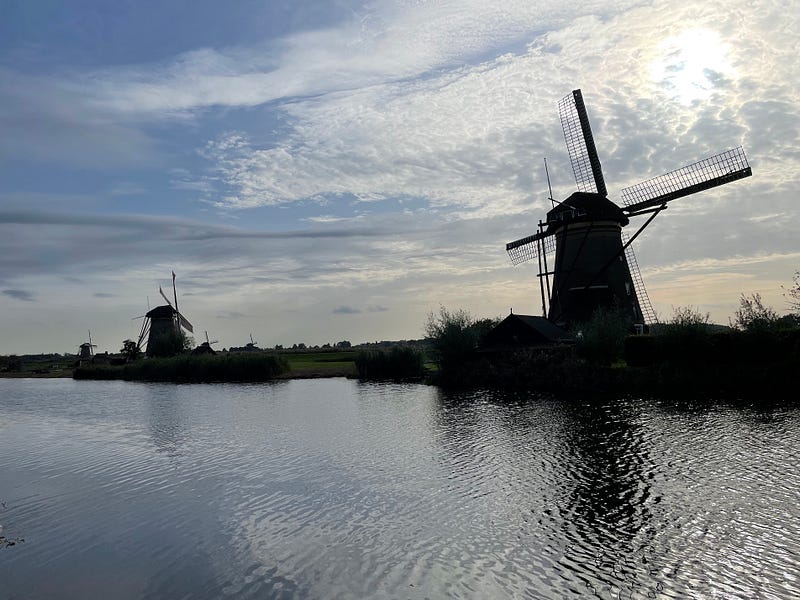
I’ve been to The Netherlands twice now, once in 2016 and once last month, October 2023.
The first time I visited, my son and I stayed for five days in Den Haag or the Hague. He was presenting at a conference and I tagged along to keep him company and visit a country I had longed to see. It was a great place to stay in this unique and hospitable country.
Near the end of our visit in 2016, we took a bus to visit three windmills that lie outside Den Haag by half an hour. After the bus, we walked along the roadside for another thirty minutes until the windmills came into view! It was exciting, indeed!
This grouping is called Molendriegang which literally means, three windmills.
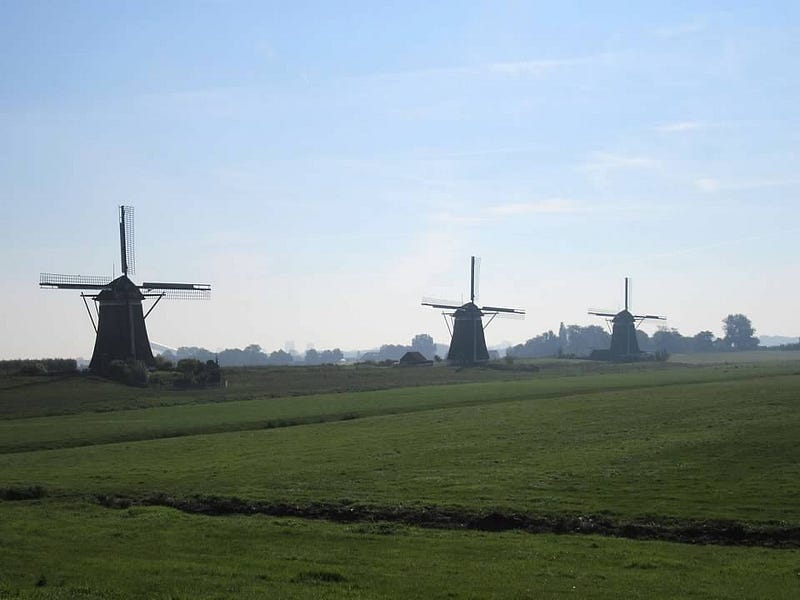
These windmills were built in the 17th century. Canals are still evident in the fields near them. They ceased operations in 1951 and closed to the public, except for what you can see from the gravel bike paths (source). However, you can get close enough to appreciate their beauty.
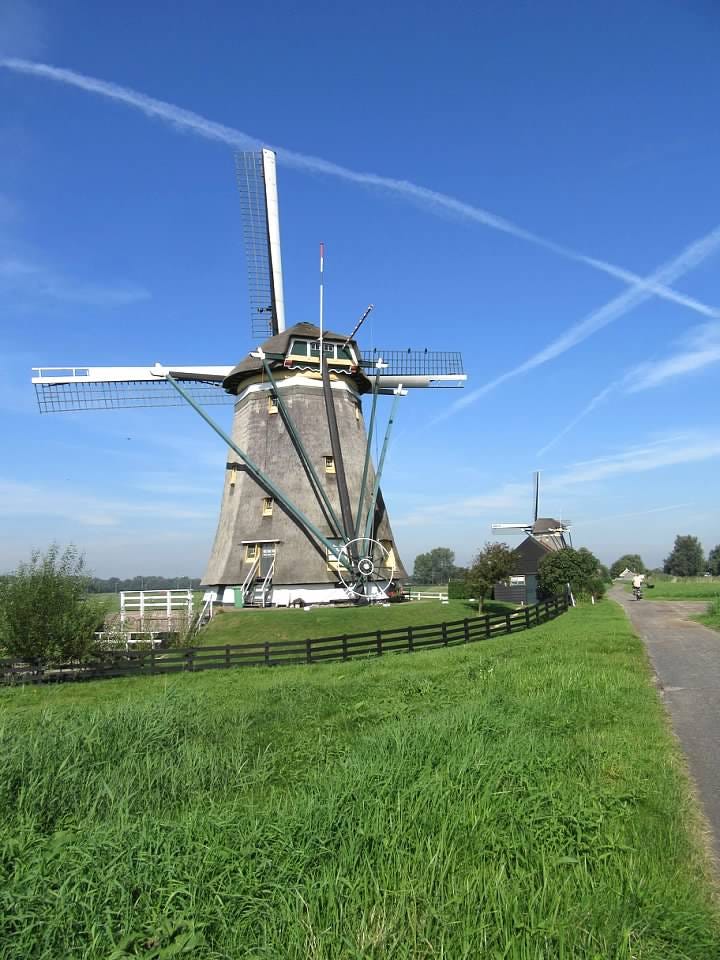
Visiting the windmills outside the Hague was a peaceful, almost private experience. We only encountered a few other people when we visited in the early afternoon on a bright September day. We were able to linger and wonder at the lives of the Dutch who lived in the working mills centuries ago and imagine the lives of the inhabitants today.
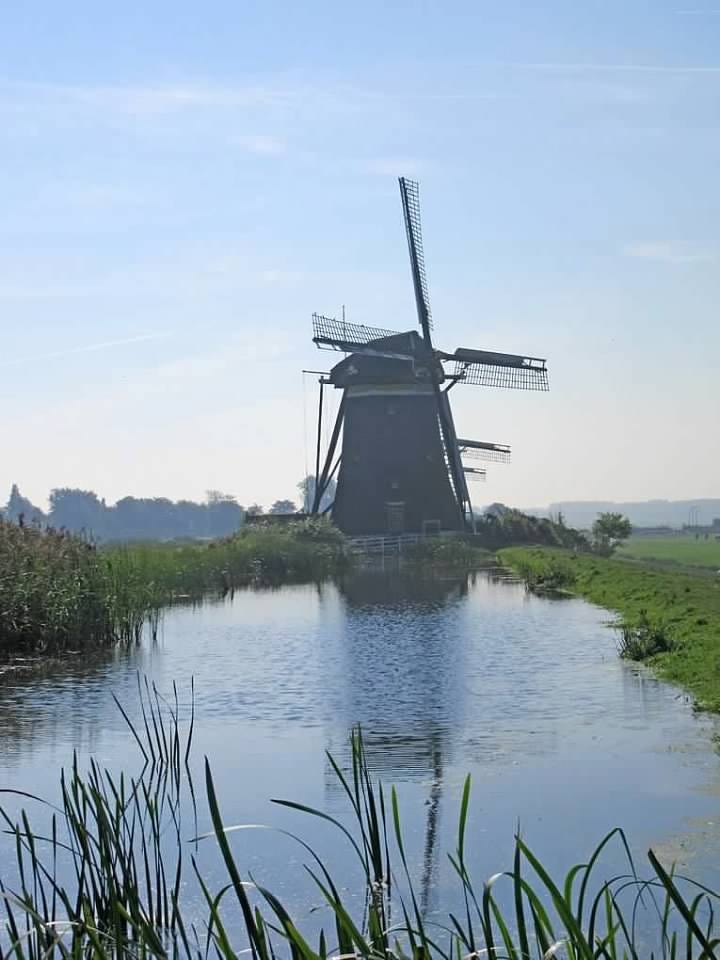
In contrast, Kinderdijk, a grouping of 19 windmills in The Netherlands was busy when we toured there in early October this fall. Kinderdijk is a UNESCO World Heritage site.
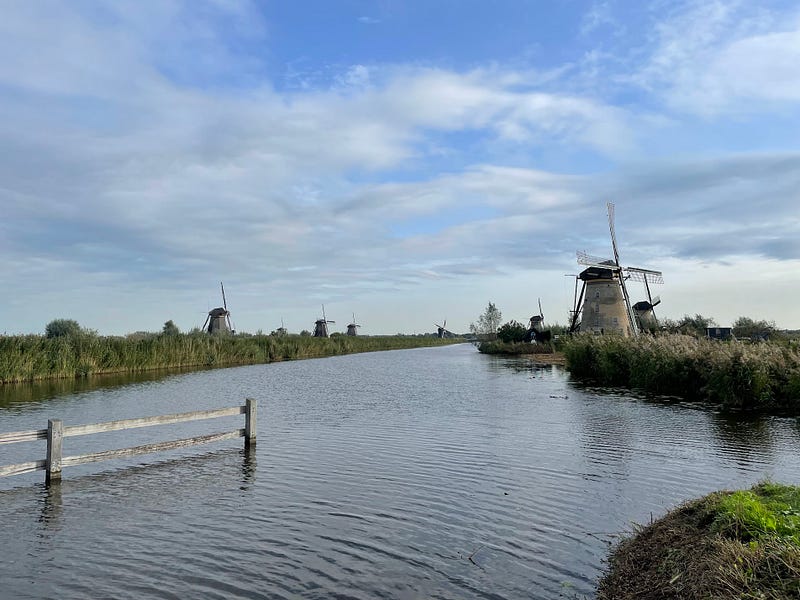
We were there as part of a tour from our European Viking River Cruise. It was an included excursion and one that I definitely wanted to experience.
Since we were not allowed in the windmills of Molendriegang, part of my desire to see Kinderdijk was to be able to go inside a windmill. We were also guided by a Dutch man named Ben who was very informative about the the Dutch countryside and the place windmills served in Dutch history, as well as how they controlled life below sea level today.
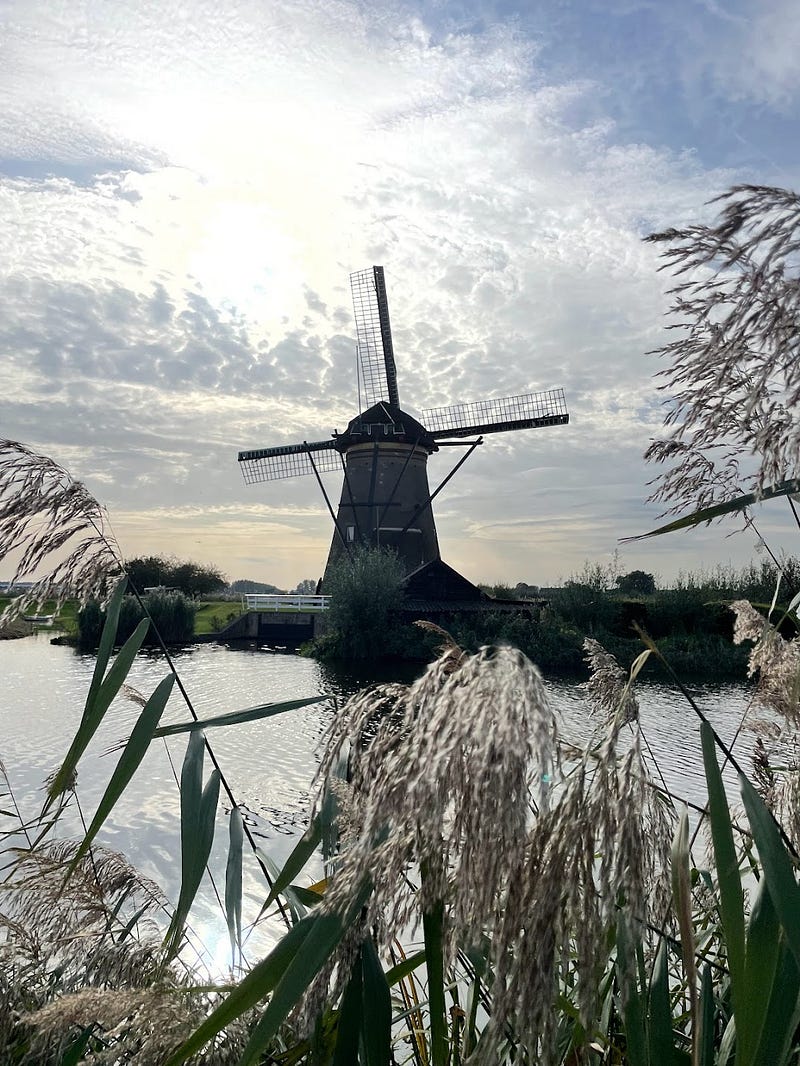
I could barely control my need to snap as many photos as I could as our group of 40 lumbered closer to the one windmill in which we could go inside.
It is a very picturesque area. The trick is getting the other visitors or tourists out of your photo frame! That can be challenging in a place like Kinderdijk! I think I succeeded in getting some nice shots!
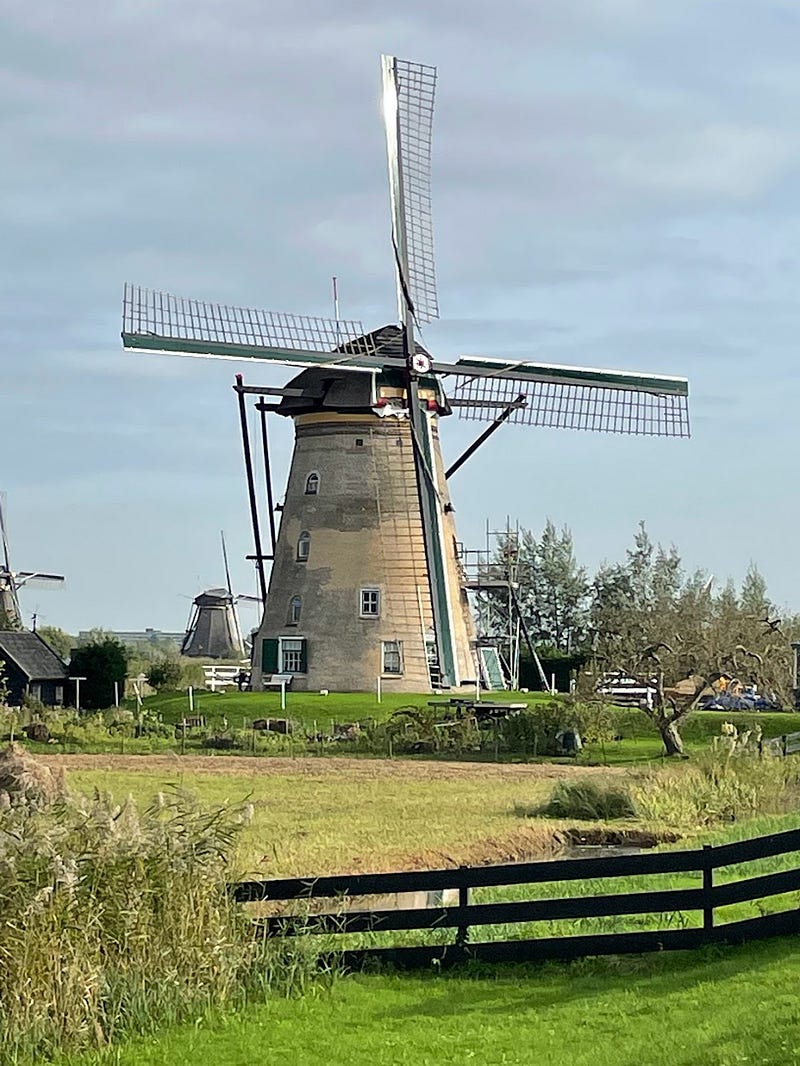
The quarters inside the windmill are tight. Sleeping areas were tucked in what looked like closets. Stairways led to different living levels which the families would occupy for different duties — such as cooking.
I did not take any photos inside for getting some without people in them was near impossible and one had to keep moving to allow everyone a chance to view the interior. I was okay with this. It was just great to experience it myself.
From the outside, we were able to see how the water would be pumped out, how the arms changed positions, and how sails were employed to utilize the wind as efficiently as possible. It really is an ingenious way to manage water and extraordinary to think they did this centuries ago!
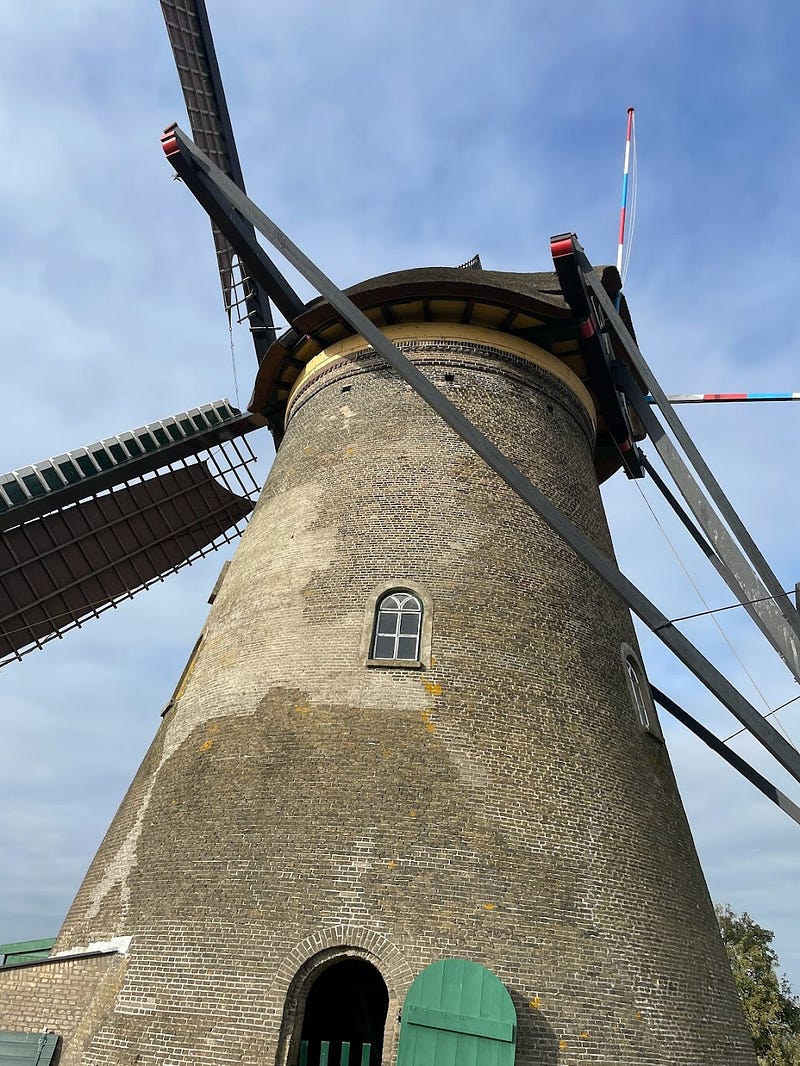
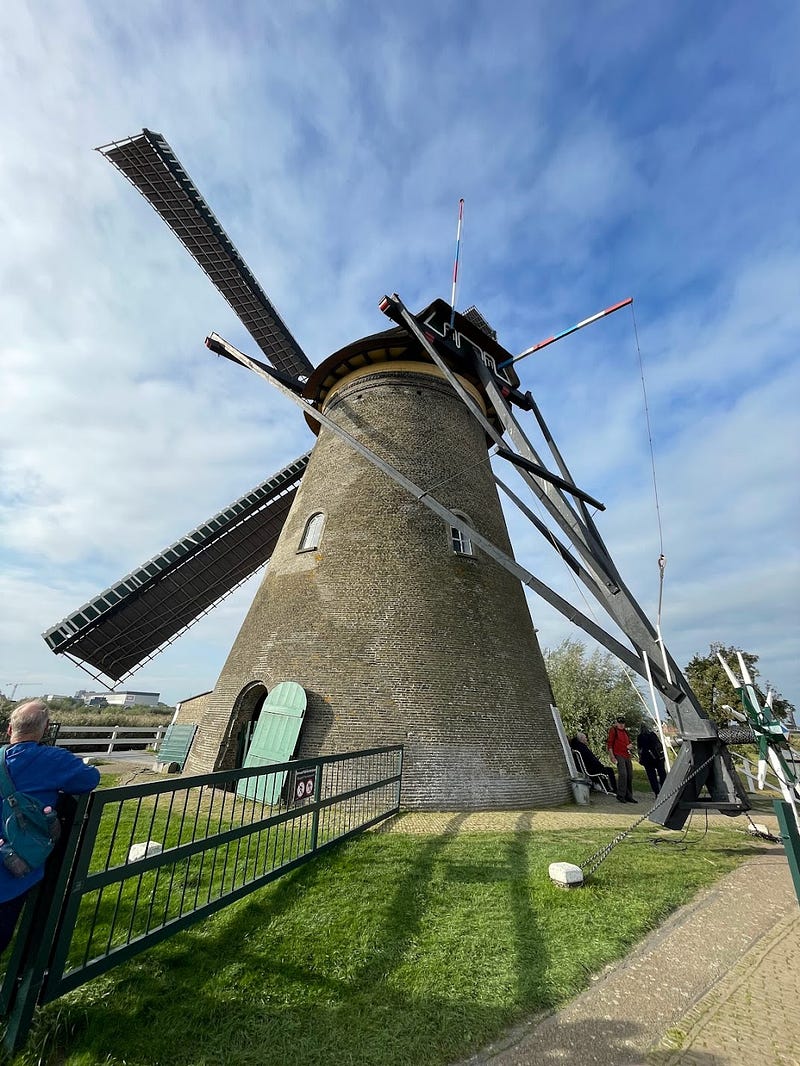
Kinderdijk was named a UNESCO World Heritage site in 1997. Through this designation and the work of volunteers like our guide, Ben, the Windmills at Kinderdijk are preserved to allow us a glimpse into the ingenuity of the past.
If it were not for the windmills, this area would have never been settled because, like much of the Netherlands, Kinderdijk lies below sea level by many feet.
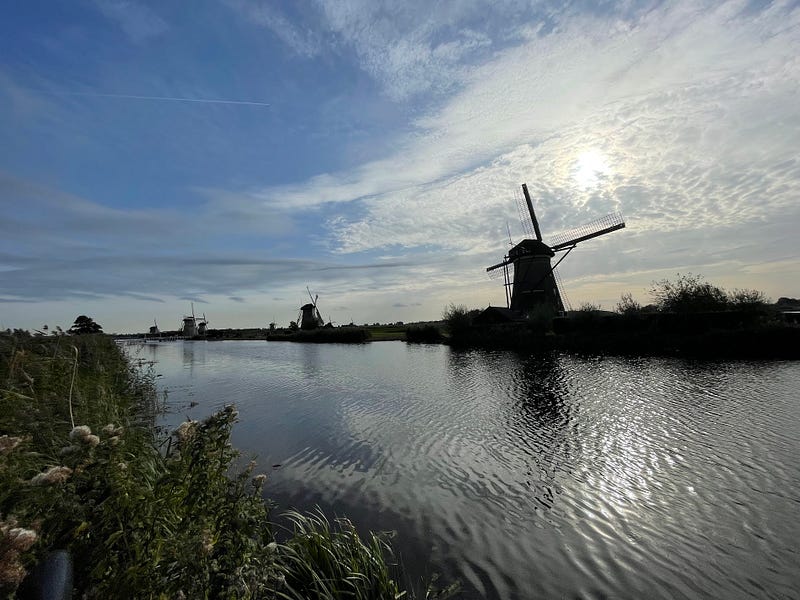
Today, modern pumps are employed to keep the water from accumulating. As the UNESCO site states, the Dutch have learned to work with the water.
“The Dutch have always relied on the water, for all sorts of purposes including agriculture, trade, and transport. That is why we have spent centuries finding sensible and respectful ways of dealing with all of this water.” UNESCO
Water is powerful and a needed natural resource. It is only with ingenuity, and amazing feats of engineering that we will be able to continue to preserve and use this life-sustaining element.
It makes me wonder what the Dutch will come up with as we face sea levels rising and climate change. I think we can look to them to be leaders for our future world and the judicious use of water.
For more on Dutch water conservation efforts, check this page.