
Wind ….“extremely expensive, kills all the birds…”
my thoughts on energy transition to renewable solar and wind energy
The complex subject of Energy and Energy Transition was debated, rightly so, in the last US presidential debate. I understand the imperative of Climate Action, but developing a workable strategy and actionable plan is a whole new level of challenge for most countries. Sound bites, misinformation and half-truths can be misleading and detrimental to navigating the Energy Transition journey.
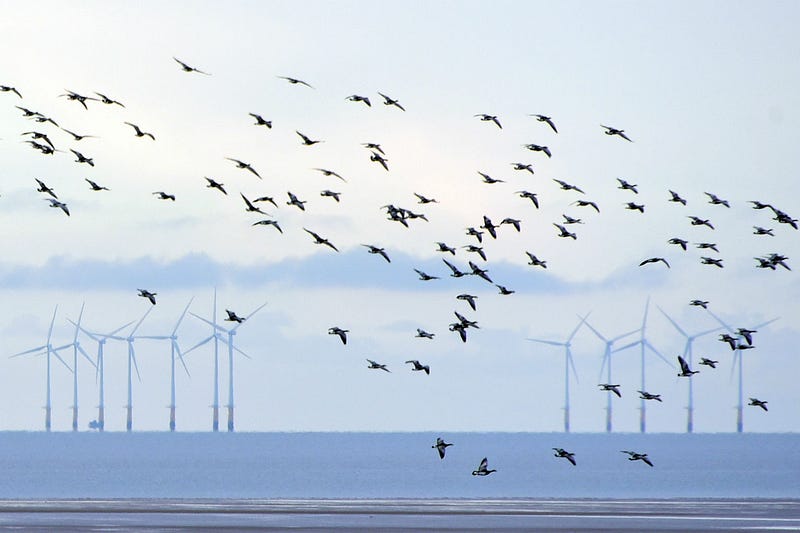
Well, hundreds of thousands of birds do get killed by wind turbines according to some estimates. But many more of them (in the millions) are routinely killed by cats, windows of buildings, radio towers, etc.
I guess, birds generally do not expect to run into very tall objects like high-rise buildings or turbines, or perhaps they are attracted by some reflective surfaces of those structures. I was pleased to learn that researchers are working hard to make wind turbines a lot safer for birds, for examples, changing the color of the blades, and installing acoustic lighthouse which emits a directional noise to frighten off the oncoming birds and divert their flight paths to avoid a fatal collision.
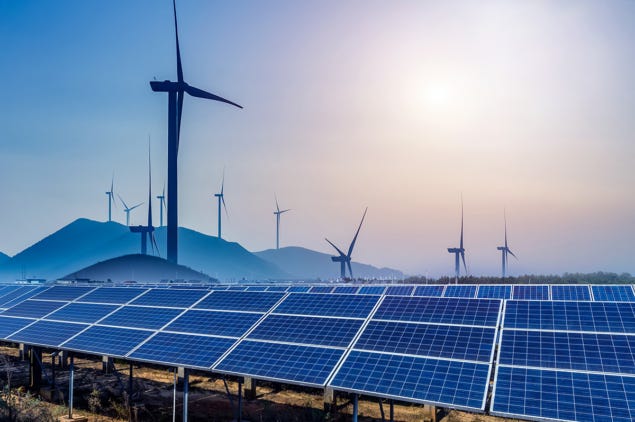
Contrary to what some may believe, the costs per megawatt-hour of utility-scale wind and solar generation have declined by 70% and 90% respectively in the last decade. IEA’s recent flagship publication, World Energy Outlook 2020, states that Solar PV is now consistently cheaper than new coal-fired or gas-fired power plants in most countries. We can also expect that in the present economic environment of low interest rates, renewable energy such as solar and wind can be even more attractive as the main investment is capital with low production/operation cost.
New utility solar projects now cost $30–60 MWh in Europe and USA, and $20–40/MWh in China and India. Figure 1 compares LCOE of utility-scale solar PV with revenue support (such as guaranteed prices) to conventional gas and coal power generation.
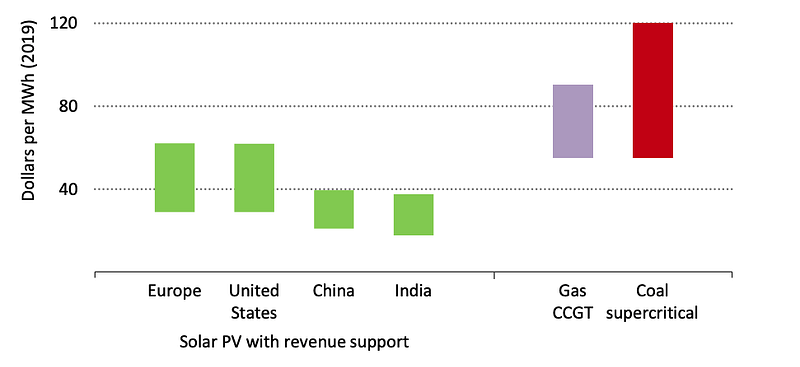
LCOE is the Levelized Cost Of Energy which gives a measure of a power source that allows comparison of different methods of electricity generation on a consistent basis. Simply put, it is the (net present value) total costs over the lifetime of the asset divided by the total electrical energy output over that lifetime, i.e., dollar per MWh.
We know that Solar and Wind are intermittent power sources, large scale deployment would require considerable baseload power supply and energy storage capacity to overcome the variable nature of the power sources. It is not always clear how LCOE comparison accounts for these external factors.
It is often pointed out that countries that are aggressively trying to transition to solar and wind energy from coal-burning are ironically experiencing increasing electricity cost. Germany comes to mind. Electricity prices for household in Germany is $0.38/kWh which is 80% more than France, its neighboring country which relies on 70% energy from nuclear power. Or Australia, with $0.24/kWh for household electricity which has been significantly/steadily increasing since a decade ago.
Countless commentaries have been written on why that is so. The blame game can run amok. Fingers are pointed to governments for lack of smart policy and only paying lip service. The right-wing commentariat criticizes renewables and renewable energy advocates blame the nasty old fossil-fuel generators. Often, governments blame everyone but themselves.
Coming back to the comprehensive World Energy Outlook 2020 report, it is clear that even if the world can come together with unprecedented political will to work together to achieve Net Zero, we will still be using natural gas, and to a lesser extent, oil for the foreseeable future.
The Sustainable Development Scenario in World Energy Outlook 2020 assumes the world is on track to achieving sustainable energy objectives in full, including the Paris Agreement, energy access and air quality goals. In this scenario, we should see a rapid growth of solar, wind and energy efficiency technologies as well as the scaling up of hydrogen, CCUS (carbon capture, utilization & storage), and new initiatives around nuclear power.
The way-forward may very well be a fine balance and integration of renewables (including geothermal), natural gas, nuclear power and relevant enabling technologies.


