
Will We Ever Be Free Again?
We cannot keep blaming technology

Do you remember how your life was like 20 years ago? From a human perspective, one could say that life hasn’t changed much: we sleep, we eat, we work, and sometimes we have fun. But we both know that is not exactly true.
Technology has changed our lives dramatically. And while it has made our lives easier (and safer) in many ways, we have given a big part of our freedom in return.
Considering that the digitalization of our lives is not going to stop any time soon, we cannot continue avoiding a very uncomfortable question: will we ever be free again?
Goodbye, payphones
I remember the days when we used payphones to call home, studied paper maps to reach our holiday destination, and the only cookies we knew about had chocolate chips on them.
Payphones are an interesting reminder of how things have changed. They were a great innovation that changed the world without threatening our freedom or privacy. You could use them whenever you wanted to contact someone. Simple. If you didn’t need one, no one was able to disturb you or track your location.
That idea of being completely anonymous sounds romantic — and almost impossible — these days.
Anonymity became a luxury after 9/11. A day that is often cited as one of the defining events of modern history.
When we look back, we remember the tragic loss of thousands of lives in a terrorist attack that shocked the entire world. But that day was also the beginning of a new era. An era of global mass surveillance that doesn’t seem to have an end.
Goodbye, payphones.
Your most loyal follower
Government surveillance is like death. We know it’s there, it affects all of us, and yet we decide never to talk about it.
Governments have been exposed on many occasions for implementing all sorts of surveillance programs to spy on their citizens. The most popular scandal involved the government of the United States (thanks, Edward Snowden), but since then most countries have implemented their own programs.
Even a solid democracy like Denmark has the intention to pass a new law in 2022 that will increase the level of surveillance their citizens are subject to.
Yet, in America and Europe we often look outside our borders and think “Well, it could be worse”.
The Chinese surveillance program, for example, has reached previously unseen dimensions. In particular, the so-called ‘Social Credit System‘ has put extreme pressure on Chinese citizens and corporations.
The social credit initiative calls for the establishment of a unified record system so that businesses, individuals, and government institutions can be tracked and evaluated for trustworthiness — Wikipedia
Local telecommunications and technology companies like Tencent, ByteDance, Huawei, ZTE, and many more have been accused of helping the government to implement this program.
Isn’t it ironic? So many people trying to grow their online audience and they can’t see their biggest and most loyal follower: their government.
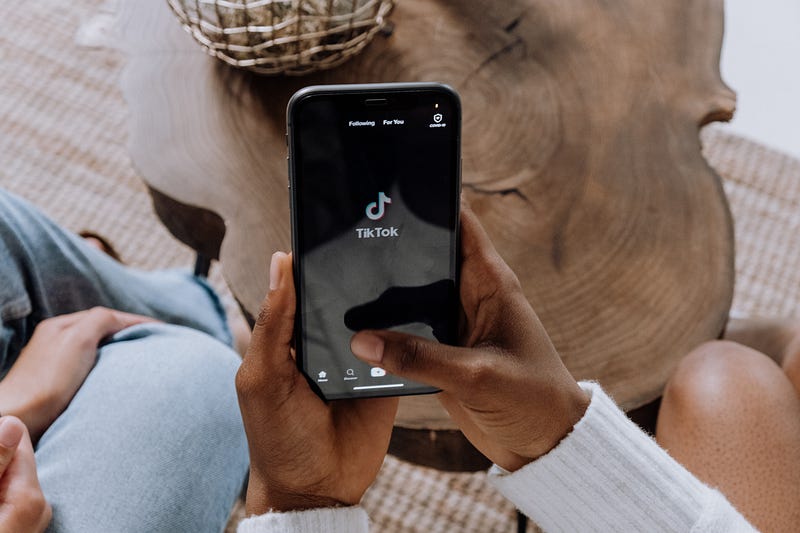
In case you don’t know, ByteDance is the company behind Tik Tok. Isn’t it ironic? So many people trying to grow their online audience and they can’t see their biggest and most loyal follower: their government.
Surveillance has indeed become such a common threat that some people believed that Bill Gates was putting tracking microchips into COVID-19 vaccines. Surprising? Not really, given the circumstances.
An alternative to “free” APPs
Looking at the Social Credit Initiative, we could try to excuse Chinese corporations because they have been forced by governments to spy on us. But are they completely innocent then?
Private corporations are as interested in spying on us as our governments. They just have different methods and objectives.
For many years now, we have enjoyed free applications and services built by the tech giants. We never asked why they were free because, in many cases, we already knew. But we didn’t care.
Now we are realizing that it was a big mistake.
We have lost all control over our personal data. It is being sent from one company server to another and we don’t know what to do about it. We are finally getting a bit worried. Better late than never?
You would probably get surprised if you visited a retail store and the assistant walked to you holding the exact pair of running shoes that you checked 3 days ago on the company’s website.
The company knows about your interest in those running shoes, but they decide not to use that piece of information at their stores because it would probably scare you. Especially when you realize the shoes are your size.
We are way more used to the online version of the same example: you browse the Internet searching for a new smartphone and from that point on every single website that your visit includes a link to buy that exact smartphone model. Pretty annoying, right?
In recent years, we have tried to control how cookies and browsing data are managed, but there are still no real alternatives to “free” APPs. I believe that tech companies should always offer a paid version of their applications and services. Those who don’t care about their privacy would keep using the “free” service. Others could decide to pay to ensure that their personal data isn’t sold to other companies.
So on one side, we have our governments watching everything we do. On the other side, private corporations tell us what to buy (or do). COVID-19 made things worse in many countries. What comes next? Will Artificial Intelligence make things harder for us?
The first non-human whistleblower
The lack of privacy that we are experiencing is the result of past decisions made (or not made) by people like you and me. Someone knew that they were doing something that wasn’t ethical or legal. Yet, they did it anyway. Sometimes because they were obeying orders, and sometimes because they wanted to impress their bosses or get an exceptional annual bonus.
As we introduce more AI algorithms to automate key IT systems, fewer people will know what is going on “behind the scenes”. This could become a new threat to our freedom, as there will be fewer chances for whistleblowers to report illegal surveillance programs or non-compliant use of personal data.
How will we make sure that AIs are “better” than us if we keep training them using human-made decisions?
Let’s remember that AI algorithms don’t understand what they are doing yet. And in many cases, we don’t understand why or how these algorithms make their decisions either. This is a concern that has been raised countless times due to its dangerous consequences.
How will we then make sure that AIs are “better” than us if we keep training them using human-based decisions?
I like thinking about the first non-human whistleblower. An AI algorithm that is aware of what it’s doing and decides to report something illegal or unethical. I wonder if it will send an email to one of the big newspapers or will instead post it on social media.
I know we still need to wait for that to happen, but isn’t it an exciting thought?
Is it the technology or is it us?
The Internet, mobile telephony, GPS, web cookies, supercomputers, and artificial intelligence have to some extent enabled the current situation. Thanks to them, government mass surveillance and the loss of our privacy have become the new normal.
But can we really blame it on technology?
I say no. We are the only ones to blame. We allowed this to happen. And we keep doing it. We complain about things over lunch, but at the end of the day, we don’t lift a finger to fight for our freedom.
The good news is you don’t need to become a famous whistleblower to change things. Everyone can do something about it.
Let’s keep the technology, but also our freedom

Technology will be as harmless as we want it to be. A gun is not dangerous by itself. It is only when there is a hand holding it that it becomes a threat.
We have seen data protection laws being approved in many countries and states. We have seen a global attempt to control how websites collect our data through cookies.
We have also seen more and more whistleblowers and citizens reporting illegal actions carried out by governments and private corporations.
We have recently seen how blockchain promises a decentralized economy that is fairer. Yes, we don’t know yet how that is going to end, but it is anyway inspiring to see how some people work on technologies that promise more freedom.
Technology will be as harmless as we want it to be. A gun is not dangerous by itself, it is only when there is a hand holding it that it becomes a threat.
What I am trying to say is: don’t accept that this is just how it works and there is nothing you can do. We have changed things in the past many times, so let’s do it again.
How? Read and learn more about your digital freedom. Express your concerns online and discuss them with your friends. Go out and demonstrate when you don’t like a new law that your government is planning to pass. And of course, vote for political parties that want to give us some of our freedom back.
It is not the technology, it is us!
I hope you enjoyed reading this story. Sharing ideas, thoughts, and opinions is the soul of Medium, so I would love to know what you think. Go ahead and post a comment!
If you are planning to become a Medium member, you can support me by joining through my membership referral page: https://medium.com/@javier.menendez/membership


