avatarVanessa Gallman

Free AI web copilot to create summaries, insights and extended knowledge, download it at here

3604

Abstract

the Senate, with no more than two serving at the same time, according to the <a href="https://www.brennancenter.org/our-work/research-reports/equal-rights-amendment-explained">Brennan Center for Justice</a>. The picture was only slightly better in the House.</p><p id="ee0e">In 1970, a new class of women lawmakers — including Democratic Reps. <a href="https://history.house.gov/People/Detail/14160">Martha Griffiths </a>of Missouri and <a href="https://en.wikipedia.org/wiki/Shirley_Chisholm">Shirley Chisholm</a> of New York— made the ERA a top priority. They had to overcome the resistance of Rep. Emanuel Celler of New York, the chairman of the House Judiciary Committee who had refused to hold a hearing on the ERA for over 30 years.</p><p id="5123">Faced with increased advocacy from of a growing women’s rights movement, he relented. In March 1972, the amendment passed both chambers of Congress with bipartisan support far exceeding the two-thirds majorities required by the Constitution.</p><figure id="a586"><img src="https://cdn-images-1.readmedium.com/v2/resize:fit:800/1*gnIxBXskYs6w7DqvgH7ZCQ.jpeg"><figcaption>Nannie M. Johnson, 73, stood among several dozen other pro-Equal Rights Amendment pickets in front ofRepublican Party headquarters on Aug. 26, 1980. <a href="https://www.flickr.com/photos/washington_area_spark/"><b>Photo: Washington Area Spark on Flick.r</b></a></figcaption></figure><p id="0c3e">Within a year, 30 of the necessary 38 states ratified the ERA. But momentum slowed as conservative activists and the emerging religious right worked to stalled the amendment. They complained that passage would lead to forced military service for women, same-sex marriage and unisex bathrooms.</p><p id="beb9">Although the GOP was the first party to endorse the ERA in 1940, GOP lawmakers cooled to the amendment. By the 1982 deadline, only 35 states had ratified it. Also lawmakers in five states — Nebraska, Tennessee, Idaho, Kentucky and South Dakota — voted to rescind earlier support.</p><p id="7487">In the decades following, the push for women’s equality found more success in courts and legislatures. The late Supreme Court Justice <a href="https://www.aclu.org/other/tribute-legacy-ruth-bader-ginsburg-and-wrp-staff?redirect=womens-rights/tribute-legacy-ruth-bader-ginsburg-and-wrp-staff#pioneer">Ruth Bader Ginsburg</a>, then founding director of the ACLU Women’s Rights Project, effectively argued for gender equality under the <a href="https://www.law.cornell.edu/constitution/amendmentxiv">14th Amendment’s</a> Equal Protection Clause.</p><p id="4c15">In recent years, renewed focus on the ERA resulted from a resurgence of activism, from the Women’s March on Washington to the #MeToo Movement to the <a href="https://msmagazine.com/2019/01/03/holding-line-women/">record number</a> of women elected to Congress and state legislatures in 2018. When Nevada ratified the measure in 2017, it was the first state to do so since 1977.</p><h2 id="3528">Current obstacles</h2><p id="3b91">Under the Trump administration, the Department of Justice issued a memo saying that the latest states to ratify the ERA — Virginia, Nevada and Illinois — cannot actually do so, because the deadline had expired.</p><p id="b900">Therefore, the National Archives would not be able to certify the amendment. U.S. Archivist David Ferriero said in January 2020 that he wouldn’t publish it without a court order.</p><p id="9fd9">The three states sued the Archives, but <a href="https://www.nbcnews.com/politics/politics-news/federal-judge-says-states-acted-too-late-ratify-equal-rights-n1259783"

Options

a federal judge dismissed the case</a> last year, writing that “a ratification deadline in a proposing resolution’s introduction is just as effective as one in a text of a proposed amendment.” He has not made a ruling on whether states can reverse earlier ratification.</p><p id="dacd">The states have appealed his decision on the deadline. As a backup plan, House Democrats last year <a href="https://rollcall.com/2021/03/17/house-votes-to-nix-deadline-for-equal-rights-amendment-ratification/">voted to remove</a> the deadline from the amendment introduction. A related <a href="https://news.bloomberglaw.com/daily-labor-report/senators-push-for-equal-rights-amendment-wont-end-court-battle">bipartisan Senate </a>resolution has not received a vote.</p><p id="ae02">Last week, the Biden DOJ issued an <a href="https://www.justice.gov/olc/file/1466036/download">opinion</a> that did not rescind the previous memo but said it “does not preclude the House or the Senate from taking further action regarding ratification of the ERA.”</p><p id="026d">The House then passed the resolution and asked Ferriero to publish the amendment before he leaves office in April.</p><p id="a810" type="7">What is the danger of having the Constitution, initially written by men, clarify that this nation now believes all men — and women — are created equal?</p><p id="d4c1">Critics argue that the ERA is no longer needed to protect women’s rights. But the major concern is what impact it could have on state-level <a href="https://www.politico.com/news/2020/02/11/abortion-equal-rights-amendment-113505">abortion restrictions</a>. Since only women can have abortions, conservatives argue, restrictions could be found unconstitutional.</p><p id="1e35">These are weak arguments. Just as with other constitutional amendments, the ERA’s reach and limits will be determined by court challenges. If the abortion restrictions are determined unconstitutional, it would mean they were unfair from the start.</p><p id="8f9f">Also, if the ERA is no longer needed to expand women’s rights, what is the danger of having the Constitution, initially written by men, clarify that this nation now believes all men — and women — are created equal?</p><p id="ab0f">“The certification is a symbol, but we deserve that symbol,” Ellie Smeal of The Feminist Majority Foundation told reporters. “We think that he should certify and publish it now. Let the opposition appeal, and yes it will go to the courts, but basically we know that this thing has passed.”</p><figure id="7d68"><img src="https://cdn-images-1.readmedium.com/v2/resize:fit:800/1*oG5s6IRJ9sdbPDQjDtxmow.jpeg"><figcaption>Suffagist Alice Paul, vice president of the National Women’s Party, helped write the Equal Rights Amendment after women’s right to vote was won in 1920. <a href="https://www.history.com/news/equal-rights-amendment-fail-phyllis-schlafly"><b>Photo: History.com</b></a></figcaption></figure><div id="10db" class="link-block"> <a href="https://vgallman.medium.com/membership"> <div> <div> <h2>Join Medium with my referral link - Vanessa Gallman</h2> <div><h3>As a Medium member, a portion of your membership fee goes to writers you read, and you get full access to every story…</h3></div> <div><p>vgallman.medium.com</p></div> </div> <div> <div style="background-image: url(https://miro.readmedium.com/v2/resize:fit:320/0*LEIk2W26J-xfvqAY)"></div> </div> </div> </a> </div></article></body>

Will U.S. Finally Enshrine Equal Rights for Women?

Long overdue steps toward a 28th Amendment to Constitution
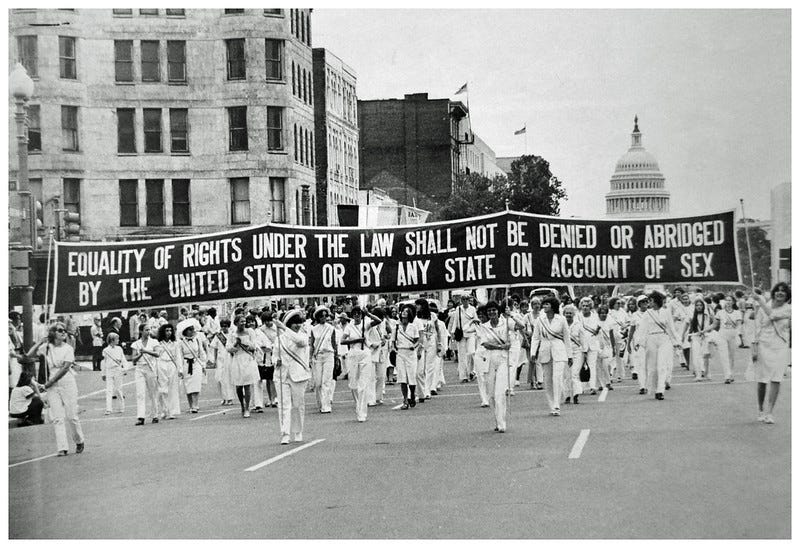
In 1977, women re-enacted a 1913 women’s suffrage march while demonstrating for passage of the Equal Rights Amendment. The banner shows the wording of the amendment. Photo: Washington Area Spark on Flick.r

It’s taken almost a century, but the Equal Rights Amendment— which says women have the same rights as men — could soon be added to the U.S. Constitution, which now only gives women the right to vote.

A Jan. 26 Department of Justice opinion cleared the way for a House resolution telling the U.S. Archivist to publish it as the 28th Amendment. A On Jan. 27, 2020, Virginia became the last of the 38 states needed for ratification. The amendment states that it should automatically go into effect exactly two years after ratification.

Yet, there are legal questions about the amendment that could end up before the U.S. Supreme Court. The biggest one is whether the ERA needs to start over because it missed Congress’ 1982 deadline, although neither the Constitution nor the amendment’s text sets deadlines. Also, should supporters count five states — Nebraska, Tennessee, Idaho, Kentucky and South Dakota — that decades earlier had asked to rescind their support?

However, President Joe Biden agreed Jan. 27 that the amendment is officially ratified. “We must recognize the clear will of the American people and definitively enshrine the principle of gender equality in the Constitution,” he said. “It is long past time that we put all doubt to rest.”

Nothing has come easy for the amendment, co-authored by legendary suffragist Alice Paul in 1923. “We shall not be safe until the principle of equal rights is written into the framework of our government,” she said.

No doubt, women have made tremendous progress in society. “But unfortunately judicial attitudes can shift, and Congress can repeal existing laws with a simple majority vote,” said New York Rep. Carolyn Moloney, a leader in the congressional push. “In recent years, there have been efforts to roll back women’s rights in education, health, employment and even domestic violence.”

When there has been doubt over the validity of a proposed amendment, Congress has acted to declare it valid. In 1992, the U.S. Archives published the 27th Amendment, on adjusting lawmakers’ salaries, even before congressional OK. That happened more than 202 years after Congress first proposed that amendment.

It’s time to make it clear that more than half of the United States’ population can’t be discriminated against because of gender.

What took so long?

Beginning in 1923, lawmakers introduced the ERA in Congress annually, but it made little progress until the 1970s. Most of the 20th century, Congress was almost entirely male.

In the nearly five-decade span between 1922 and 1970, only 10 women served in the Senate, with no more than two serving at the same time, according to the Brennan Center for Justice. The picture was only slightly better in the House.

In 1970, a new class of women lawmakers — including Democratic Reps. Martha Griffiths of Missouri and Shirley Chisholm of New York— made the ERA a top priority. They had to overcome the resistance of Rep. Emanuel Celler of New York, the chairman of the House Judiciary Committee who had refused to hold a hearing on the ERA for over 30 years.

Faced with increased advocacy from of a growing women’s rights movement, he relented. In March 1972, the amendment passed both chambers of Congress with bipartisan support far exceeding the two-thirds majorities required by the Constitution.
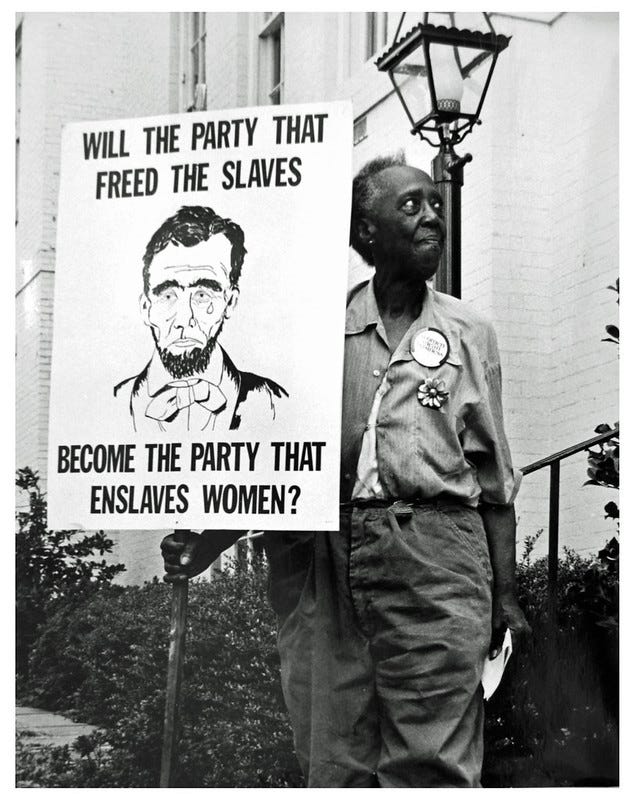
Nannie M. Johnson, 73, stood among several dozen other pro-Equal Rights Amendment pickets in front ofRepublican Party headquarters on Aug. 26, 1980. Photo: Washington Area Spark on Flick.r

Within a year, 30 of the necessary 38 states ratified the ERA. But momentum slowed as conservative activists and the emerging religious right worked to stalled the amendment. They complained that passage would lead to forced military service for women, same-sex marriage and unisex bathrooms.

Although the GOP was the first party to endorse the ERA in 1940, GOP lawmakers cooled to the amendment. By the 1982 deadline, only 35 states had ratified it. Also lawmakers in five states — Nebraska, Tennessee, Idaho, Kentucky and South Dakota — voted to rescind earlier support.

In the decades following, the push for women’s equality found more success in courts and legislatures. The late Supreme Court Justice Ruth Bader Ginsburg, then founding director of the ACLU Women’s Rights Project, effectively argued for gender equality under the 14th Amendment’s Equal Protection Clause.

In recent years, renewed focus on the ERA resulted from a resurgence of activism, from the Women’s March on Washington to the #MeToo Movement to the record number of women elected to Congress and state legislatures in 2018. When Nevada ratified the measure in 2017, it was the first state to do so since 1977.

Current obstacles

Under the Trump administration, the Department of Justice issued a memo saying that the latest states to ratify the ERA — Virginia, Nevada and Illinois — cannot actually do so, because the deadline had expired.

Therefore, the National Archives would not be able to certify the amendment. U.S. Archivist David Ferriero said in January 2020 that he wouldn’t publish it without a court order.

The three states sued the Archives, but a federal judge dismissed the case last year, writing that “a ratification deadline in a proposing resolution’s introduction is just as effective as one in a text of a proposed amendment.” He has not made a ruling on whether states can reverse earlier ratification.

The states have appealed his decision on the deadline. As a backup plan, House Democrats last year voted to remove the deadline from the amendment introduction. A related bipartisan Senate resolution has not received a vote.

Last week, the Biden DOJ issued an opinion that did not rescind the previous memo but said it “does not preclude the House or the Senate from taking further action regarding ratification of the ERA.”

The House then passed the resolution and asked Ferriero to publish the amendment before he leaves office in April.

What is the danger of having the Constitution, initially written by men, clarify that this nation now believes all men — and women — are created equal?

Critics argue that the ERA is no longer needed to protect women’s rights. But the major concern is what impact it could have on state-level abortion restrictions. Since only women can have abortions, conservatives argue, restrictions could be found unconstitutional.

These are weak arguments. Just as with other constitutional amendments, the ERA’s reach and limits will be determined by court challenges. If the abortion restrictions are determined unconstitutional, it would mean they were unfair from the start.

Also, if the ERA is no longer needed to expand women’s rights, what is the danger of having the Constitution, initially written by men, clarify that this nation now believes all men — and women — are created equal?

“The certification is a symbol, but we deserve that symbol,” Ellie Smeal of The Feminist Majority Foundation told reporters. “We think that he should certify and publish it now. Let the opposition appeal, and yes it will go to the courts, but basically we know that this thing has passed.”
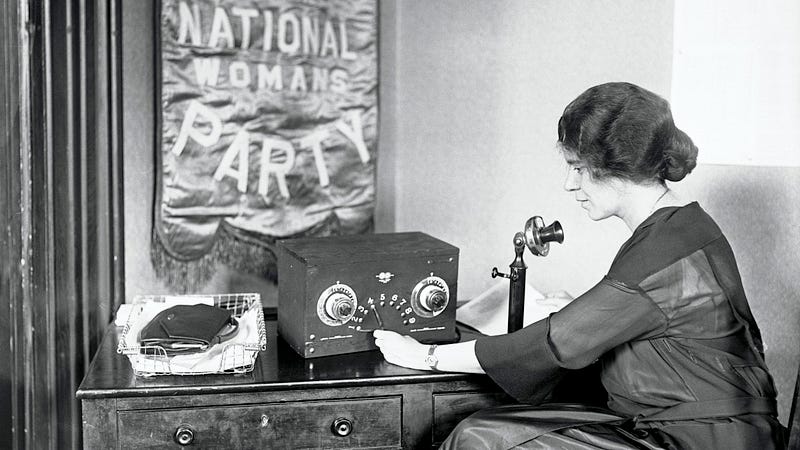
Suffagist Alice Paul, vice president of the National Women’s Party, helped write the Equal Rights Amendment after women’s right to vote was won in 1920. Photo: History.com
Politics
Womens Rights
Constitution
Equality
History
Recommended from ReadMedium