
Will This Time Be Different?
People of color are hoping for the best, but preparing for the same
My friend Julie asked me this question via Facebook Messenger recently:
I’ve been feeling more hopeful over the past few days, as I see changes being made and some hearts changing. It feels like a historic time. Are you feeling it as well? Do you dare feel hopeful? I don’t want to let up or get complacent because there’s so much work left to be done, but I can’t tell if my feelings of hopefulness are coming from my inner “optimistic white girl” or if we’re actually experiencing a moment they will talk about in history books years from now. Thoughts? [emphasis mine]
I have been moved, encouraged, and even inspired by the display of humility and contrition I’ve seen from my white friends who have had profound revelations about their privilege and ignorance. In the face of so many heartless and uncompassionate responses I so frequently see from supporters of “He who shall not be named” (cough, Trump, cough) it is refreshing and invigorating to get more of these replies like the one from Julie.
I can empathize with her. There definitely is something different going on. The entire world is protesting—from Bangkok to Great Britain, the Netherlands to New Zealand. Confederate statues are coming down. Even NASCAR has gotten in on the action and banned the Confederate flag and even removed the guidelines requiring people to stand for the National anthem—in essence, allowing drivers to peacefully protest (WTF! How is it that NASCAR, of all sports, got this done before the NFL?!)
All of this change is wonderful. But…
I’m CAUTIOUSLY hopeful. My concern is that there is a long way to go, and I don’t know if we all have the stomach to stick it out. And by “we” I mean “you”—white people.
Through the looking glass
If you’re a white person reading this, I acknowledge that this is an uncomfortable place for you to be. Dealing with the strain. Feeling the heartache of a community. I know. People of color know. We have no choice but to bear it. Every day.
My fear is this: if you’re a person who has a choice about whether or not to stay committed and looming in the face of ugliness and racism every day, exhausted by it, would you? At some point the burden could get so heavy, it would be easy to just let it go. The support we’re seeing now could slowly die before any real change happens. (And let’s not discount the possibility of the Cheeto in Charge starting a small war in some foreign country just to change the news cycle focus. I would NOT put it past him. It sounds hyperbolic to even suggest it, but deep down inside, you know it in your bones, he’s fully capable and willing to do something like that.)
So, I’m left with the question: will this time be different.
John Oliver recently did an entire show on the history of police brutality. At the end of that episode, he showed and quoted social scientist Kenneth Clark who was commenting on the 1968 Kerner Commission Report which was charged with coming up with suggestions for how to respond to the unrest of civil rights-related riots in the late ’60s. Clark stated:
I read the report of the 1919 riot of Chicago and it was as if I was reading the report of the investigative committee of the Harlem riot of 1935, the investigative report of the Harlem riot of 1943, the report of the McCone Commission on the Watts riot [1965]. I must again in candor say to you…it’s like a kind of Alice in Wonderland with the same moving picture reshown over and over again, the same analysis, the same recommendations, and the same inaction.
John’s follow up to Clark’s analysis was this:
For ours is a firmly entrenched system, where the roots of white supremacy run deep, and it is critical that we all grab a fucking shovel. To do anything less would be absolutely unforgivable. John Oliver, Last Week Tonight with John Oliver
In light of John Oliver’s report, I again ask…Will this time be different?
Take a load off
I recently watched the 2017 documentary “LA92” about the riots and uprising that occurred in the Spring of 1992 after the acquittal of the four police officers who, on camera, clearly beat Rodney King within an inch of his life. It’s a phenomenal piece of storytelling that uses no supplemental interviews. Instead, it tells the entire story from news footage, interviews, and amateur footage from the time period. What’s so striking is that it sets the stage for the 1992 riots by first briefly telling the story and events that led up to the 1965 Watts riots — almost 30 years earlier. The similarities between the cries of black people and the responses by white politicians in 1965, and those of 1992, are eerie.
What was even eerier, and something the filmmakers could not have dared to dream back when this was released three years ago, was the similarities of the same cries and pain black people are screaming in the wake of George Floyd’s murder.
So, I ask…Will this time be different?
In the DM correspondence with my friend Julie, I suggested that she and her husband watch “LA92.” Her response was another encouraging example of candid self-awareness:
My husband and I had a good discussion last night about watching Just Mercy (I’ve read the book, just never seen the movie.) We were tired from a long exhausting day and it was late, but we had planned to watch it. I said “I just don’t think I can handle watching something emotionally taxing tonight.” Then I realized how privileged that statement was, and how great it painted a picture of white allyship. We haven’t had to be in this fight our whole lives, so we are emotional lightweights. I feel like someone who saw their friend carrying something very heavy for a long time and said “Here, let me take the load off of you and help you carry it,” then 14 seconds later said “My arms are tired, I’m gonna hand it back to you.”
I gotta admit, her last sentence there made me chuckle out loud. I can picture an SNL sketch now of a prim and proper white woman with a parasol walking in the hot sun while her black friend, sans parasol and sweating, carries two bags of heavy groceries.
I appreciate how Julie immediately became aware of her privilege. So many white people who get offended at that word automatically assume it’s about financial resources. But it’s so much more than that. As Julie realized, it’s also about not having to bear the burden of fighting for racial justice if that burden becomes too, well, burdensome. If the fight becomes too hard. If the cost becomes too high, you can stop. That is a privilege.
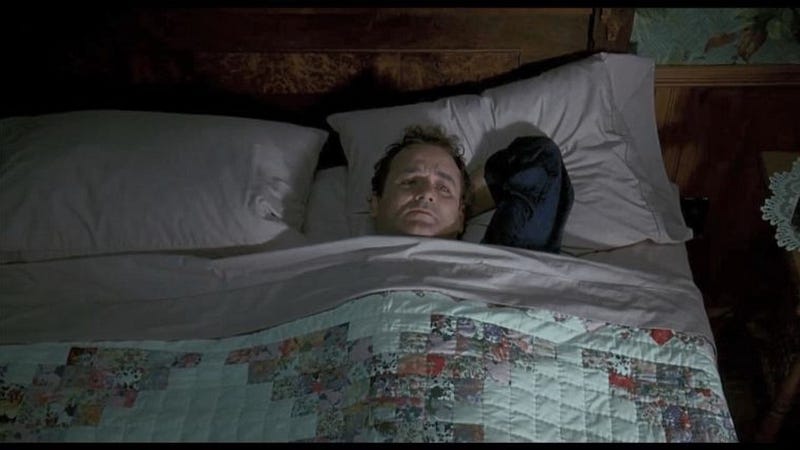
The truth is, white allyship is mandatory for any meaningful change to occur. That is where the power lies. White allies in government, business, houses of worship, and community activism will need to persevere through the heat—both the solar kind in protests and the government kind in politics. For if they tire too quickly, too easily, and give the load back to their black brothers and sisters to carry, we are doomed to repeat the nightmarish “Groundhog Day” repetition of injustice, rebellion, recommendation, and inaction.
So to my dear white brothers and sisters walking alongside, I ask…
Will this time be different?