
Will the metaverse be your new place of work in the future?
A virtual world where a digital or cartoon-like 3D representation exists

Metaverse is evolving day by day. When we look back 50 years from now, the modern Internet we use now may seem laughably ancient. The Internet will likely not be confined behind a screen, but it is likely that we will interact with it differently.
We will use Augmented Reality or AR to blend real world objects and digital objects, explore the world of Virtual Reality or VR, connect the real and digital worlds in ways that we can per Can’t even imagine now. But what will this mean for the world of work?
We are already moving away from the nine-to-five commute and the traditional ways of the office. This is thanks to the two-year lockdown during COVID-19 and a new love or tolerance for virtual meetings. So will the next step be working in the Metaverse? A virtual world where a digital or cartoon-like 3D representation of you exists, interacting and interacting with others?
The metaverse is over-talked about and has become a term. So it’s important to keep in mind that it doesn’t actually exist yet. And even those who keep an eye on the technology disagree about what it will actually look like.
Will competing virtual worlds or worlds connect in ways not yet possible between competing technologies? Will we spend more time there than in the real world? And will we need entirely new laws to regulate these virtual spaces?
No one has any solid answers to these questions yet, but that hasn’t stopped the interest and hype, as a number of companies see it as a new way to make money.
We’ve seen businesses blossom in Meta’s Horizon Worlds, games like Roblox and Fortnite, and newly created worlds like Sandbox and Decentraland.
Leading shoemaker Nike is now selling virtual trainers, HSBC Bank owns land in Sandbox, and Coca-Cola, Louis Vuitton and Sotheby’s have opened in D’Centraland.
The term metaverse was coined about 30 years ago by author Neal Stephenson. In his book Snow Crash, the hero of the story finds a better life for himself in the world of virtual reality.
Perhaps the most daring move to turn this myth into real technology was taken in October 2021. This happened after Facebook announced that it was changing its name to Meta and began investing billions of dollars to transform itself into a metaverse-first firm.
Founder and boss Mark Zuckerberg was behind this new vision of the company. Yet the big investment has raised concerns among shareholders, some of whom recently expressed concern that the company is spending too much capital on VR.
And last October, a report by The Verge website, which claimed to have seen an internal memo from Meta, said that there were many bugs or problems with Horizon Worlds’ platform, as well as the company’s own employees. Not using it fully.
Herman Narula is the chief executive of Improbable, a software company for creating planets in the metaverse. He is also the author of a book called Virtual Society, but he is not convinced of Zuckerberg’s vision. They say: ‘Why would we want an office in the metaverse that is like our real office? The whole point of creative spaces in new realities is to expand our experiences, not to replicate what we already have in the real world? But I think there will be a lot of jobs in the metaverse, for example we will need moderators.
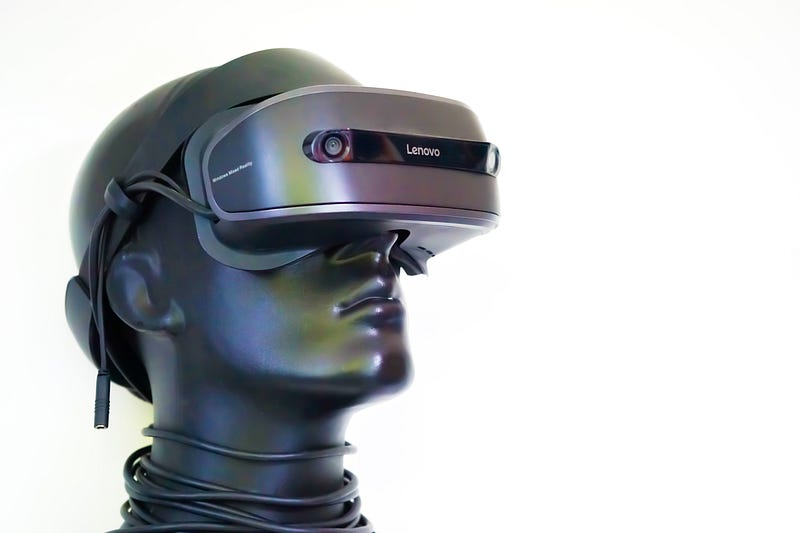
The metaverse’s moderation or policing is contentious, not only because it is technically difficult to monitor potentially billions of avatars conducting live chats in a virtual world, but also because these avatars generate massive amounts of data.
A Stanford University study found that spending just 20 minutes in virtual reality yielded more than two million unique records of body movements, a new stream of data for companies.
Alex Rice, co-founder of online security company HackerOne, believes that a lot of thought needs to go into the design of Metaverse before any firm would consider allowing its employees to access it.
“Imagine something like what happens next to the water cooler in an office,” he says. Think of it as happening in a fully supervised metaverse environment. This will definitely have life-changing consequences. People can be fired outright for saying something in a private, informal conversation with a colleague that is now subject to massive corporate surveillance.’
Tom Fiske, editor of the tech newsletter Immersive Wire, believes it’s too early to start thinking about working in the metaverse.
“There are still many difficulties in discussing the metaverse, and its definition is still tenuous and debatable,” he says. While this term itself is debated and unclear. It is difficult to say whether we will work in the Metaverse in the future.
What the metaverse actually is, no one can give a definitive answer. But despite this, there are strong predictions about its price increase.
Financial analyst firm McKinsey has suggested the market will be worth five trillion dollars by 2030, while another management consultancy firm, Gartner, has predicted that by 2026, a quarter of the world’s population will spend at least an hour a day in the Metaverse.
A Stanford University study found that spending just 20 minutes in virtual reality yielded more than 2 million unique recordings of body movements.
Matthew Ball is a chief analyst at research company Canalys. They don’t agree with that. He predicts that most of the ongoing business ventures in the Metaverse will close by 2025.
He thinks companies need to think about whether a presence in the metaverse is really necessary, or just using tech for tech’s sake.
“Not every business needs a VR headset to remotely greet co-worker avatars or view virtual models, and not every business will need a headset for meetings,” Ball says.
VR is powerful and awesome, but Zoom and Teams calls offer a hassle-free, easy-to-use alternative that will also be less of a burden on you.
Tiffany Rolfe is chief creative officer at digital branding firm RGA. He and some of his team have already worked in Metaverse.
The company created a virtual American football stadium inside the Fortnite game for phone company Verizon during COVID-19, and has also worked with Meta to create music worlds inside Horizon Worlds.
“People who would normally design things on a computer have to put on a headset and work with builders inside the world,” says Rolf. And with new ways of working come new ideas, such as how long employees should wear headsets. My team probably had a two-hour window in which they wore it.
The fact that people are already working in virtual worlds suggests that the future of the metaverse may be used as a workplace, but the jobs that exist there will be very different from those that exist today. We do in the real world.
And anyone waiting for headsets to escape the tedium of the daily commute may have to wait years before that becomes a reality.
You can submit your stories to Medpage — one of the ongoing Medium Publications. To join Medpage, click here.
Don’t forget to Upgrade the Medium Membership account by using my referral. Just click here. Also, do subscribe me via email, so that you will get notification of every newly published via email box.
Thank You for your time.
You will surely like my other content, like linked below