
Will The Future of Computing Involve Fungi?
We might well have a solution to all our problems right beneath our feet
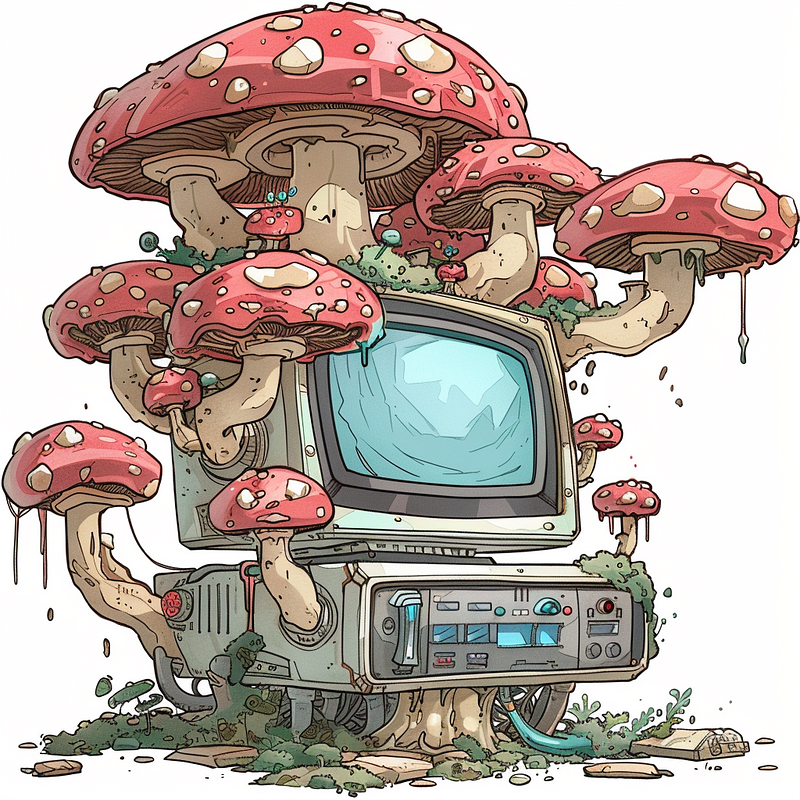
Ah, the humble mushroom. Apart from bacteria and archaea, fungi are the oldest living organisms we have on this crazy planet. Well, bacteria and archaea aren’t really ‘alive’ in the strictest sense of the word, so, yes, fungi are the oldest form I guess.
Mycelium > electronics
The Unconventional Computing Laboratory (kickass name lads) at the University of the West of England in Bristol has been at the forefront of researching alternative ways of making computers compute.
Andrew Adamatzky is the lab’s director and has been instrumental in leading the field of fungal computing and electronics. We know that mycelium reacts to electrical pulses in a similar way to brain neurons and Adamatzy et al posit that fungi could be used in artificial neural network-based computers.
Not only that but because of the way mycelium works compared to a computer, it might lead to a massive leapfrog in the technological capabilities of computers.
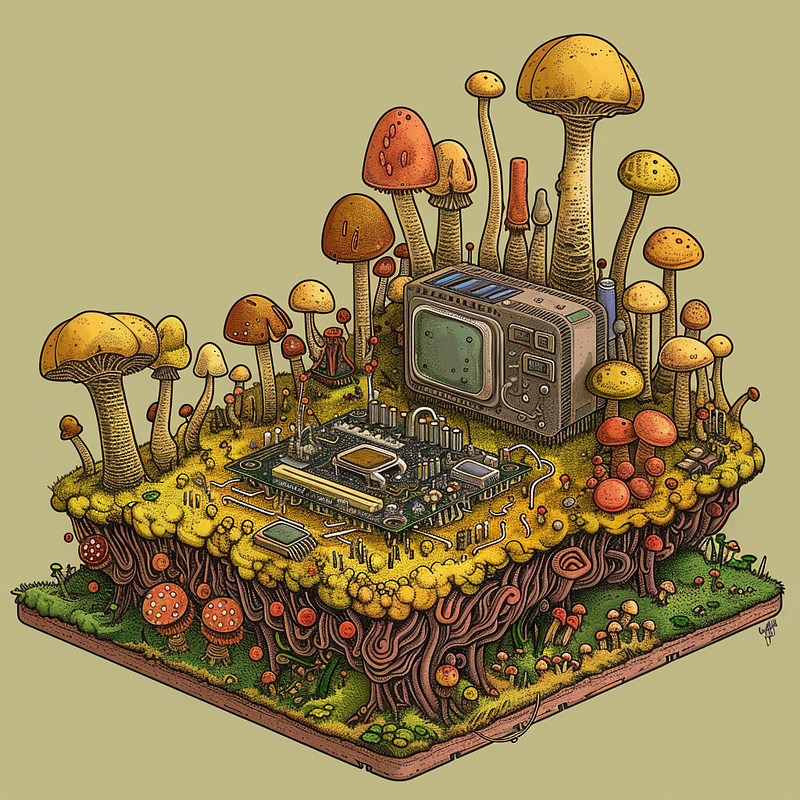
Binary
Computers work thanks to binary, which is a whole load of 1s and 0s. The simplest way I can explain this would be:
Imagine you have a black box, and this black box is programmed to understand two words: “on” and “off.” 0 = Off, 1 = On. If you were to get the box to turn on and off, you’d program 0, 1 into it so that it would turn on and turn off.
Mycelium is best understood as the roots of a mushroom, but rather than just one mushroom, there are millions and millions of these threads underground and all connected. Think of it like an internet of mushrooms and they also connect up to plants and trees.
Fungi can not only send messages along them but so too can the trees and the plants ‘wired’ into it. We know that when there are trees together in a forest if one is lacking a certain mineral or water, the other trees will relay this message and get more water/minerals sent to that tree. It’s quite astonishing.

Binary v organic
You can see then where this is going.
Rather than working in a binary 010101 system, if we were able to use mycelium to transfer signals it would work faster and more efficiently. However, the giant problem in the room is that because mycelium is organic matter it will unfortunately biodegrade over time so compared to wires and cables they win on that front.
However, it’s in the possibility that because mycelium could work as a type of neural network within computers that scientists are testing out ways to make them useful in computers.
The advantages are clear, they have the potential to work faster and the environmental benefits are clear as well. The biggest obstacle though is trying to figure out how to keep them living within computer hardware.
What the future could bring
Another area that’s been looked at is in wearables. It’s suggested that rather than what we have now, which is still pretty amazing in fairness, wearables take data and provide measurements.
A mycelium-based wearable would be able to read things like chemical processes from within the body and tell you to make adjustments. For instance, it might be able to tell you that you’re running low on magnesium, potassium, or a certain vitamin and then you’d eat more fruit, and vegetables or take a supplement.
Mycelium technology could also then be used in infrastructure in homes and public buildings where it would be able to read things like oxygen and ozone levels etc. and it would be able to make adjustments. Imagine that someday in the future your air conditioning may well be filtered through some kind of fungi and be done in a more healthy and environmentally friendly way.
Hi, I’m Paddy. Thanks for reading my article about the future of computing.
I’m a counselor and spirituality teacher.
If you’d like to contact me regarding a counseling, or spirituality session you can contact me here.
If you’d like to read my latest articles on Medium you can subscribe here. My different social media channels are here.


