
Will Starlink Disrupt Spectrum’s Internet Provider Monopoly?
Elon Musk seeks to provide internet globally by year’s end
Throughout college and well into my teaching career, I’ve spent several hundred dollars sitting in coffee shops, drinking a latte or a Frappuccino while I completed work using their Wi-Fi until closing.
Once I arrived home, I opened YouTube on my phone and played a video at the lowest resolution, 144p. I waited for several minutes as the video buffered. This became a daily occurrence when living in a rural area.
Millions still don’t have access to fast internet at home
As of 2019, a third of households nationwide do not have a reliable internet connection. The only way those families can access the internet is to leave their homes and go to a public library, school, or Starbucks.
A week before schools transitioned to virtual learning in 2020, I remember some of my students stared at their phones under their desks. When I caught them and asked them to turn it in, they refused.
For many students, the only internet access they had available was at school. As of September 2020, 3.7 million children still did not have access to an internet connection at home.
In August of 2020, teachers were expected to provide live (synchronous) classes to students via Zoom. I panicked. I still did not have access to the internet in my rural home. I immediately went on apartments.com and searched for a decent apartment that would have access to the internet.
Once school started, many students could not log in to Google Classroom or Zoom and attend class. Of the seventy or so students I see every other day, less than half log in to Zoom.
All the other students have never logged in, nor have they turned in a single assignment since school began. As a result, teachers, schools, and districts nationwide failed them.
Corporations control who gets access to the internet
In the United States, only two companies control a majority of the internet service available in the country. Those are Spectrum (also known as Comcast) and Charter (also known as Xfinity).
Both companies decided they wouldn’t compete against each other. Instead, they would each claim one area and be the only internet service provider available. By doing so, they could raise prices and provide data caps. Customers have no choice other than to agree to the terms and conditions.
In the U.S., 83.3 million people are controlled by an internet monopoly: either Charter or Spectrum. Since both corporations have no other competition, they have no incentive to innovate or expand their services to other areas, namely rural areas.
Spectrum and Charter see no benefit in laying out hundreds or thousands of feet of underground cable and spend tens of thousands of dollars to provide internet to a rural home, as the customer would only pay $50-$100 a month.
Meanwhile, their “competitors” provide poor services and fail to offer any sort of competition to Charter or Spectrum. ViaSat, for example, offers limited data plans — its most expensive plan offers 150GB for $200 per month. In a family of four or five people, where children are connected to Zoom meetings, that data plan will reach its limit very quickly.
This data plan also can’t compare to Spectrum, which offers unlimited internet for a quarter of the price of ViaSat. However, ViaSat and HughesNet are the only internet service providers available to rural areas.
Since ViaSat and HughesNet face no competition from Spectrum and Charter, they have no incentive to provide fast speeds for their consumers. The average speed of ViaSat clocks in at 11.7Mbps, or 1.4 Megabytes per second. At that speed, a YouTube video has to be played at the lowest resolution and would still buffer.

Google Fiber failed to disrupt the market
Roughly ten years ago, Google announced it would become an internet service provider. Google planned to disrupt Spectrum and Charter’s current control of the market by offering internet using fiber-cable. This new technology would allow for faster speeds. As of 2020, it is about five times faster than Spectrum internet.
Today, a majority of the U.S. population still does not have access to Google Fiber. According to Google, Fiber is only available in twelve cities in the country. Rural customers still don’t have a solution, nor do city people have access to more than one or two options.
Starlink will do what Google couldn’t
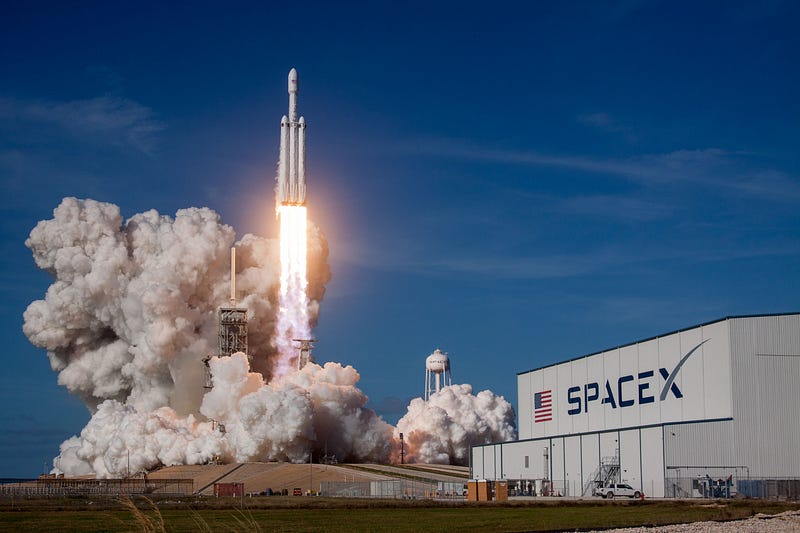
A few years ago, Elon Musk announced Starlink, a division of SpaceX. Musk intends on providing internet access to everyone around the world wirelessly through the use of satellites.
So far, SpaceX has launched over a thousand satellites into low-Earth orbit, though the FCC has approved SpaceX to launch over 12,000 satellites for Starlink usage.
As more satellites are launched into space, internet coverage will expand around the world. Whether you live in an urban, suburban, or rural area, you will have access to high-speed internet. Many YouTubers who have preordered the Starlink service have already received their installation package and are testing it out in remote areas.
As of a few days ago, Elon Musk made a few promises. People would have access to 300Mbps speed internet, and coverage will be available worldwide by the end of 2021.
This timeline beats Google Fiber, as Google is only providing coverage to a dozen cities in the U.S. For people who lack internet access or want something other than Spectrum or Charter, Starlink will be the answer.
What are the disadvantages?
First, Starlink is currently not available everywhere, though SpaceX is launching satellites frequently to achieve their 2021 goal.
If you live in the city, coverage might be slower, as satellites can only beam so much data back to Earth — Starlink is better suited for suburban or rural areas where population density is lower.
Finally, Starlink is currently out of some people’s price ranges. The satellite and router for your home cost $499, and the service costs $99 a month. This will deter low-income families from purchasing the device, but it is worth buying for areas without existing coverage.
If Elon Musk maintains his timeline and provides global coverage by the end of 2021, he can help in providing internet coverage to students who don’t have the means for it right now.
Starlink will be a lifesaver for many students and families who have no internet service options available in their area. However, so long as the price of the hardware and service remains at its current price, it might not solve the problem of providing global internet coverage.
While it will be available, as long as it is out of reach for low-income families, many will choose not to buy the product. If Elon Musk truly wants to provide global internet coverage and compete with Spectrum and Charter, prices for the satellite and the hardware must go down so more people can purchase it. If he does, he will achieve his mission of providing coverage globally.
If you live in a rural area and would like to preorder, you can visit their website.
Click here if you’d like unlimited access to more of my writing and everything else on Medium. Note this is an affiliate link, and I will receive a portion of your membership fees, which helps support my writing!


