Will It Rise?
My encounter with Levain bread.
It’s lucky that I am a great cook because I’ve been doing a lot of it lately.
I kind can rummage through my cookbooks and cupboards and make something tasty. I enjoy food; if I like something at a restaurant or that someone has brought to a potluck, I will ask about the ingredients and try it out at home.
That’s not to say I haven’t had disasters like the fried eggplant. It tasted so bitter, we agreed as a family to spit the first bite out without swallowing. I bought that lustrous aubergine eggplant at a farmer’s market. The recipe didn’t mention the need to soak it first. I will leave eggplant to the professionals.
The last excursion
The last restaurant my husband and I ate at, before the Stay-At-Home order began, was the Vina. It still serves the best egg rolls I’ve ever tasted. I’ve been going there for over 35 years. When I was pregnant, I remember my daughter giving me a double kick of appreciation after a meal. Two generations of satisfied customers in one sitting.
Around the corner from the Vina is a Half Price Books store. Besides a grocery store run, that was the last place we shopped. I bought this lovely book called Artisan Breads by Jan Hedh. What a lucky find: it has step-by-step instructions with photos on how to make sourdough or Levain starters.
The only drawback is that all the recipes give ingredients in grams or ml. I would have to buy a kitchen scale to follow these recipes. I did.
The Levain
The book says that bakers in France use raisins to make the starter. I was going to use my dried-out currants, but my husband encouraged me to follow the recipe exactly. It was a joint effort. He provided tech support for the kitchen scale by explaining the tare function that measures the weight of the container that the ingredients are in. I put the raisins, honey, sugar, and water into an air-tight container and shook the ingredients together and shook that mixture once a day for five days.
On day 4, I opened the container. All I could smell were wet raisins. I needed a second opinion and I asked my husband to take a sniff. He couldn’t detect the tang of fermentation either. We let it rest another 2 days. On day 6, we could smell raisins and fermentation.
The Mother
I followed the instructions to make the mother and on day 7 I made the chef. As a write this, I’m wondering about biblical idioms like “manna from heaven.” I bet people were hungry and leavened bread looked like a miracle. I’ll leave it at that.
The Chef
My first loaf was not successful because I put it in my breadmaker for the second rise and bake. Bread machines are better suited to quick-rise yeast. Bread made with Levain rises slower and not as high. It requires very little kneading and the dough’s texture is more like Gak — a gooey kids toy from the past.
I re-read the instructions to see what went wrong, but I did not lose hope. I called on my trusted baking ingredients from my other baking adventures — buttermilk and potato flour. Adding those ingredients produced a bread that looked just like the pictures in the book and it tasted even better, though it takes twice as long to toast.
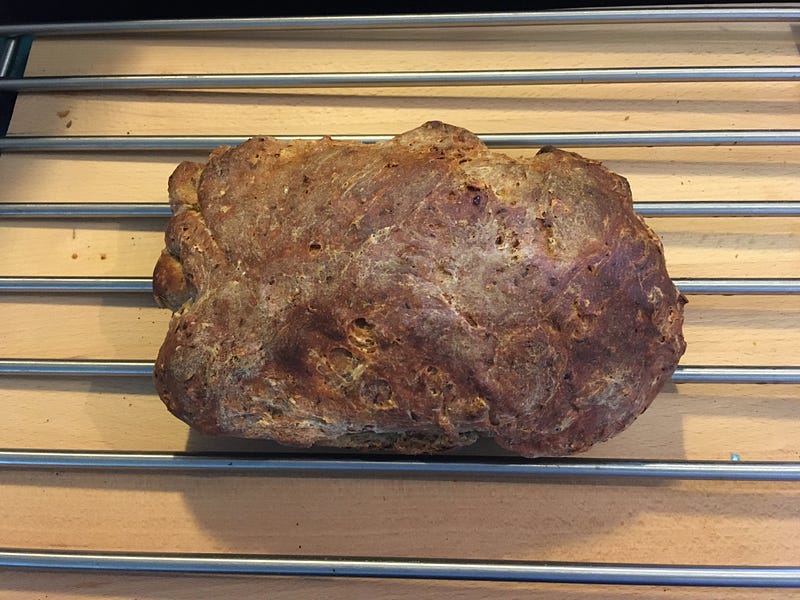
When I make my next batch I’m going to use gluten to see if that improves the rise. Bread making is a grand experiment when you have time on your hands. Every day has meaning and a ritual that needs to be performed to get the required result. It was an empowering experience. Something invisible, done diligently, with few ingredients can make something sublime.
Words I cherish
I didn’t expect to see the word mother associated with bread. I get teary-eyed thinking about it. It takes a mother to activate the process. The results come with how you work with the chef.
This baking encounter got me thinking about the chef hat. I think it looks like a bread’s first rise. My mother gave me this hat.
A chef really does start with the mother.