
Will Gmail’s New Autocomplete Feature Lead to the Downfall of Modern Civilization?
Or can we finally just enjoy our lives while our computers talk to each other on our behalf?
The new update to Gmail includes a new autocomplete feature. Much like the autocomplete on your phone, this autocomplete looks at what you’re typing and then makes a remarkably accurate guess as to what you’re trying to say.
Unlike the autocomplete on your phone, though, the Gmail autocomplete attempts to finish the sentence you’re working on, not just the word that you’re pecking out on your phone’s tiny onscreen keyboard.

The suggested conclusion to the sentence you’re typing out appears in grey type to the right of your cursor, and you just need to press Tab to skip your cursor to the end of the proposed sentence to enter it into your email and get on with typing out the next business cliché.
This feature is a more advanced and interactive version of Gmail’s existing “suggested reply” feature, where Gmail displays two or three possible replies at the bottom of a new emails (always with the exclamation points!).
Usually these suggested replies are pretty simple, like “Got it!” or “Thanks!” or “Sorry, I can’t make it.” Gmail (or more accurately, the giant silicon brain that makes it work) reads all of your incoming email — you knew this already, right? — and then figures out several likely replies for you, based on the incoming email’s contents.
These suggested replies are incredibly helpful if you’re just zipping through your inbox on your phone and want to say yes or no to a simple email request. It’s incredibly fast and convenient, and of course most email is really this simple kind of request — reply exchange, like: “Can you make a meeting tomorrow at 9:30?” “Sure, no problem!”
This “suggested reply” seemed incredibly helpful. a reasonable extension of the autocomplete feature in Google Search. It seems that Google is just making a reasonable guess at what you probably mean to say, before you’ve finished typing it.
Because Google’s hive mind in the cloud sees probably billions of searches and emails, and is carefully watching as we type every one, it’s pretty good at guessing what we want to type.
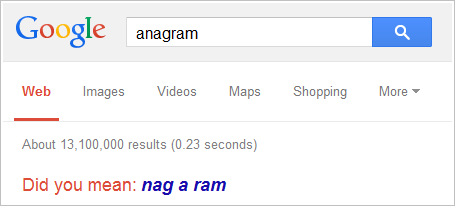
Now that this has gone from the benign “Did you mean?” notice at the top of your search results, to typing out what you want to search for in the first place before you can, to offering a few possible replies to your incoming emails, to finishing your sentences for you while you type out your emails, have we reached a tipping point?
In Google’s defense, it’s not like Gmail is the home of incredibly exciting creative writing. Email is largely the exchange of pleasantries and business clichés. That’s what made me a little uncomfortable at first: Google knew the mindless cliché that I wanted to type out before I did. Am I really that much of an drone that a computer can guess what I’m trying to say so readily and accurately?
Well, evidently, yes.
But then I noticed something a little more subtle and insidious: Google would suggest a way to end my sentence that wasn’t exactly what I was going to say, but was close enough. So, bang! I’d hit that handy Tab key and just go with Google’s suggestion, and move on to the next sentence.
This is is the same issue that plagues Google’s search autocomplete feature: when you are searching for something and Google’s guess is close enough that you don’t bother to type out exactly what you’re searching for, and you just go with the suggestion.
In this way, the autocomplete suggestions become little self-fulfilling prophecies of our collective intentions: Google knows what you meant to search for because here’s what everyone else is searching for — of course everyone else is searching for that! It’s what Google said you should search for.

In this way Google is doing our thinking for us, and subtly encouraging us to just go along with what everyone else is already thinking, or more accurately, what Google wants everyone else to think already.
I don’t think this is nefarious on Google’s part, it’s not some giant brainwashing conspiracy. It’s just a great example of how “artificial intelligence” is doing more and more work for us in subtle ways that nudge us all to say the same thing, or search for the same thing, as everyone else.
What happens when we get to a point where the computers can compose our emails better and faster than we can, using the same limited collection of worn-out phrases? Maybe it’s just a clear indication of how most of our communications are ritualistic formalism.
But Google is already suggesting replies to emails we receive, and now there’s a good chance that most of that email that just showed up in our inbox was in fact composed by Google. In this way, Google is just talking to itself, giving us a few options to chose from, and then doing most of the work for us to dress our simple, repetitive thoughts up into nice, polite language. Thanks, Google, for saving me the pain of conscious thought.
Or, I should say:
“Thanks, Google!”
Originally published at stratofax.wordpress.com on October 11, 2018.


