avatarVictoria Kurichenko

Free AI web copilot to create summaries, insights and extended knowledge, download it at here

3675

Abstract

ead more about my experiment by following the link below. Surprisingly, this article got 13,000+ views and over 80 comments from my readers.</p><div id="b157" class="link-block"> <a href="https://readmedium.com/i-published-a-chatgpt-article-on-my-website-heres-what-happened-ee2258fc8c4b"> <div> <div> <h2>I Published a ChatGPT Article On My Website — Here’s What Happened</h2> <div><h3>You risk getting penalized for doing this.</h3></div> <div><p>medium.com</p></div> </div> <div> <div style="background-image: url(https://miro.readmedium.com/v2/resize:fit:320/0*VFOTpmBDWpd_IAeV)"></div> </div> </div> </a> </div><p id="c46d">In a nutshell, the goal of my experiment was to verify whether AI-generated content has a chance to rank high in search results — something which many website owners want to achieve!</p><p id="f7a2">Google continuously talks about content quality and trustworthiness but can AI content tick all the boxes and be considered good enough for top positions?</p><p id="b89a">Spoiler alert, my experience, and experiment show that <b>Google prefers human content over AI content.</b></p><p id="992e">Here are a few GSC screenshots of how 2 articles published on my website (entirely AI-generated) and a client article (posted on a reputable website) performed over time.</p><figure id="b7a5"><img src="https://cdn-images-1.readmedium.com/v2/resize:fit:800/1*1TX00jeyENlFr2g-hGI1zw.png"><figcaption>AI-generated article 1.</figcaption></figure><figure id="5ef5"><img src="https://cdn-images-1.readmedium.com/v2/resize:fit:800/1*hq7rgrVFBz4Vfm6-NZNB4Q.png"><figcaption>AI-generated article 2.</figcaption></figure><figure id="c37e"><img src="https://cdn-images-1.readmedium.com/v2/resize:fit:800/1*biX1hEIqbPo8ShSOL3QwBw.png"><figcaption>AI-generated article 3.</figcaption></figure><p id="2093">Can you grasp a similar pattern?</p><p id="ba26">The performance of these articles is not improving. Impressions are not growing. Instead, they are falling.</p><p id="c442">These are a few instances only, and I’ve also heard success stories from my readers. However, my general attitude toward AI-generated content is <i>negative</i>.</p><p id="82f0">I also have a gut feeling that Google can detect AI content well and could easily remove it from SERP one day.</p><p id="7b13">Remember what I said earlier — <b>publishing AI-generated content on your website is entirely at your own risk</b>!</p><p id="5f63">However, it turned out this was not the most significant risk for SEOs and website owners.</p><p id="b976">On May 10th, Google announced generative AI integration into SERP, which made me seriously worry about the future of SEO.</p><p id="6e63">This is their official announcement on Twitter.</p> <figure id="5bb5"> <div> <div> <img class="ratio" src="http://placehold.it/16x9"> <iframe class="" src="https://cdn.embedly.com/widgets/media.html?type=text%2Fhtml&amp;key=a19fcc184b9711e1b4764040d3dc5c07&amp;schema=twitter&amp;url=https%3A//twitter.com/searchliaison/status/1656364458883813376&amp;image=https%3A//i.embed.ly/1/image%3Furl%3Dhttps%253A%252F%252Fabs.twimg.com%252Ferrors%252Flogo46x38.png%26key%3Da19fcc184b9711e1b4764040d3dc5c07" allowfullscreen="" frameborder="0" height="281" width="500"> </div> </div> </figure></iframe></div></div></figure><p id="6b14">Google said that the top of the search engine result page would be occupied by AI-generated snippets like

Options

this one:</p><figure id="8fb8"><img src="https://cdn-images-1.readmedium.com/v2/resize:fit:800/1*6J7BdrvHsumP0MxJlMIO4A.png"><figcaption><a href="https://blog.google/products/search/generative-ai-search/">Image source</a></figcaption></figure><p id="6808">I hope you get it now why SEO specialists have started to worry.</p><p id="c564">This giant AI-generated snippet is designed to respond to users’ queries preventing them from navigating to websites.</p><p id="e3d2">Instant answers, featured snippets, and zero-click searches have already reduced CTR (click-through rate) by roughly 20% for top-ranking websites.</p><figure id="a9eb"><img src="https://cdn-images-1.readmedium.com/v2/resize:fit:800/0*0vXATUgxXXzxiQhx.jpg"><figcaption>Image source: featured snippets study by <a href="https://ahrefs.com/blog/featured-snippets-study/">Ahrefs</a>.</figcaption></figure><p id="96a1">Can you imagine what will happen after Google releases its AI-generated snippet?</p><p id="3590">I have a few thoughts about it:</p><ol><li>Drop in the overall CTR for all top 10 ranking web pages.</li><li>More fierce competition for the top 3 positions.</li><li>Google might create new ad opportunities to incentivize people to pay for top positions in SERP.</li><li>Bard will generate answers to informational queries in SERP. So users won’t need to open websites for more information.</li><li>Even top-performing websites will see a drop in organic search traffic.</li><li>Popular SEO strategies that we actively utilize nowadays will no longer bring the desired results.</li><li>Instead of focusing on keywords, we’ll have to learn how to optimize for snippets.</li></ol><p id="be11">These are just a few thoughts. And I might change my opinion in time.</p><p id="5d2e">We don’t know how the new SERP will work. That’s why making any predictions is challenging.</p><h1 id="c497">Why I am still optimistic</h1><p id="6573">Despite the rapid technological changes and zero confidence in what the future of SEO will look like, I remain optimistic.</p><p id="a3cc">As long as search engines exist, the SEO industry will live.</p><p id="2ef5">Businesses will continue investing time and money to figure out how to reach their target audience in the search results. That’s why SEO, as a profession, won’t disappear.</p><p id="7af0">However, SEO will continue evolving and adapting to the new reality. It will drive many “average” SEO experts out of the market and force the most dedicated ones to gain new skills.</p><p id="cb47">If you also think your job might be affected by AI, now it’s time to think about how to secure your future.</p><h2 id="4a8e">Grab my guide to learn how I create blog posts that hit the Google front page. You can easily replicate my 3-step process even if you are just starting.</h2><p id="bf14"><i>You can get full access to every story on Medium for just 5/month by signing up through this <a href="https://victoria-kurichenko.medium.com/membership">link</a>.</i></p><div id="1e84" class="link-block"> <a href="https://victoria-kurichenko.medium.com/membership"> <div> <div> <h2>Join Medium with my referral link - Victoria Kurichenko</h2> <div><h3>Get full access to every story on Medium for just 5/month Your membership fee will directly support me and other…</h3></div> <div><p>victoria-kurichenko.medium.com</p></div> </div> <div> <div style="background-image: url(https://miro.readmedium.com/v2/resize:fit:320/0*y3REw3Xcboz4E29I)"></div> </div> </div> </a> </div></article></body>

Will Generative AI Kill SEO? Here’s What an SEO Expert Thinks

You should be worried if you run a website.
Image source: Unsplash

I’ve been running a niche website for two years, and it has recently started earning me four figures a month.

I realized that a well-performing website that consistently attracts traffic could earn decent money when I sleep.

However, growing a website from scratch is not easy, no matter what others say.

Every traffic acquisition channel requires much work before you start seeing any results.

In my case, I grow my website’s traffic through SEO.

By the time I started my own website, I’d already worked for 5+ years as an SEO specialist in SaaS and B2B companies.

I thought having enough expertise would help me grow and monetize my website to make passive income.

I am not the only one with such an ambitious goal. I know many content creators who launch niche websites hoping to sell their services and earn affiliate commissions.

However, the drastic technological changes make me wonder whether my website growth strategy will remain sustainable in the next 5 years.

If you are a website owner or content creator, you are affected too!

Why should we bother with generative AI?

Generative AI is a type of artificial intelligence that can create new content, such as text, images, or music.

AI chatbots like ChatGPT or Bard are trained on a massive dataset of existing content and then use this data to generate new content.

I know that content created by ChatGPT and Bard often sucks due to some limitations, but it’s only a matter of time before AI will be smart enough to provide accurate answers fast.

What’s next?

Here comes another issue — a massive spread of AI-generated content all around the web!

If it takes me 1–2 days to write, optimize and publish an article on my website, in the meantime, AI can generate hundreds of new content pieces within this time frame.

It’s ridiculous.

One human-written article versus hundreds of AI-generated content pieces.

I’ve also seen some clients slowly shifting towards using ChatGPT for content writing. They say, “Why hire content writers if ChatGPT can do the same thing but faster and cheaper?

Despite being an SEO expert, I could not come up with a proper response to this statement.

Technically, Google is not against using AI. However, no one gives any guarantees! That’s important to remember! You post AI content on your website at your own risk.

After posting many AI-generated articles, some of my clients saw an immediate impression boost in the GSC, but most articles flopped in a few months.

As a risk-aversive person, my strategy is to wait and analyze data before making any conclusions.

I used my website as a playground to test AI-generated content and its impact on SEO.

You can read more about my experiment by following the link below. Surprisingly, this article got 13,000+ views and over 80 comments from my readers.

In a nutshell, the goal of my experiment was to verify whether AI-generated content has a chance to rank high in search results — something which many website owners want to achieve!

Google continuously talks about content quality and trustworthiness but can AI content tick all the boxes and be considered good enough for top positions?

Spoiler alert, my experience, and experiment show that Google prefers human content over AI content.

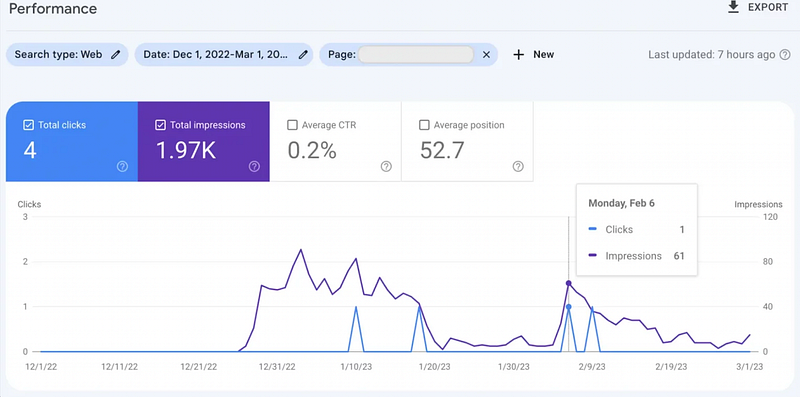
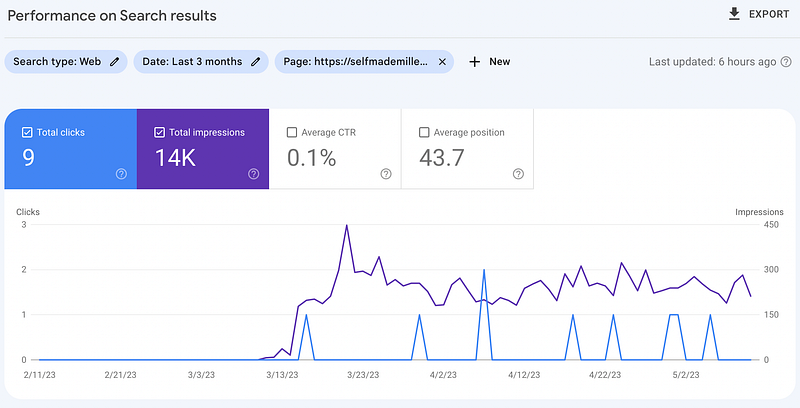
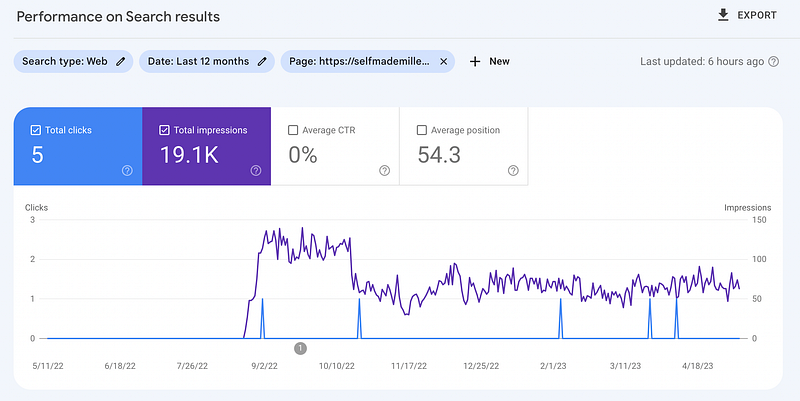
Here are a few GSC screenshots of how 2 articles published on my website (entirely AI-generated) and a client article (posted on a reputable website) performed over time.
AI-generated article 1.
AI-generated article 2.
AI-generated article 3.

Can you grasp a similar pattern?

The performance of these articles is not improving. Impressions are not growing. Instead, they are falling.

These are a few instances only, and I’ve also heard success stories from my readers. However, my general attitude toward AI-generated content is negative.

I also have a gut feeling that Google can detect AI content well and could easily remove it from SERP one day.

Remember what I said earlier — publishing AI-generated content on your website is entirely at your own risk!

However, it turned out this was not the most significant risk for SEOs and website owners.

On May 10th, Google announced generative AI integration into SERP, which made me seriously worry about the future of SEO.

This is their official announcement on Twitter.

Google said that the top of the search engine result page would be occupied by AI-generated snippets like this one:
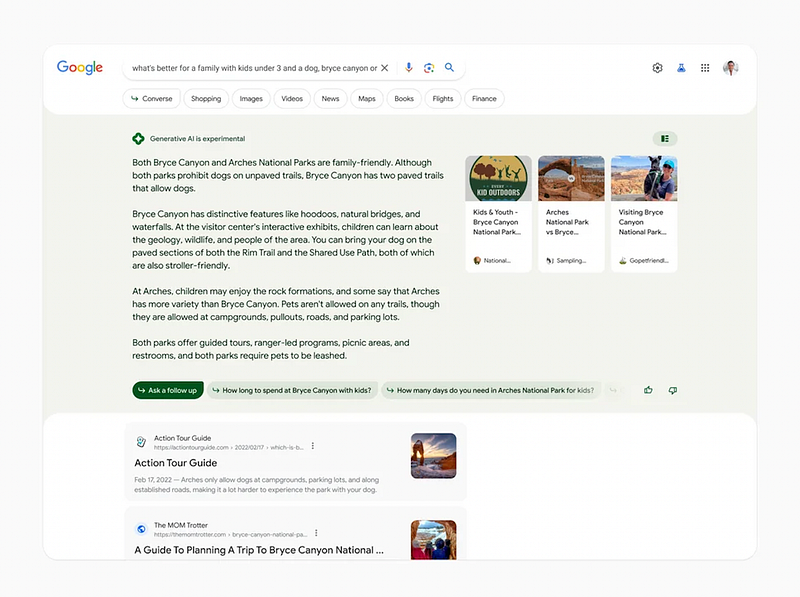
Image source

I hope you get it now why SEO specialists have started to worry.

This giant AI-generated snippet is designed to respond to users’ queries preventing them from navigating to websites.

Instant answers, featured snippets, and zero-click searches have already reduced CTR (click-through rate) by roughly 20% for top-ranking websites.
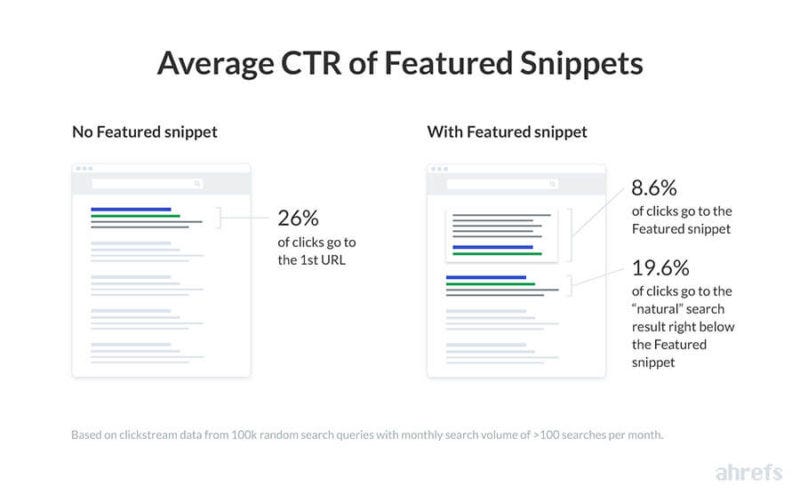
Image source: featured snippets study by Ahrefs.

Can you imagine what will happen after Google releases its AI-generated snippet?

I have a few thoughts about it:

  1. Drop in the overall CTR for all top 10 ranking web pages.
  2. More fierce competition for the top 3 positions.
  3. Google might create new ad opportunities to incentivize people to pay for top positions in SERP.
  4. Bard will generate answers to informational queries in SERP. So users won’t need to open websites for more information.
  5. Even top-performing websites will see a drop in organic search traffic.
  6. Popular SEO strategies that we actively utilize nowadays will no longer bring the desired results.
  7. Instead of focusing on keywords, we’ll have to learn how to optimize for snippets.

These are just a few thoughts. And I might change my opinion in time.

We don’t know how the new SERP will work. That’s why making any predictions is challenging.

Why I am still optimistic

Despite the rapid technological changes and zero confidence in what the future of SEO will look like, I remain optimistic.

As long as search engines exist, the SEO industry will live.

Businesses will continue investing time and money to figure out how to reach their target audience in the search results. That’s why SEO, as a profession, won’t disappear.

However, SEO will continue evolving and adapting to the new reality. It will drive many “average” SEO experts out of the market and force the most dedicated ones to gain new skills.

If you also think your job might be affected by AI, now it’s time to think about how to secure your future.

Grab my guide to learn how I create blog posts that hit the Google front page. You can easily replicate my 3-step process even if you are just starting.

You can get full access to every story on Medium for just $5/month by signing up through this link.

SEO
AI
Business
Entrepreneurship
ChatGPT
Recommended from ReadMedium