
The ‘Undecidability’ of Life
Freedom and despair in Will Eaves’ ‘Murmur’
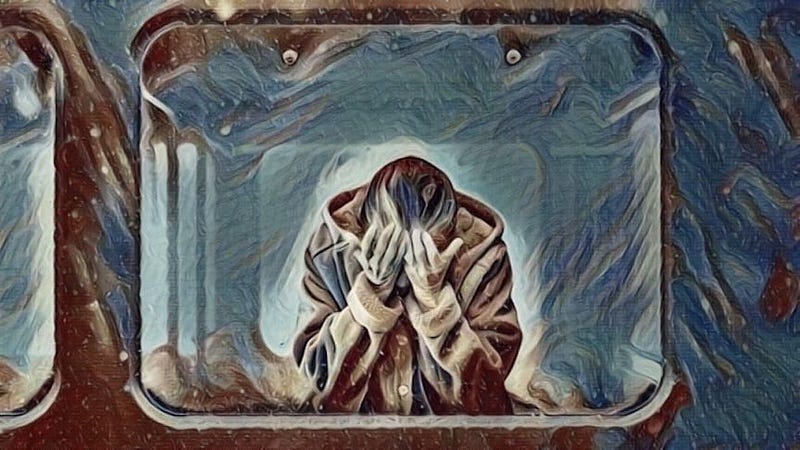
“Seven weeks after my arrest,” the narrator of Will Eaves’ novel Murmur says, “I was found guilty of gross indecency with a male person and sentenced to receive a course of organotherapy — hormone injections — to be delivered at the Royal Infirmary.” The man is started on a synthetic estrogen, Stilboestrol, which makes him less muscular, more “flabby,” and with “pouch-like” breasts that he believes look odd, if only “because one does not expect a man to have breasts.”
Eaves, an English novelist, is telling the true story of Alan Turing, a mathematician, codebreaker, and early computer scientist in England during the Second World War. After arresting Turing in 1952 for having sex with another man, the government chemically castrated him, and he died by suicide two years later, apparently by eating an apple laced with cyanide. The fictional narrator is named Alec Pryor, but his tale is essentially Turing’s reimagined in the first person. The novel was released in the UK in 2018 and in the US in 2019. It deals not primarily with the physical punishment but with questions of human desire and agency.
On Free Will
It’s a philosophically driven novel. The title, Murmur, refers to the man’s deluge of thoughts during his slow process of chemical castration. The hormones immediately start up an internal narrator,
“a sort of rhythmic description of my state of mind, like someone speaking quickly and urgently on the other side of a door.…Anyway, I’ve never had this experience before. This morning I could hear the inner murmuring accompanying trivial actions: ‘I’m up early, it’s dark outside, the path I laid haphazardly with my own hands is now a frosted curve.’”
During treatment, he could retreat into his mind and “still be me,” but after treatment ended, “I seemed to disappear from the inside. I felt as if I’d been replaced.” There might be a scientific reason. “I had my body changed against my will,” he reflects, “and that has altered what I took to be my mind.”
His sexual libido is interrupted, and other drives fill the vacuum. This perplexes him. When we don’t have desire, exactly what is the other desire that remains?
Free will? He doesn’t believe in it. All right, so we have an illusion of free will. Presumably, even the nurse who inflicts this “most extraordinary thing” upon him, making him “a sexless person” to satisfy the law “because she has been told that it is her job,” manages to avoid feeling moral responsibility for this specific action while still believing that she is generally a freely choosing person. And that illusion — where does it come from?
There’s a political dimension of the question. People sense “how frail they themselves would be in the face of institutional opposition and stigmatization,” and out of this “intuitive shame,” they oppress others. Those who work in large organizations are afraid of truth-tellers, as activists are at risk for being “isolated” and “dismissed.” So, most people lie to themselves and don’t stand up for what’s right. As he phrases it: “We agree not to look. It is a simple but profound contract of the collective subconscious with the truth.”
Upon the more private version of the question of what we know and feel and why we choose to act, he has no final answer. Humans are enigmas, to ourselves and certainly to each other. Our knowledge, experience, and identity cannot grasp itself. We are conscious insofar as we have this “Godelian element of wonder…something we know we have, but cannot enclose.” Codebreaking, like “a detailed work of art,” is “painstakingly achieved, and yet always a surprise.” Relationships are like that, too. We don’t even know our own thoughts and feelings, and what “makes us who we are” is how we respect our “not knowing” others. Everything we perceive defines us, and yet we cannot be reduced to what we feel. This is “shadow-magician” work, “prophecy”: “it’s you, and how it is to have a life, which is to leave it wondering.”
The narrator had accepted that his passionate feelings for a male friend would never be reciprocated, but he had allowed himself to hope they might live together in a way that was “outrageously Platonic.” He now feels “haunted by his presence,” as the friend “is as near to me as I am near to the person I used to be, and both persons are irretrievable.” It is hard for him to let go of this. How hard it is, indeed, for us to let go of our memories of the way things were and our hopes for what we wanted them to become. The character recalls that, in his anxiety during the Second World War, he bought silver bars, buried them, and never found them again; today, he still feels loss, rather than accept that the bars are simply gone and may as well have never existed. He likens this to human anxiety over mortality: We resist death because we are attached to what we are now.
One way or another — accidentally or intentionally, with free will or not — events fall into place and form our lives. He visualizes it as “tessellation — where the contours of one form fit perfectly the contours of another.” Escher’s “aesthetics of undecidability” show how everything fits together, but it’s hard to see exactly how and along what lines. If separate shapes fit together perfectly, isn’t it more correct to think of the artwork as an indivisible whole? And are people, too, like those identical, repeating shapes in Escher’s drawings? Isn’t there something in each of us that is unique? Then how do we fit together?
Puzzling Out the Code
Fictional narrators, like real people, are unique. Murmur has first-person narration by a man who claims to have been mentally altered by chemical castration. He doesn’t know how much of his new perspective is the physical effect of castration and how much is the political effect of humiliation and state control. He don’t know this because — to apply the character’s Escher artwork metaphor — none of us can see where one shape ends and the next begins. The ink lines join as they divide. They look like separate shapes, but they are part of a pattern. For the real Alan Turing, there was no castration that wasn’t an unjust punishment, no castration that didn’t derive its meaning from anti-gay laws following on the heels of the Second World War. Neither can the fictional character in Murmur unwrap the political context from his body. He can only tell us what his castration means to him; he can implicitly reveal why he killed himself.
Murmur is also a commentary on the overload of modern life. The narrator worries presciently about the “thinking machines” of the future, robots that “will be made to remember everything” and will lack a human grasp of the role of forgetting. He fears that his own introverted human mental murmur may have gotten “stuck in a loop,” having a complete set of facts but remaining “unable to sift any of it.”
The novel discusses body dissatisfaction and the effects of hormones. In doing so, it opens questions about our attachment to our assumptions and interpretations of our own bodies. I’m transgender, and I don’t read this as a transgender narrative at all. I see it as another perspective that is also important and that illuminates a different human experience. Without using the words “transgender” or the back-formation “cisgender” (the words did not exist in Turing’s generation), the story allows us to fit those modern concepts together in an Escherian sketch, so we see how those words can define each other in negative and positive space and join to form a greater whole, describing the tension between different parts of human experience.
Eaves entirely avoids the “evil eunuch” trope. In Murmur, our moral scrutiny is directed not at the innocent man but at the state that victimizes him. The state destroys him, politically and existentially, by depriving him of his freedom and introducing an unresolvable complaint at the root of his desires, yet he is never morally corrupted.
He dies trying to break the code.
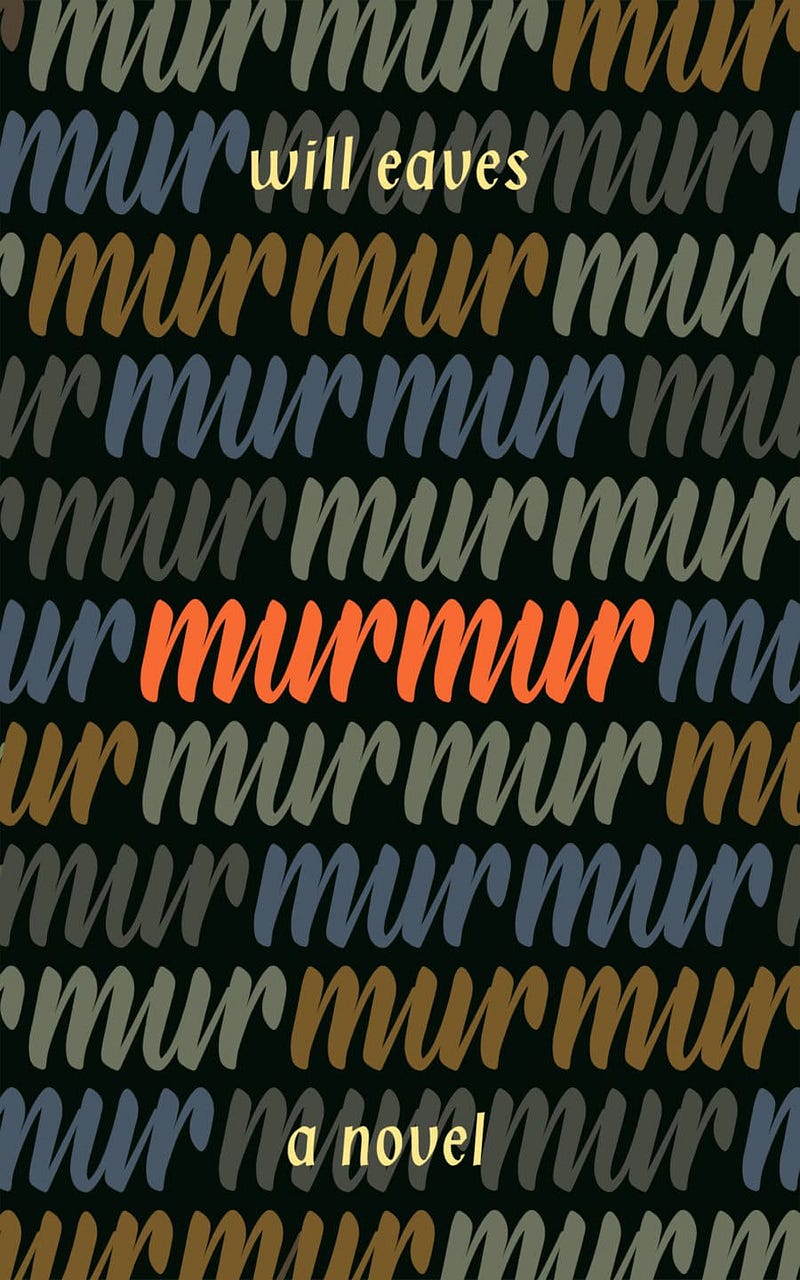
This essay was originally published April 3, 2019 in Tiny Flames Press, which is now offline.


