avatarMark Ellis

Free AI web copilot to create summaries, insights and extended knowledge, download it at here

3955

Abstract

ident of Apple Music and Beats, the “lyrics experience” remains one of the most popular features of the service.</p><p id="ad64">“We already know our users all over the world love to follow along to their favourite songs,” Schusser explained, “so we wanted to evolve this offering even further to enable even more engagement around music through singing. It’s really a lot of fun, our customers are going to love it.”</p><p id="08da">Apple Music Sing is currently available in the beta version of iOS 16.2, but Apple tells us the full release will take place later this month — presumably in time for some festive singalongs.</p><h2 id="24e4">How does Apple Music Sing work?</h2><p id="049e">When I first heard about Apple Music Sing, I assumed that Apple had simply gained access to the individual tracks of each compatible song, thus effectively giving the user access to the vocal slider on the mixing console.</p><p id="1750">Not so. Apple Music Sing appears to be entirely software driven.</p><p id="0906">Speaking to <a href="https://mashable.com/article/apple-music-sing-karaoke">Mashable</a>, an Apple spokesperson gave an insight into what’s happening behind the scenes.</p><p id="a737">“We built an on-device machine learning algorithm that can process music in real-time, finding the vocal parts and neatly isolating them from the rest of the song.”</p><p id="bde4">This is, for want of a better phrase, absolutely nuts. It’s like the audio equivalent of Google’s brilliant Magic Eraser feature for photos. The ability to programmatically separate vocals from instrumentation and then allow volume adjustment or muting of the former is a testament to the wealth of talent at Apple. I can’t even begin to guess how this works, so I won’t bother, but I am mightily impressed that it’s even possible.</p><div id="e2ba" class="link-block"> <a href="https://readmedium.com/what-apple-music-lossless-spatial-audio-and-dolby-atmos-really-sound-like-e9a4279575e"> <div> <div> <h2>What Apple Music Lossless, Spatial Audio and Dolby Atmos REALLY sound like</h2> <div><h3>And a little surprise for AirPods Max owners</h3></div> <div><p>medium.com</p></div> </div> <div> <div style="background-image: url(https://miro.readmedium.com/v2/resize:fit:320/1*2WPyAV7qXMr72VAXgMhCbA.jpeg)"></div> </div> </div> </a> </div><h2 id="7392">The problem with Apple Music Sing</h2><p id="5a18">The only reason I know about Apple Music Sing is because Doc Ayomide (a member of my Discord server) pointed me in the direction of a tweet from Sam Kohl of iupdate fame. The tweet provided a glimpse of Apple Music Sing in action and, at the time of writing, has received over 8,500 likes and nearly 1,200 retweets.</p> <figure id="19e2"> <div> <div> <img class="ratio" src="http://placehold.it/16x9"> <iframe class="" src="https://cdn.embedly.com/widgets/media.html?type=text%2Fhtml&amp;key=a19fcc184b9711e1b4764040d3dc5c07&amp;schema=twitter&amp;url=https%3A//twitter.com/iupdate/status/1600575084380438542&amp;image=https%3A//i.embed.ly/1/image%3Furl%3Dhttps%253A%252F%252Fabs.twimg.com%252Ferrors%252Flogo46x38.png%26key%3Da19fcc184b9711e1b4764040d3dc5c07" allowfullscreen="" frameborder="0" height="281" width="500"> </div> </div> </figure></iframe></div></div></figure><p id="148c">Beyond this gradual social proliferation, Apple has published a — yeah, you guessed it — <a href="https://www.apple.com/uk/newsroom/2022/12/apple-introduces-apple-music-sing/">press release about Apple Music Sing</a> (why do they have to give <i>every</i> new feature a name?).</p><p id="a046">They sound very excited about it, at least. Indeed, they even call it an “exciting new feature”. However, beyond a couple

Options

of images of Apple Sing in action and a few bullet-pointed feature highlights, that’s all we’re getting at the moment.</p><p id="f727">I appreciate we’re not going to see Apple Music Sing until later this month, and maybe we’ll be treated to a far more concentrated ad campaign once it’s available for the masses, but I can’t help but worry that this might be another case of Apple allowing its hard work go to waste.</p><h2 id="0b33">This reminds me of something…</h2><p id="5e6d">Earlier this year, Apple added one of the most important and technically impressive features to its video editing software, Final Cut Pro. Unfortunately, I can guarantee you’ve never heard of it — even if you use Final Cut Pro. I can say this confidently, because I’ve spoken to countless Final Cut Pro users who didn’t know anything about Voice Isolation — but who realised, immediately, that they desperately needed it.</p><div id="5b54" class="link-block"> <a href="https://readmedium.com/this-new-final-cut-pro-feature-is-game-changing-a8ee37a19511"> <div> <div> <h2>This New Final Cut Pro Feature Is Game-Changing</h2> <div><h3>And it has fixed two massive issues for me</h3></div> <div><p>medium.com</p></div> </div> <div> <div style="background-image: url(https://miro.readmedium.com/v2/resize:fit:320/1*9aNdKU9ehDPnszXNUlxp2w.png)"></div> </div> </div> </a> </div><p id="f8a3">For the uninitiated, Voice Isolation is the combination of a check box and slider, both of which appear when you select an audio track in Final Cut Pro. Pop a tick in that box, and some super smart machine learning all but removes unwanted background noise from the track in question. The slider enables you to adjust the amount of voice isolation being applied, depending on how bad the background noise is.</p><p id="271a">To put this into context, before Voice Isolation made an unexpected entrance, I was ready to spend a considerable amount of money on soundproofing and sound deadening my studio. Passing traffic and room noise had presented a constant challenge since moving in — I’d had enough.</p><p id="5338">However, when Voice Isolation arrived, it solved both issues. By simply ticking that box (I don’t even adjust the slider), the road noise disappeared, and the room suddenly sounded as though it had been acoustically treated. Most impressively of all, there were no weird side effects on the vocal track — it sounded just as good as before.</p><p id="a062">Voice Isolation and Apple Music Sing are two examples of Apple’s software engineers using machine learning to achieve the seemingly impossible. I’d guess that the two features are probably linked in some way, and likely share some of the same isolation techniques, but whatever it is that’s happening behind the scenes, it is mightily impressive.</p><p id="b94d">I just hope Apple gives Apple Music Sing its own ad campaign because it deserves it. We’d never have got that for Voice Isolation because it’s such a niche, professional-focused feature, but if people really are using Apple Music for karaoke, they’re going to love that new mic icon.</p><h2 id="2a2f">Before you go</h2><p id="3acf"><a href="https://markellisreviews.ck.page/newsletter"><b><i>Join my behind-the-scenes mailing list</i></b></a></p><p id="1667"><i>If you enjoy my writing, it’s only a snippet of what’s on Medium. I’m a paying member myself and highly recommend joining. <a href="https://markellisreviews.medium.com/membership"><b>Click here to join</b></a> (a portion of your membership fee will be sent my way and therefore directly support my work!).</i></p><p id="52ac"><i>Originally published at <a href="https://markellisreviews.com/apple-music-sing-deserves-its-own-ad-campaign/">https://markellisreviews.com</a> on December 8, 2022.</i></p></article></body>

Will Apple Sing LOUD About This Amazing New Feature?

This all feels rather familiar
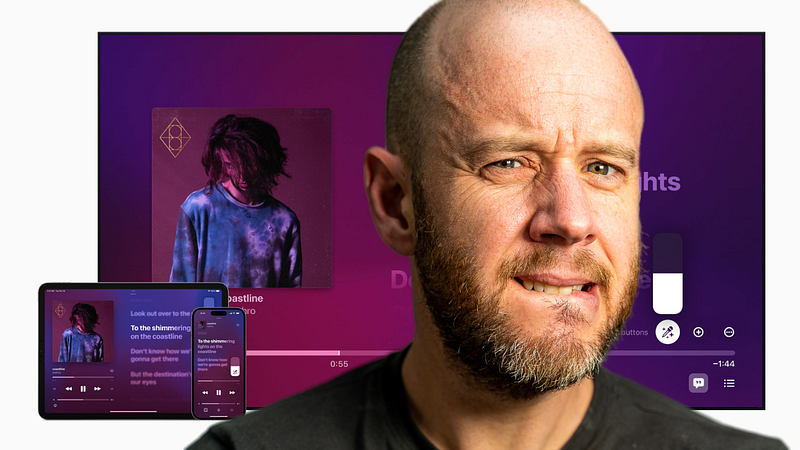
Image courtesy of author and Apple

Did you know you can choose a different eye colour for the left and right eye of your Memoji? No, me neither. But the fact you can reveals the attention to detail Apple lavishes on its software.

It’s why, every year at WWDC, we’re treated to a massive range of new features for iOS, macOS, and the growing list of spin-off operating systems Apple maintains and updates each year.

There’s just one problem — most of those new features disappear without a trace. Sometimes, this happens in the literal sense; they never materialise, but even when they do, the initial WWDC hype usually gives way to bland press releases, millisecond appearances in ads, and, presumably, the hope that word of mouth will carry them through.

It’s impossible for every new feature to reach ‘your mum knows about it’ status, but I think there are far too many that pass by unnoticed, simply because Apple doesn’t give them enough time beyond WWDC.

This week, they’ve announced an incredible new Apple Music feature which could suffer the same fate.

What is Apple Music Sing?

Apple describes Apple Music Sing as expanding its “world-class lyrics experience with a new feature for fans to easily sing along to tens of millions of songs”.

The result is a new microphone icon that shows up alongside the existing lyrics display in Apple Music on the iPhone, iPad, and Apple TV 4K. Tap the icon, and you can adjust the volume of nothing more than the vocal track of the song that’s currently playing. This effectively isolates the vocals and enables the user to change the volume of the vocal track, or remove it entirely, leaving just the instrumentation.

Apple hasn’t stopped there. The lyrics display has also been significantly improved with what Apple calls “real-time lyrics” that are synced to the music, beat-by-beat. Individual syllables are also now animated as the music plays — just like karaoke systems. They’ve even figured out a way to separate the main vocals from backing vocals, which should make the ability to sing along to songs far easier.

Apple is clearly aiming squarely at the karaoke crowd with these lyrics improvements and the addition of Apple Music Sing. As noted by Oliver Schusser, Apple’s vice president of Apple Music and Beats, the “lyrics experience” remains one of the most popular features of the service.

“We already know our users all over the world love to follow along to their favourite songs,” Schusser explained, “so we wanted to evolve this offering even further to enable even more engagement around music through singing. It’s really a lot of fun, our customers are going to love it.”

Apple Music Sing is currently available in the beta version of iOS 16.2, but Apple tells us the full release will take place later this month — presumably in time for some festive singalongs.

How does Apple Music Sing work?

When I first heard about Apple Music Sing, I assumed that Apple had simply gained access to the individual tracks of each compatible song, thus effectively giving the user access to the vocal slider on the mixing console.

Not so. Apple Music Sing appears to be entirely software driven.

Speaking to Mashable, an Apple spokesperson gave an insight into what’s happening behind the scenes.

“We built an on-device machine learning algorithm that can process music in real-time, finding the vocal parts and neatly isolating them from the rest of the song.”

This is, for want of a better phrase, absolutely nuts. It’s like the audio equivalent of Google’s brilliant Magic Eraser feature for photos. The ability to programmatically separate vocals from instrumentation and then allow volume adjustment or muting of the former is a testament to the wealth of talent at Apple. I can’t even begin to guess how this works, so I won’t bother, but I am mightily impressed that it’s even possible.

The problem with Apple Music Sing

The only reason I know about Apple Music Sing is because Doc Ayomide (a member of my Discord server) pointed me in the direction of a tweet from Sam Kohl of iupdate fame. The tweet provided a glimpse of Apple Music Sing in action and, at the time of writing, has received over 8,500 likes and nearly 1,200 retweets.

Beyond this gradual social proliferation, Apple has published a — yeah, you guessed it — press release about Apple Music Sing (why do they have to give every new feature a name?).

They sound very excited about it, at least. Indeed, they even call it an “exciting new feature”. However, beyond a couple of images of Apple Sing in action and a few bullet-pointed feature highlights, that’s all we’re getting at the moment.

I appreciate we’re not going to see Apple Music Sing until later this month, and maybe we’ll be treated to a far more concentrated ad campaign once it’s available for the masses, but I can’t help but worry that this might be another case of Apple allowing its hard work go to waste.

This reminds me of something…

Earlier this year, Apple added one of the most important and technically impressive features to its video editing software, Final Cut Pro. Unfortunately, I can guarantee you’ve never heard of it — even if you use Final Cut Pro. I can say this confidently, because I’ve spoken to countless Final Cut Pro users who didn’t know anything about Voice Isolation — but who realised, immediately, that they desperately needed it.

For the uninitiated, Voice Isolation is the combination of a check box and slider, both of which appear when you select an audio track in Final Cut Pro. Pop a tick in that box, and some super smart machine learning all but removes unwanted background noise from the track in question. The slider enables you to adjust the amount of voice isolation being applied, depending on how bad the background noise is.

To put this into context, before Voice Isolation made an unexpected entrance, I was ready to spend a considerable amount of money on soundproofing and sound deadening my studio. Passing traffic and room noise had presented a constant challenge since moving in — I’d had enough.

However, when Voice Isolation arrived, it solved both issues. By simply ticking that box (I don’t even adjust the slider), the road noise disappeared, and the room suddenly sounded as though it had been acoustically treated. Most impressively of all, there were no weird side effects on the vocal track — it sounded just as good as before.

Voice Isolation and Apple Music Sing are two examples of Apple’s software engineers using machine learning to achieve the seemingly impossible. I’d guess that the two features are probably linked in some way, and likely share some of the same isolation techniques, but whatever it is that’s happening behind the scenes, it is mightily impressive.

I just hope Apple gives Apple Music Sing its own ad campaign because it deserves it. We’d never have got that for Voice Isolation because it’s such a niche, professional-focused feature, but if people really are using Apple Music for karaoke, they’re going to love that new mic icon.

Before you go

Join my behind-the-scenes mailing list

If you enjoy my writing, it’s only a snippet of what’s on Medium. I’m a paying member myself and highly recommend joining. Click here to join (a portion of your membership fee will be sent my way and therefore directly support my work!).

Originally published at https://markellisreviews.com on December 8, 2022.

Technology
Apple
Music
Apple Music
Tech
Recommended from ReadMedium