
Wikipedia is Rolling in Wealth. Then Why Does It Keep Asking Us For Donations?
Another case of playing the wolf in sheep’s clothing…


Wikipedia: The world’s favorite information source
Wikipedia is synonymous with online information and has emerged as one of the most important websites on the world wide web.
My story with Wikipedia goes way back. All my school projects, college essays, curiosities and interests in unheard-of topics have been satiated by Wikipedia.
I have also contributed to Wikipedia once, I freelanced for a company which required me to prepare their founder’s profile to be put up there. I was surprised at how easy the whole process was, truly, anybody with some time could get on it to write and edit information.
The first time I heard Wikipedia asking for donations was in 2016. It went something like “if you don’t donate, we could disappear”. But I knew a website everyone relies on cannot simply disappear overnight, so I didn’t bother.
But when I saw those messages pop up on my screen again last week, I noticed how passive-aggressive and bitter they sound, and realized there was more to the story than what I was seeing. So I went to find out.
It’s funny. Wikipedia has been in my face for years, but I never really knew anything about it. The more I learn, the more it comes off as just another variation of a social media app, with bullies and chaos of its own.
What do I need to know about Wikipedia?
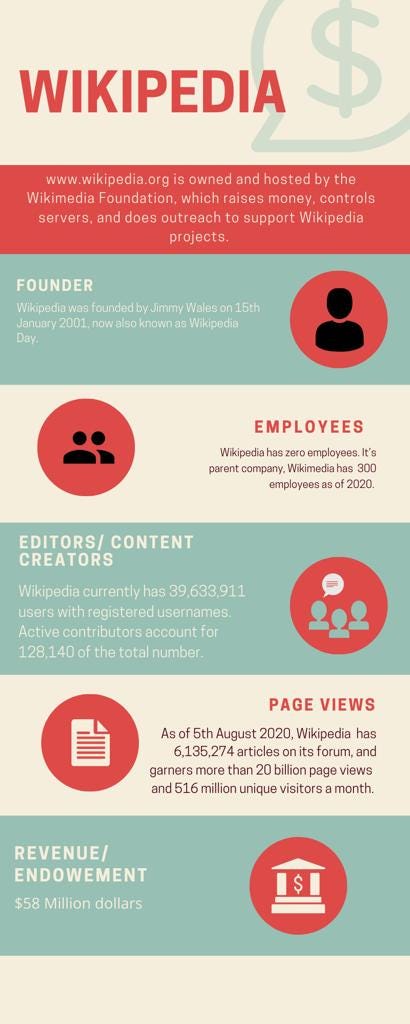
Wikipedia is an open-source website that allows users like you and me to read, create, edit, and manipulate content. Most of us passively read and click off, while a small chunk actively engages in editing and creating content for Wikipedia, who are also known as Wikipedians, or the “community”.
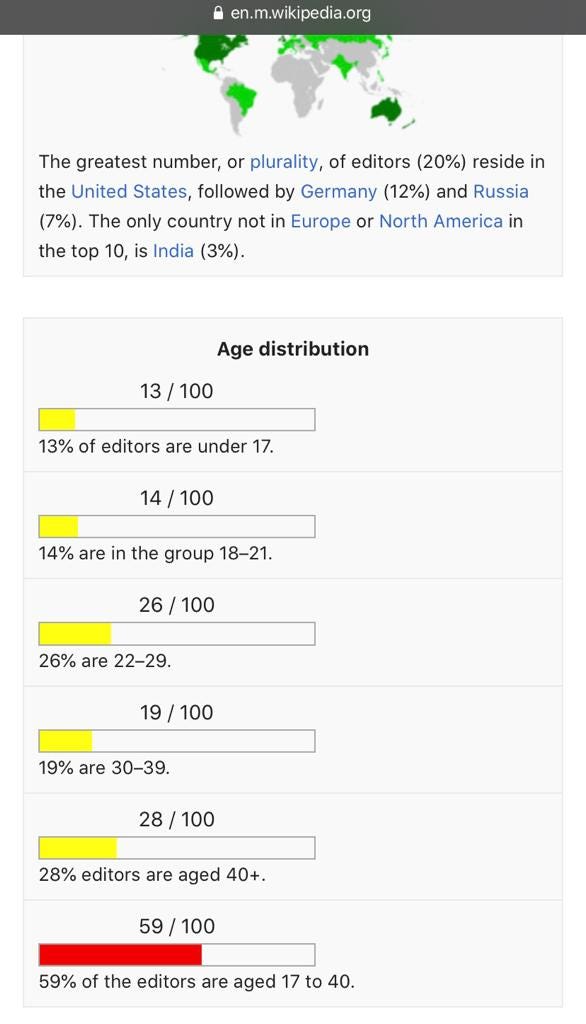
These editors range from 13yo kids contributing for “fun” to 40+year olds with expertise. Yes, anonymous volunteers and established experts wield the same amount of power.
Another important aspect to note about Wikipedia is that it is an ad-free website. If it were to accept banner ads and video ads, it could, by most estimates, be worth as much as $5 billion.
“Everyone makes fun of Jimmy for leaving the money on the table,” says Sue Gardner, the executive director of the Wikimedia Foundation, the nonprofit that runs Wikipedia.
Sooo..why doesn’t it start monetizing its website?
It cannot do that because of a simple reason: its “community”.
What Constitutes Wikipedia’s Community?
Wikipedia is not run by its founder, Jimmy Wales- he’s too busy going around the globe talking about “internet freedom”- or the Wikimedia Foundation.
Wikipedia has a backend and a frontend. The backend consists of engineers, programmers, and other tech guys, while the frontend is the powerhouse of the cell.
Sorry, I meant, the front end is the one that actually runs Wikipedia. The content creators and editors, or the volunteers.
They have more power than anybody else, simply because they’re the ones putting out information, which is the sole reason billions of people go to Wikipedia.
Wikipedia could, and would have monetized its website, but Jimmy Wales realized early on that it would cause the “community” to revolt, so it has since been ruled out.
Why would the community revolt you ask?
Because the majority of them aren’t paid for their contributions. All the money that Wikipedia would make off of the ads would stay with Wikipedia.
How would you feel if a non-profit that you volunteer for starts monetizing its operations and making big bucks, but you receive no part of it? Yeah, you would be mad.
Why does Wikipedia need so much money anyway?
It doesn’t.
How much money would a company need, if it’s solely an online website where the major work is carried out by volunteers for free? Not much.
By asking for donations, Wikipedia is simply doing business. It calls itself a “small non-profit” while banking in millions of dollars in donation.
“It’s an advertisement that says ‘we will never run advertisements,’” complained Pete Forsyth, a former member of the Wikimedia Foundation’s fundraising team and a current Wikipedia consultant. “It’s an embarrassment to Wikipedia.”
Most of Wikipedia’s actual employees work in the Engineering and Product Development department, so what will Wikipedia do with all this money?
Use it to buy furniture made of gold, of course.
— Inc.com
Should you donate?
Personally, after much research, I don’t think Wikipedia needs the money it’s asking for.
Amazon, Google, and Apple continue to donate millions to Wikipedia since Siri, Alexa & Google users rely heavily on it for information. These companies will make sure it runs just fine without us having to pitch in and donate.
I will not part with my hard-earned money to a so-called “non-profit” so that they can splurge on fancy chairs.
And even if Wikipedia were to start paying all of its contributors, I still don’t think I wouldn’t donate, simply because I will not pay to read biased, unadministered, and uncontrolled opinions of every tom dick and harry, from a community that hardly operates like one.
And anyway, if Wikipedia calls itself a “free encyclopedia”, why should it guilt trip it’s readers to donate money every once in a while by acting like it is in survival mode? (with 51$ million in the bank? Yeah right.)
So, should you donate?
You decide. As for me, It’s a hard pass.


