
Why Your Read Ratio is Low and Why You Should Care
I have 7 reasons that’ll help you wipe those tears out..
Read ratio is an important metric that tells you the percentage of visitors who read your story.
If 100 people clicked on your story and only 20 of them read it, you’ll have a read ratio of 20/100 = 0.2 = 20%.
I also want to remind you that a read is considered as such when the visitor/viewer spends at least 30 seconds actively* on your story.
*: That will be a topic for an upcoming storyNow that I got the definitions out of the way, let’s tackle the core topic.
Let’s start with why you should care.
They say a picture is worth more than a thousand words, so here it is:
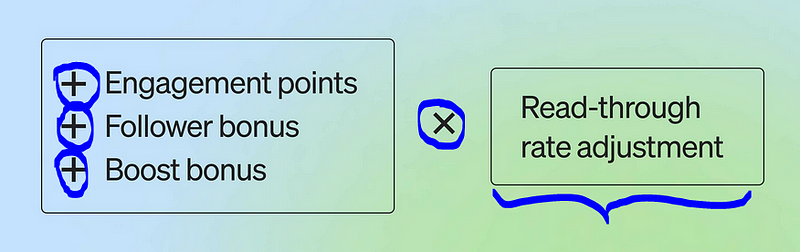
As you can see in the picture above, it’s a multiplication sign, not an addition sign, which means it has a massive power to either drive your earnings up or pull them down.
Not only that, the read ratio is a coefficient apart, unlike the 3 metrics on the left.
All this means that no matter how high the metrics on the left, if the read ratio is low, it equals to a low earning.
And just in case you’re still doubting what I’ve just explained above, here is what Medium says, word for word:
“Low read ratios imply that the title and preview were perhaps a bit clickbaity. A story that gets 100 reads in a day with a 80% read ratio will earn more than a story that has 100 reads and a 20% read ratio, even though they had the same number of reads.” — Medium
Now that we understand how very important the read ratio is compared to the other metric, let’s discuss what can cause a read ratio to be low.
1 — Clickbait?!
Let’s look up the definition of clickbait online.
Clickbait: something (such as a headline) designed to make readers
want to click on a hyperlink especially when the link leads to
content of dubious value or interest - source: merriam-webster.com
No one likes clickbait content. It gets your attention but fails to deliver. It makes people frustrated and angry.
Medium also doesn’t like that, so they decided to penalize clickbait content.
How? The read ratio.
Just think about it. You read a title that catches your attention, you click on it (benefit of the doubt), you skim through it, and you shout “Mother Father!!!!” and then you bounce off before that 30 seconds is over.
That’s 1 view, 0 reads.
A few views down the line, the reads are very meager. That’s a sign to the algorithm that the article is clickbaity since the read ratio is too low.
So always make sure your titles spike interest while staying in the frame that your content delivers on. No mismatch should exist between the title and the content.
2— Scary content
Scary indeed are some stories here on Medium.
The title might spike your interest, but after you click, you’re just frightened by the format the story is in. I’m talking about big chunks of text, no space, no breaks, …
Let it breathe! And me too!
Take a look at these two texts:
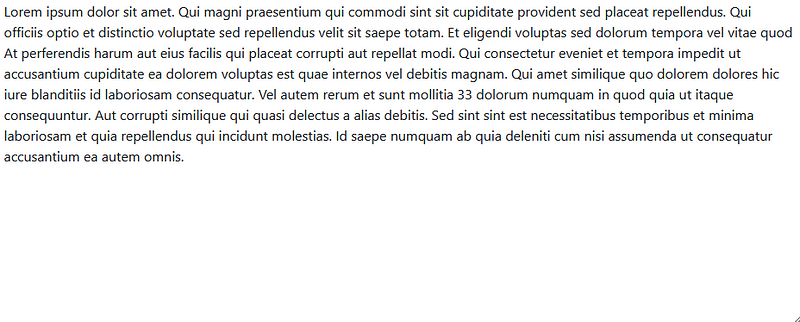
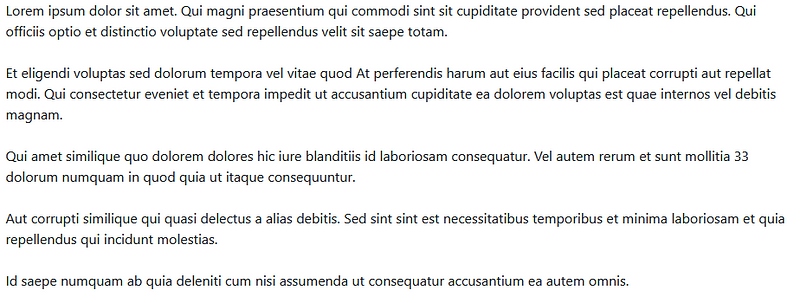
Which one would you feel more comfortable reading?
Yeah! Obviously the one on the right.
Same text, different format, different sentiment.
Your content could be great, but you’re scaring people away with the formatting. As a result, they click, “OH HELL NAH!!”, and then bounce off.
3 —Boring (no visuals, redundancy..)

Another thing that might pull your read ratio downward is a boring story.
Boring could be for many reasons: text only, no visuals, redundancy…
You have 30 seconds to make the visitor want to stick around. And to do that you need to get their attention and then keep it for more than 30 seconds.
And when I talk about grabbing their attention, I talk about the first paragraphs. They are already here because of the title.
So don’t make it boring and redundant. Use compelling and relevant images or illustrations, and format the story properly using headlines, … Put simply, write as if you really have something to say and not because you have to say something.
4 — Too long
Aside from the short attention span people have nowadays, they also don’t have a lot of time, or they think they don’t.
But regardless of whether it’s this or that, a long text can be a turn-off for many people.
So they will click, take a look at your content, scroll, keep scrolling down, *sigh*, and then leave.
If your style of writing is very engaging, and you’ve already written long content and had good results with it, then keep doing that.
But if you shot your shot at it and got disappointing results, then consider maybe turning that long content into a series of small digestible content.
5 — The I-Clapped-Check-Me-Out clan
This is a virus spread among some users of the platform.
Basically, they are the type of people who will click on your work, clap, and **poeng** (spring noise) bounce back. Then, they’ll go click on someone else’s work and do the same..
They don’t care about your work. They’re there for themselves, hoping that you check their profile, read their work, and help them earn more money.
It’s a selfish behavior in all sorts of ways.
If that behavior could talk, it would say:
“ Hey there! I don’t really give a damn about your work, nor your read ratio. Just make sure that when you get the notification, check my profile and read my work. And just in case, I’ll do it again next time you drop a story and my eyes happen to land on it”
6 — The Let-Me-See-The-Comments clan
Similarly, there are those who only click on stories to check comments to maybe get the gist of the article (lazy way) or clap on comments to notify them and incite them to check their profiles and hopefully their work.
They are not there for your content. They are there for the comments only.
But they are not really there for the comments either. They are there from themselves.
7 — Wrong tags?
Tags aren’t there for aesthetics. They are there to help distribute your story to the right audience.
I’m saying this because I see a lot of writers here using tags that are irrelevant to the topic they wrote about. I can’t help but wonder why they do it.
Is it because they got decent views with those tags? Is it because they became top writers for that tag? Is it an autopilot thing?.. I don’t know.
But using the wrong tags can be detrimental to your read ratio.
Think about it like this: you use an irrelevant tag, Medium distributes it to the audience that’s interested in that tag, they see it, assume your content will uncover a topic they care about (maybe misunderstanding the title) or maybe they just click on any story Medium suggests to them.
You don’t want them to receive your story if they don’t care about that topic because they will bounce back the second they realize that it’s not for them.
And you, as a result of that, will see your read ratio sink because you’ve just had one view without the equivalent read. More people do that and your read ratio will come crashing down.
For the 5 & 6, you can’t really do much about it.. Focus on those in your control.
If you reach this stage of the story, I would like to thank you for your time :)
Don’t forget to drop a comment if you would like to let me know what you think :)
If you like this story, I’m sure you’ll like these too: