
Why Your Micro-Decisions Determine Your Life
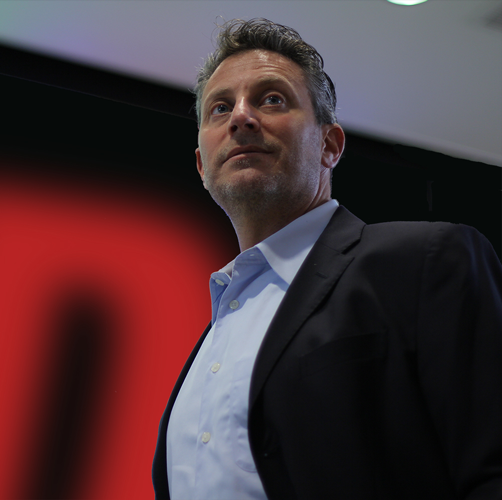
Stephen Duneier is proof that you can change your life by changing your daily actions

Today, a lot of emphases is placed on our big decisions like having children, getting married, learning to drive, buying a house, getting divorced, and quitting a job. But the reality is that it’s all the thousands, if not tens of thousands — of micro-decisions that create our character and determine our identity.
We often forget that our habits are the sum total of our daily decisions and that it is each of these micro-decisions that lead to the achievements in our lives and ultimately build up who we become. They also greatly influence how we address the big decisions in our lives and how other people regard us.
Throughout this article, I will be educating you on how to effectively approach micro-decisions to achieve your goals and live your best life. It is an empowering and simple idea that has the entirety of its effectiveness focused on what can be done in the present moments of our lives.
What is a micro-decision?
A micro-decision is any of the choices that you make every second of every day that you are often unaware of but shape the course of your life and, therefore, your reality most strongly. It is the tiny actions we undertake from a starting point to reach our immediate objective, and it is these day-to-day micro-decisions ultimately shape our lives.
Little drops of water, they say, make a mighty ocean. In like manner, micro-decisions made consistently over time have massive impacts that determine the course of our lives.
To illustrate the micro choice concept more clearly, we will examine the story of an American professional investment manager, speaker, lecturer, author, artist, and Guinness World Record holder Stephen Duneier (doo·nee·ay). Stephen learned how to apply intentionality and the power of micro-decisions to alter his decision-making approach.
How Stephen Duneier unleashed the power of micro-decisions
Stephen Duneier was born in July 1967 in the city of New York. He grew up a very bright and curious young boy but often found it challenging to settle down and focus on one task at a time. As a result, he was a consistent C-minus student from kindergarten through to his high school graduation. He really wanted to focus and be better at his studies but just couldn’t.
Then he began his Junior year in college and decided he would make an intentional change to become an A-student. He knew he would have to change from just thinking about the big goal of becoming a better student and instead focusing on the marginal adjustments he could make and actual actions he could take every second and minute.
So, instead of thinking of and trying to accomplish his school tasks in their entirety, he decided he would only focus on the bits that make up the whole and on what he could achieve in five to ten minutes. If he got an assignment to read five chapters in a book, he wouldn’t think of reading the whole five chapters or even 1 chapter at a time. He would break it down not only into a page at a time but further into paragraphs, and then sentences, and finally, words.
He knew everyone could easily read a word, and if he was able to focus and act on his micro choice to read a word, soon he would read two words, and then three until he had read a sentence and then a paragraph, a page, a chapter, and eventually all five chapters. He focused on the things he could do in each immediate moment to advance the achievement of his ultimate goal, and from that point forward, all the way through to graduation; he was a straight-A student. He got on the President’s honor roll and was on the dean’s list every semester.
Stephen then went on to one of the top graduate programs in the world for finance and economics. Using the same approach of focusing on his micro-decisions, he achieved the same results as in college, finishing with distinction.
He continued to develop his habit of approaching tasks at the micro-level and felt that he would apply it to his professional career since it worked for him in school. He started as an exotic derivatives trader for Credit Suisse, which led him to become global head of currency options trading for Bank of America, and then global leader of emerging markets for AIG International. It helped him deliver top-tier returns as a global macro hedge fund manager for 12 years and become the founder and Chief Investment Officer of two award-winning hedge funds.
Stephen then decided to apply the effectiveness of micro-decisions to his personal life and to his ambitious goals. He started with his desire to learn how to speak German. Instead of listening to music on his iPod during his daily hour-and-a-half commute, he would listen to language tapes every day.
He purchased the first 33 CDs in the Pimsleur German language program and transferred them onto his iPod. He then removed all the music on his iPod to be left with just the option of listening to the language program.
He did this consistently, and ten months after he started, he listened to all 99 CDs in the German language program. After that, he traveled to Germany to advance his language skill with a 16-day intensive German course and was able to speak German at a very decent level afterward.
Later in his career, he had just moved back to the United States from London and was 25 pounds overweight and out of shape. He wanted to rectify that and was well aware that he likely wouldn’t use it if he simply registered and paid at a gym. He also knew that simply having a goal that he wouldn’t eat the kinds of food that caused him to be overweight would not be enough. So, he didn’t set a vague resolution to just lose 25 pounds but rather set a goal to hike 33 trails in the front country of Santa Barbara’s Mountains, even though he had never been on a hike before.
He knew that it wasn’t about the 33 trails and not even one trail, but about those tiny little decisions to consciously drop every distraction and put on his hiking shoes and then take one step and then two until he had hiked one trail and eventually the 33. By the end of the year, he had walked all 33 paths, lost 25 pounds, and participated in the Pier to Peak half marathon — one of the most challenging half marathons in the world.
He didn’t stop there but decided to do more. Through the daily application of micro-decisions, he earned his auto racing license, learned how to fly a helicopter, did rock-climbing and sky diving, and learned to fly planes acrobatically. He further read 50 books in 52 weeks, learned to unicycle, used jumping stilts to hike, and learned how to play drums. After all these, his wife suggested he learn to knit, taking her suggestion.
One day he was sitting under a Eucalyptus tree that’s 2.6 miles up the cold spring trail in Santa Barbara and began thinking it would be nice to cover it in yarn. So, he was knitting for the next 82 days, no matter where he was, whether at a board meeting, on the trading floor, at the hospital, or on an airplane. One stitch at a time, and 82 days later, he had done his first yarnbomb, just in time for the second annual international yarnbombing day.
He went on to do more projects, which included wrapping a massive boulder atop the Saddlerock hiking trail above Montecito, California, and creating a giant starfish with reflective yarn and hanging it 40 feet above the Seven Falls Trail.
He didn’t stop at knitting but went on to crocheting, and got ambitious enough to achieve his goal of crotcheting the world’s largest granny square, which had more than half a million stitches, was 1,311 square feet, weighed over 60 pounds, and consisted of 30 miles of yarn. He crocheted this granny square for two years, seven months, and 17 days and currently holds the Guinness world record for the largest granny square ever made.

Stephen Duneier acknowledges that he is still the average person he was in childhood, with no exceptional talent. He takes enormous, ambitious projects that people seem to marvel at, breaks them down to their simplest forms, and then makes micro-decisions to improve his odds of achieving them.
Like Stephen, we all can achieve our most ambitious goals by focusing on the micro-decisions and our actions in the tiny moments that make up each day. Let us now look closely at the importance of micro-decisions, the hindrances to optimizing them, and how we can apply them for practical living.
What is the importance of micro-decisions?
As someone who doesn’t usually draw, would you believe you could if you were given a photograph of a person and told to replicate the image with just a pencil and a piece of paper? Your answer would probably be ‘No .’ But do you agree that you could reproduce the image of a solid gray square? Yes, everyone can.
The truth is, if you could make just one gray square, then you could make two, and then three, and eventually, all the different shades of gray squares that make up the image of the person come together.
Using this illustration as a guide helps us realize that what stands between us and achieving even our most ambitious dreams and goals has far less to do with possessing some magical skill or talent and more to do with how we approach problems and make decisions to solve them.
When we focus on the task as a whole, we see the complexity and tend to lose interest or maintain the tenacity to complete it quickly. But when we break a task into tiny bits and focus on the micro-decisions we can make every moment; we will be equipped to quickly get things done and build successively upon each little goal.
When you can do this and incorporate micro-decisions into your everyday routine, it will become recurring, and you’ll start doing it without thinking about it. Whether you’re just trying to improve professionally or learn new things, it all begins with a single step and grows from there.
Anyone can take a step. However, the most challenging step is choosing to start using the power of micro-decisions to take your life and career to the next level intentionally. For more on the power of choice, check out Episode 19 I did on this topic.
What impacts the effectiveness of micro-decisions?
Many actions and habits can hinder you from making effective micro-decisions to achieve your goals. Five of the most prominent include:
Attempting to multi-task
When you attempt to handle several tasks at a time, you often set yourself up for failure, as you could quickly deplete your willpower to act in the present and lose interest in achieving the long-term goals you set out.
When you multi-task, it triggers numerous responses every moment, causing an imbalance. Every time we switch attention from one thing to another, it pays a toll on the brain. Ultimately, it uses up your brain cells and slows the response to each operation you try to perform
Focusing on the ultimate goal instead of the immediate
It’s great to have a vision, an ultimate goal of sorts. We desire to focus and have something to work towards. Usually, a vision excites us. It’s the ideal motivator. Without goals, our lives would feel meaningless and stagnated.
But by solely focusing on the big goals too much, we often lose sight of the critical actions we need to take daily to achieve them. Focusing on the ultimate goal instead of on the process of micro-decisions that gets you there takes you out of the present moment. So, ensure that your focus is on what you can do in each moment. These are the things that add to the achievement of your ultimate goals.
Not being disciplined and specific
If you fail to acquire self-discipline, it causes many issues: health problems, financial issues, distraction, procrastination, things stacking up and overpowering you, and much more. So discipline and specificity are essential skills to develop, but most people don’t know where to start.
One of the most significant things you can do to get better at being disciplined is to take small actions. It can seem overwhelming to tackle massive, intimidating projects … so don’t. Instead, make those micro-decisions of things so small you can’t say no.
Have a paper to write? Just start with 5 minutes. Want to walk? Just walk for 10 minutes. Have an assignment that is due? Just do the first few paragraphs. Want to clean your house? Just start with 2 things to clean.
Being too hard on yourself
No one is perfect, and we all fail. When we beat ourselves up for making a mistake or failing, we lose the opportunity to grow and learn from that failure. So, whenever you fail at putting your micro-decisions to practical use, make sure you pick up yourself, understand what caused it, and make intentional efforts to do better.
Also, make sure you frequently take time to measure your daily progress and reward yourself for getting things done, no matter how little. This will encourage you to keep doing more and reaching for your best.
Living without intentionality and passion
Too often, we live our lives on autopilot. That is why intentionality is so important. Intentional living is about understanding your purpose and asking yourself why you do the things you do — and then being content with the answers.
Here are just a few questions to consider.
- Why do you allow yourself to have self-limiting beliefs?
- What keeps you from pursuing your passion?
- Why does what you think you can achieve hinder your capabilities?
- What gets in the way of keeping commitments you make to yourself?
- Why are you with your partner?
- Why are you allowing hustle culture to get the best of you?
Note how your responses make you feel? Are they confusing or conflicting?
Living with intention means closely examining your daily micro-decisions and making changes accordingly if you’re not happy with what you see.
Why our micro-decisions determine the course of our lives
Little drops of water, they say, make a mighty ocean. In like manner, micro-decisions made consistently over time have massive impacts that determine the course of our lives. I hope this episode has opened your minds to the importance of everyday micro-decisions and has inspired you to pull out some of those ambitious dreams you have kept on a shelf and start pursuing them. Know that no goal is too big, and dare to reach for your bucket list.
Think of the specific things you’ll love to achieve, understand yourself and your abilities concerning them, and take conscious actions to get you there through your everyday micro decisions. Each step is a tiny little decision that needs to be made precisely along the way to achieve the type of outcome you desire. If you don’t choose to start, there won’t be any choice to take the final step in achieving your goals.
So, dream big, aim high, and most importantly, take things one step at a time.
I wish you success in your step-by-step decisions to achieve your most important goals!
This article is based on an episode of Passion Struck with John R. Miles. Listen to the episode on Apple Podcasts, Spotify, Podcast Addict, Pocket Casts, Stitcher, Castbox, Google Podcasts, Amazon Music, or your favorite podcast platform.
- Read my recent article on why the real prisons exist in the mind and what we believe.
- Are you having trouble prioritizing yourself? I discuss where you invest your love; you invest your life in Episode 104
- I explain why materialism is impacting your success and happiness in episode 96.
- Do you know the science of healthy habits? I explore this in-depth in Episode 108.
- Suppose you missed my interview with Jen Bricker-Bauer on Everything is Possible. Don’t panic! You can catch up by downloading it here.
- How do you strengthen your relationship with your best self? Explore episode 110.


