
Why Your Company Probably Doesn’t Really Care About Black Lives Matter
Does It View Racial Equality as a PR Issue or a Business Issue?
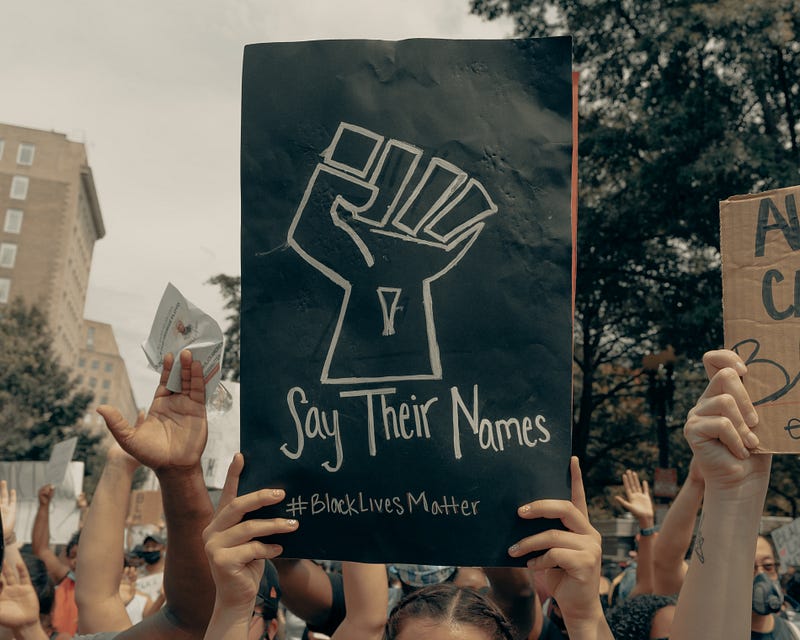
As you, no doubt, are currently aware, we are experiencing massive social unrest in America about deep-seated systemic racism and normalized police brutality against black citizens.
In response to the deaths of George Floyd, Ahmaud Arbery, Breonna Taylor and Rayshard Brooks — the latest in a growing list of victims of police violence — Americans from every walk of life have united in protest in cities and towns across the country.
The voice of national outrage grew so loud that myriad businesses and CEOs began to voice their support of Black Lives Matter. These statements came from companies in every sector, which suggests that it has become more dangerous to their public reputation to hold their tongue than to speak out.
The problem is that much of these words are, well, just that: words.
Corporate boilerplate advocacy usually isn’t even worth the paper it’s printed on. Here’s how I know.
The Social Responsibility Playbook
During more than a decade at top public relations firms, I spent years managing the reputations of major public corporations, and one thing became abundantly clear.
There were executives’ views about whether or not “corporate social responsibility” (CSR) was important, and then there was what they stated publicly. How much CSR was valued often came down to dollars and cents. The public statements were intended to tilt public opinion in their favor, and therefore, often overstated the actual magnitude of a company’s efforts.
For context, companies don’t like to take sides on contentious public matters. In the view of the executive leadership team, if they risk the alienation of a portion of their customer base, they stand to lose much more than they stand to gain. From a shareholder responsibility point of view, companies can and have made the argument that it’s not financially responsible to take sides.
When they do choose to advocate a position, as they have in the case of Black Lives Matter, then that’s when people like me come into play. While there are a number of tricks at public relations executives’ disposal, there are different levels of advocacy — so that’s how I’ll break the playbook down.
Advocacy Playbook
Level One: Release a corporate statement in support of the cause.
Level Two: Tactics above and conduct an interview with a predetermined “friendly” reporter who is sure not to ask difficult questions. Volunteer the chief diversity officer to share cherry-picked diversity facts with the reporter. Encourage (but don’t explicitly require) employees to share company messaging over social channels.
Level Three: Tactics above and publicly commit to implement some yet-to-be-determined diversity plan in support of workplace equality (do not offer concrete milestones of success or a timeline). Typically, this plan would focus on increasing the percentage of black employees in the company and in management. Name a black executive to lead this plan forward. Limit interviews to “friendly” reporters.
Level Four: Tactics above and commit a substantive donation to a philanthropic organization to advance black rights, financial security, education, etc. Make sure that the organization is selected by a representative group of black employees to add credibility. Broaden reporter interviews and offer several members of the executive team, including the CEO.
Does any of that sound familiar? It should.
So, Does Your Company Really Care?
If you take a quick glance at your company’s public statements, it should be easy to tell what level of commitment they chose to pursue. You can rest assured that any company with a decent public relations team will position their corporate statement in a way that inflates the impact of their efforts.
While I decided to crumple up my PR career, go back to school, and earn an honest living with an MSW, I would have advised on the development of these kinds of corporate statements. As opposed to only voicing support for the BLM movement (which many companies have done), I would have tried to increase the statement’s credibility by tying current support into a longer-term company effort to advance workforce diversity, as supported by any available proof points.
You can usually gauge the company’s authenticity based on whether or not senior executives comment on the company’s efforts directly. If they do, are they expressing genuine grief for lives lost to police brutality or are the words emotionless corporate-speak? Are they recalling personal anecdotes of racism in their lives? Are white leaders admitting the role that they’ve played in perpetuating systemic racism? Individually? Within their organization?
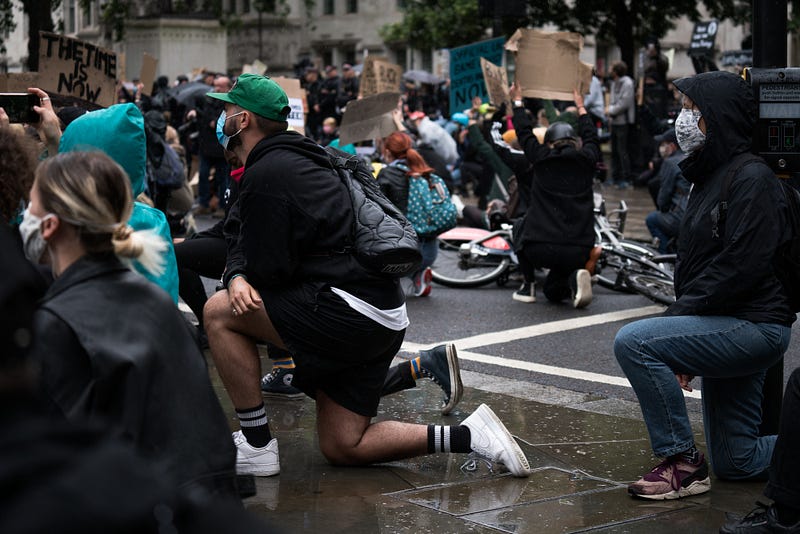
Actions Speak Louder than Words
One must move beyond a simple statement, however, to determine if a company is actually committed to supporting the Black Lives Matter movement.
First, you need to ask if your company’s efforts are new or if they have touted diversity efforts in the past. If the efforts are new, then you’re likely looking at a bandwagon company that’s trying to cheaply garner brand equity by piggybacking on a timely movement.
Second, if their efforts are not new, then what has your company has done to date? Did it already have concrete plans to improve the diversity of its workforce? Has it announced specific results or milestones in its diversity efforts? If the company only hired a chief diversity officer, created black employee resource groups (ERGs) and set up racial bias training seminars, then the previous effort was likely only superficial.
Third, if a company has announced a financial commitment to philanthropic organizations supporting black rights and equality, is a one-time contribution or is it part of a larger effort? As you may know, corporations sometimes approach a problem by throwing money at it until it goes away. While a big financial contribution is great, that doesn’t support long-term change, and, more importantly, a financial contribution doesn’t do anything to move their own workforce forward.
Ultimately, a good rule of thumb is to determine whether or not a company’s public statements match what is seen inside the company. Amazon, for example, has been roundly criticized for its support of the movement because 85% of its black employees work in low-paying, non-technical jobs (like in warehouses) and there is only one senior-level black employee.
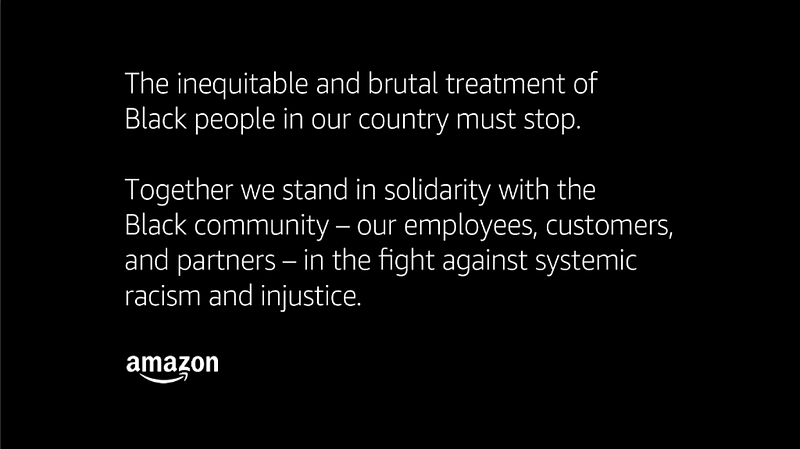
Oh and there was that misguided Juneteenth celebration offering chicken and waffles. And let’s not forget about Amazon’s general counsel describing a black employee, who was fired for staging a warehouse walk out over coronavirus health concerns, as “not smart or articulate.”
It can also be useful to assess the true value of a company’s financial contributions against company earnings. This helps to put the company’s actual financial sacrifice in perspective. In other words, while millions of dollars may sound like a lot to you and I, it’s usually no more than a sliver of a percent of annual company earnings. As I explain in this story, Nike’s substantial $40M contribution only represents 0.1% of their 2019 earnings.
What Companies Can Actually Do
Taking steps toward a more diverse workforce and making significant financial contributions to the right organizations are certainly positive steps forward. Companies and leaders who remain committed to their diversity plan long after media coverage dies down will earn major reputation points with their customers and their diverse employees.
I do, however, think that there is fifth level of corporate advocacy in the playbook I mentioned earlier. My belief is that companies can make the greatest impact within their own organization. Employers are in charge of how the screen and hire candidates, how much they pay them, who they promote and who they pass over.
Level Five: In addition to releasing authentic public statements of support from the company and its executives, offering a broad range of interviews and even making a financial contribution, companies who are true advocates of Black Lives Matter and racial equality in the workplace could:
- Disclose data on the composition of their workforce and pay disparity between different racial groups.
- Publicly release a comprehensive plan to shift workforce/executive composition, aligning it with U.S. demographics, and reducing pay disparity.
- Highlight concrete milestones of progress against a realistic, inflexible timeline.
- Hold leadership accountable for these KPIs or impose financial penalties for failure.
- Create systems to reduce racial bias in the candidate screening and interview process.
- Partner with historically black colleges and universities, committing to the creation of a set number of roles for graduating seniors each year.
- Implement a supplier diversity screening process, requiring suppliers to meet specific metrics
All of these are concrete steps to actually drive change within a company’s business. Let’s face it, systemic racism within the workforce is not a public relations or marketing issue.
Change and progress will only be achieved when U.S. employers open their eyes and see the issue for what it really is: a core business issue.
If you still have questions about the authenticity of your company’s efforts, ask them some pointed questions. Nothing about racial inequality and discrimination within the workforce is new. The sad truth is that employers are rarely held accountable.
I really don’t see how an employer can legitimately claim that they’re doing their best when, as of 2017, black men were only making 70 cents on the white male dollar. Every single company knows how much it pays its employees — they damn sure know how much they make off of each of them.
In my experience, corporations don’t like to change when they don’t face significant consequences, especially when those changes cost money. Over the next year, it will become clear which employers were actually committed to change and which hoped the whole movement would just blow over.
Businesses exposed as having played slick public relations games and overstating their support for Black Lives Matter might face some fairly substantive consumer backlash. It’s only fair that they reap what they’ve sown. After all, based on that wage gap, businesses have been making more money off their black employees for quite some time now.