
Why You Should Take a Year from Work to Travel
Travelling offers much more than parties and alcohol.
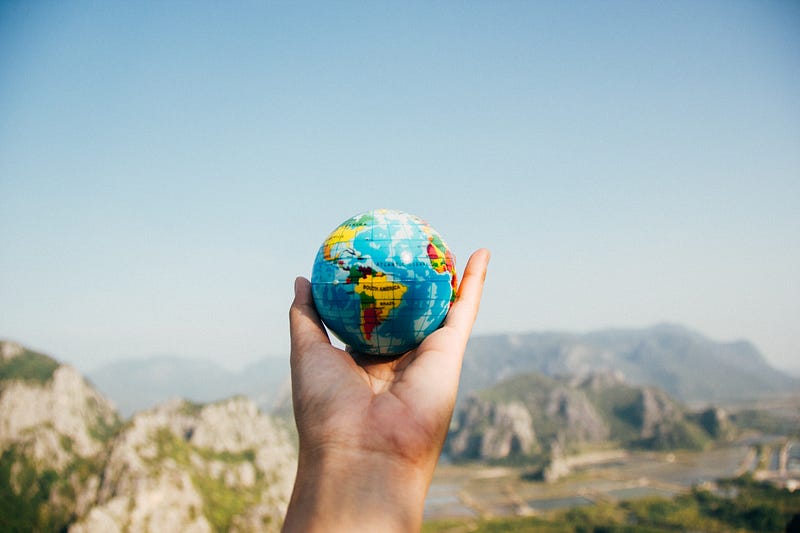
We all need a break. As we are whisked away from university to our first job to the next job to the next in a never-ending cycle, we all experience burnout and just want to ‘get away from it all’.
You’ll ask yourself: Should I go travelling?
The simple answer is Yes.
Why not? There’s nothing wrong with travelling purely for ‘fun’ but with a small shift in mindset, travelling is also a multi-dimensional learning experience and an opportunity to develop personally and professionally.
Make it worthwhile
I like to do things for a purpose. Yes, I occasionally binge through a TV series like everyone else, but mostly, I complete tasks which bring benefit. Spending a year of your life travelling is no light feat, so you should make it worth your while.
Travelling should be an incentive to learn about a country’s culture, language, and history. You can read dozens of books and watch countless videos in a country, but that still pales compared to you being there in the moment. One reason we travel is to live life through the perspective of the locals. Learning about a country’s culture makes you appreciate the bigger picture in life and dissipates cultural divides. For the less philosophical ones, at the very least, the locals will massively respect you for actively trying to understand them.
Record your journey. Many side hustles stem from sharing personal journeys and teaching others. Travelling to other countries and learning how others live intertwined with your own personal experiences in a foreign country provides a unique, raw perspective that can be captured through YouTube Vlogs or written blogs.
Regarding content creation: Yes, many people travel. But do they go to the exact locations like you? Do they interact with the same people as you would? It’s these subtle differences and personal insights that classify your content as ‘interesting’. Content creators gain initial attraction through content but grow their audience through personality.
Improved financial awareness
An important life skill neglected in our education system is money management. Travelling makes you more financially aware. Managing your personal finance is more difficult than said, especially when most graduates are already drowning in debt, overspend and are clueless on how best to use their savings.
When you travel, you’re forced to work out your starting budget: how much to allocate towards rent, food and leisure, just about everything. No-one else will do this for you.
You may already manage your finances if you live out, but living abroad is a whole different game. There are more unknown variables in a foreign country. You’ll undoubtedly revise, chopping and changing your budget allocations in the face of uncertainty — and that’s okay. Past the initial panic, you gain a feel of how you can effectively redistribute your finances and preserve money.
This is a skill not only for travelling, but throughout life — as a working adult, family planning, saving for retirement, etc. The list goes on.
Boost your employability
Many people neglect travelling because they’re worried they’ll struggle to keep their existing job or find a new one. A third of your life will be spent at work, so is taking a couple of months off really that detrimental to your career?
Travelling to another country can boost your employability. Language is the most obvious benefit. If you devote time to learn the language whilst being in the country you’re visiting, you’ll reap the rewards twice as fast. There is no faster way of learning a language than conversing in it day-in, day-out. It removes the ‘rigidity’ of learning a new language from books/videos where you learn isolated sentences without context and instead teaches you to have a flowing conversation.
Less obvious benefits are substantial improvements to your ‘soft’ skills: communication, adaptability and organization.
Communication is self-explanatory. You’ll be forced to meet and speak to strangers just to gather your bearings. When you can’t speak the language, you’ll have to find new ways of communicating your message through hand gestures and body language. We overemphasize the verbal aspect of communication, yet it only accounts for 7% of how the recipient interprets the underlying message.
During your travels, something will go wrong. It may as minor as getting lost or misplacing your documents. No matter how trivial, when you’re alone in these situations without others, you’ll be forced to adapt. Being in these uncomfortable situations breeds flexibility. This brings us to the final skill: organization. As problems occur, you plan and consider additional factors to stop the problem from reoccurring. You’ll quickly learn to organize your day/week, skills which transfer to work.
Find yourself
We like to think we know ourselves inside out. However, studies have shown that peoples’ personalities change when placed in new environments, i.e. a different country. This unfamiliarity ‘unlocks’ a part of yourself unknown to us; a side that doesn’t appear when you are in your comfort zone surrounded by friends and family.
Like me, many university graduates hit a stumbling block and don’t know what they want to achieve in life. Transitioning from the steady hand of education into the abyss of the working world post-graduation further fuels uncertainty of what type of lifestyle we want.
Travelling probably won’t enlighten a beam of light that points you in an exact direction, but it will certainly shed light on what you don’t want. After your travels, you may realize a steady 9–5 job is not what you’re after and you would prefer working part time whilst exploring other avenues. Or you conclude travelling is nothing but hassle and you never want to do it again.
My point is, on reflection on your travels, you’ll have a stronger feeling about what you want and don’t want in your life.
Final Notes
As motivational speaker and entrepreneur, Jack Canfield once said,
Everything you want is on the other side of fear.
Travelling can seem a daunting challenge, but it’s no exaggeration when people say it can be the best decision of your life. Whilst you continue to mull over the benefits and limitations of travelling, remember that time waits for no-one. I want to travel whilst I’m young and free of family commitments.
Something in life will always get in the way you’ll never find the ‘perfect’ time. So you may as well do it, anyway. Of the travelers, you know, how many have regretted it — or have they recalled their experience with a fond glow?