
Why You Should Start Your Own “Happiness Project”
Gretchen Rubin gives you the tools you need
Whether we are happy or not is not completely up to us. In fact, our genetics play a big role in our happiness levels — some are more predisposed to depression than others, for example.
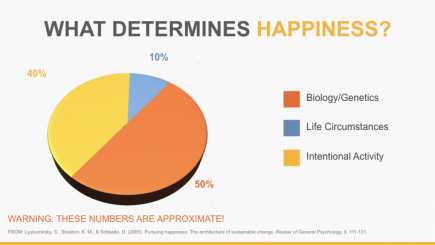
As you can see on this chart, there is still a big part of our happiness that we have complete control over, and we can drastically change our lives by focusing on that zone.
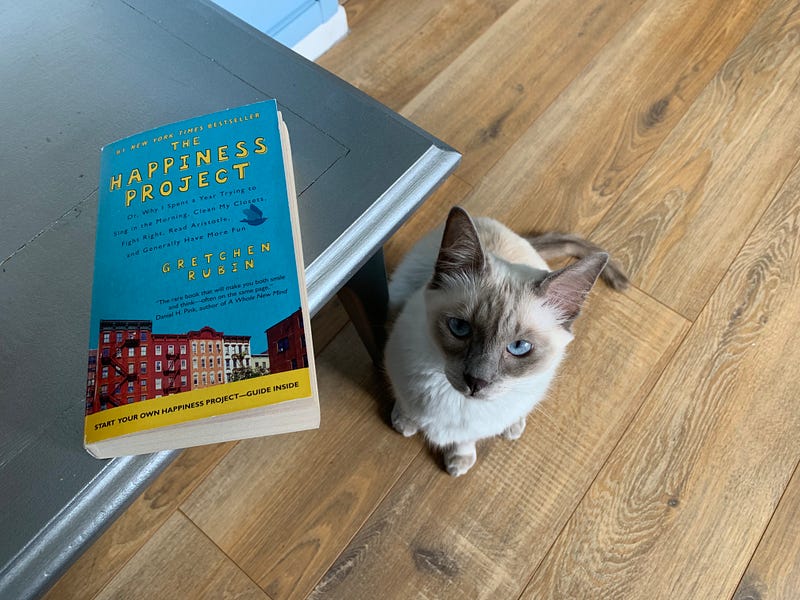
In The Happiness Project, Gretchen Rubin gives herself 12 months to be happier. Each month has a specific theme: January is for Vitality, February is for Marriage, March is for Work, April is for Parenthood, May is for Leisure, etc.
Each month, Rubin spends time researching the month’s theme and aims to implement a couple of new habits. Then, she evaluates her progress at the end of the year and decides to keep what works and ditch what doesn’t.
This book inspires you to take action
I felt much smarter after reading this book: It’s packed with stats on happiness and interesting quotes, which makes it a must-read. In addition, this book inspired me to take action and ask myself this question:
What can I do to be happier?
Now, I ask you: what can you do to be happier?
What are your values?
Believe it or not, but acting according to our values is what makes us happy. Of course, it’s not as simple as it sounds, but almost. Therefore, you must start by determining your own: What do you value the most?
Come up with a list and then make a Top 3. Values can be anything from authenticity to family, love, ambition, honesty, authority, creativity, compassion, etc. James Clear compiled a list of over 50 core values commonly used by leadership programs and institutes if you need inspiration.
Which areas of your life could be improved?
Think of your life as a pie made of 5 main areas: health, work, play, relationships, and spirituality.
Is there room for growth in any of these areas? Would exercising more often make you happier? Or maybe cultivating a better relationship with your spouse or kids? Write down your thoughts.
What are your monthly themes?
Use your answers to the previous questions to determine the themes you want to work on. They can be anything from Parenthood to Creativity or Health.
What are the new habits you want to implement?
Determine at least a couple of new monthly habits you want to implement, according to your themes. For example, some of Rubin’s habits were:
- Give proofs of love (Marriage)
- Quit nagging (Marriage)
- Start a collection (Leisure)
- Imitate a spiritual master (Spirituality)
- Go to sleep earlier (Vitality)
- Act more energetic (Vitality)
One month at a time
Don’t try to change everything at once. Instead, each month, focus on the goals you set for that month. If a habit you implemented in February works for you, then keep practising for the rest of the year. Eventually, you won’t be able to keep 36 habits, but the goal is to try things and see what makes you happier.
Final words
Rubin writes about her happiness experience in an honest way without trying to embellish it. She says multiple times that completing this project was difficult and that happiness doesn’t always come easily. But if you don’t take action, nothing will ever change.
The Happiness Project is definitely one of the books that had the biggest impact on my life, and one blog post cannot convey the huge amount of value you’ll get by reading it. I encourage you to visit the author’s blog and, of course, to read the book!
I post about movies, storytelling, and books on Twitter. Let’s connect.


