
Why You Should Reconnect with Nature
The fate of our civilization hinges on our ability to connect with our planet and cherish our unique station in the universe.
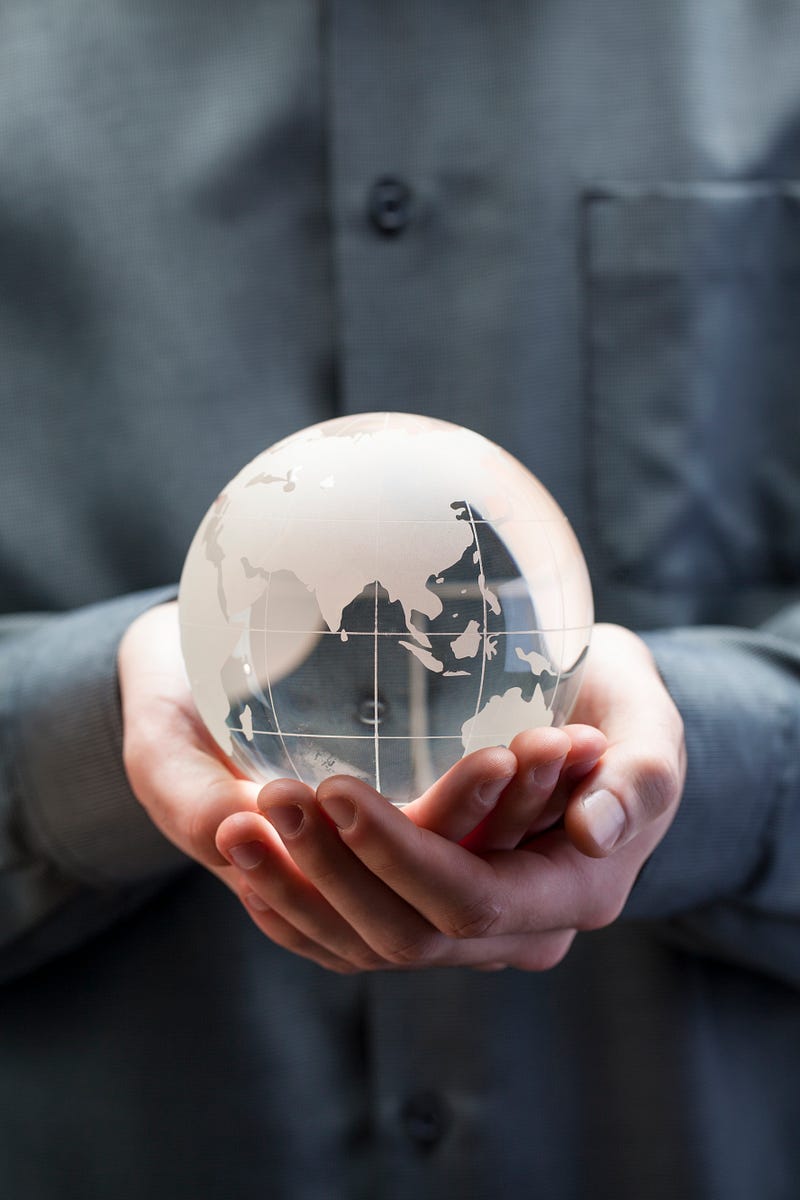
For over 90% of our existence on this tiny blue marble, we lived outdoors 24 hours a day, 7 days a week, 365 days a year. We evolved physiologically to adapt to our primordial lifestyle, as you’ll see below.
With the Agricultural Revolution 10,000 years ago, we eschewed our nomadic lifestyles in favor of sedentary lifestyles. In doing so, we began to divorce ourselves from the planet, which had a host of deleterious effects on our ways of life. One of those impacts was the distancing between humans and nature.
Even as we adopted farming lifestyles where we would own or rent property to grow crops and raise animals, we still had plenty of interaction with the natural world. We still depended entirely on nature to sustain ourselves and our ways of life.
With the Industrial Revolution, that all changed. We no longer depended on living plants and animals to create energy, and we separated our ways of life from our surroundings. And now, two centuries later, we have almost completely removed ourselves from nature. The damage has been undeniable and vast.
Can COVID-19 put things into perspective?
Right now, we feel the pain of that distance more vividly than ever before. COVID-19 separates us from two of the foundational elements of being human: interacting with our planet and interacting with each other. As we sit in quarantine, we are left to wonder what has gone wrong with our society and our way of life.
The short and long answer is: a lot, much of which escapes the scope of this article. I never feel more alive than when I’m in nature. The further I get from computers, smartphones, social media, and all of the creature comforts of civilization, the more alive I feel. I feel grateful for the opportunity to experience the planet in all of its glory, and I can only hope that my descendants can enjoy that same privilege for a long, long time.
The whole point of sustainability is to live in a way that can be sustained indefinitely. In our fast-paced, hyper capitalist lifestyles, understanding the vitality of sustainable living may seem either difficult or, worse, trivial. The fast car, the big house, and the nice clothes seem more important than ‘hugging trees’ or recycling. We are hell bent on consumption for the sake of it; we live to consume instead of consuming to live.
This consumerist lifestyle, which I hold chiefly responsible for the anthropogenic destruction of the planet, is not mentally sustainable for each of us, and it’s certainly not physically sustainable for the planet either.
The privileged masses who live in the developed world and can afford to live so unsustainably have it all wrong. And if they spent more time in the forest, they would start to see the forest from the trees in regard to the meaning of life and the uniqueness of life on Earth.
Science says…go out into nature!
Plenty of research suggests a link between exposure to nature and both well-being and sustainability. One study found that “children who perceive themselves as more connected to nature tend to perform more sustainable behaviors; also, the more pro-ecological, frugal, altruistic, and equitable the children are, the greater their perceived happiness will be.”
Translation — if you feel more connected to nature, you will try to live in harmony with it, which itself will make you happier.
Another study found that nature exposure may promote cooperative and environmentally sustainable behavior. For example, research participants who watched a nature video “harvested more cooperatively and sustainably in a fishing-themed commons dilemma.” That ‘cooperative’ word is key, since we will need cooperation on an unprecedented scale to keep our planet thriving for many generations.
Conversely, researchers from the University of Exeter found that people who live in urban areas and spend less time in nature tend to take less environmentally beneficial actions like recycling, buying eco-friendly products, and engaging in environmental volunteering.
The evidence is clear and convincing: when you get outside, you help yourself and the planet around you. What better way to kill two birds with one stone?
Many people who work on behalf of the environment cite a childhood exposure to nature as a foundational element of their work. The people who ostensibly care most about protecting and preserving the planet tend to do it because from an early age, they were immersed in nature and thus treasure the significance of keeping this planet safe and healthy.
We evolved to depend on nature
Humans evolved to depend on daily exposure to nature. We developed physiological processes that depend on daily exposure to sunlight, like absorption of vitamin D. We rely on nature to help us sleep; exposure to sunlight increases melatonin production, which regulates our sleep cycle. We developed color eyesight partly to distinguish the ripeness of fruits.
Some of the other benefits of regular exposure to nature include reduced stress, blood pressure, inflammation, fatigue, diabetes risk, and cancer risk. It also helps your short term memory, vision, creativity, ability to focus, and immune system among many other overlooked benefits.
Hospitals treating COVID-19 patients have resorted to incorporating nature as a means of improving outcomes. Mount Sinai Hospital’s Office of Wellness and Resiliency in New York partnered with the design firm Studio Elsewhere to develop “recharge rooms,” spaces with natural design elements that help medical workers recover from a physically and mentally taxing shift. The rooms use biophilic design principles to bring the outdoors into the built environment.
Mount Sinai understands that when patients look at nature, their recovery time can decrease. Even if they just see nature on a screen, their stress levels fall.
You can get your daily or weekly dose of outdoor exposure just about anywhere with 120 minutes of outdoor time per week. If you go for a 15–20 minute walk every day, your biological and psychological needs from nature will be met.
But to me, the best benefits of being in nature go beyond normal bodily processes. It’s about appreciation and gratitude, about being grateful that we all get to live in such an abundant and beautiful planet that maintains practically perfect conditions to sustain life as we know it.
How do we move forward on realizing the potential of human-nature connectedness? It’s simple. Individually, you can commit to walking every day and/or spending meaningful time on a regular basis immersed in nature, whether it’s your local park or a state or national park. Urban designers should look to improve access to parks and other urban green spaces. Education officials should prioritize opportunities for outdoor experiential learning to imbue an affinity for nature in children.
As the link above says, “ultimately, we must find enough ways to foster opportunities for people to positively experience the natural environment to create the sustainably minded societies our future depends upon.”
There’s a lot on the line in regard to our ability to reconnect with nature and design our economies and societies in harmony with nature rather than the current state of deleterious disharmony.
Look around you and pretend you were an alien descending from a faraway land tasked with assessing the state of affairs on this pale blue dot. You would look at our rampant deforestation, reckless greenhouse gas pollution, wanton water depletion, and a host of other destructive actions and give humanity a big fat F-. We can do better, and we must do better.
You don’t need to be Jared Diamond to see what’s at stake
Noted anthropologist Jared Diamond has no illusions about what’s at stake if we can’t design a sustainable economy, which in my view would reflect a realignment of our frayed relationship with nature. In 2014, as he told Mother Jones:
“Either by the year 2050, we’ve succeeded in developing a sustainable economy…or by 2050 we’ve failed to develop a sustainable economy, which means there will no longer be first world living conditions, and there either won’t be humans 100 years from now, or those humans 100 years from now will have lifestyles similar to those of Cro-Magnons 40,000 years ago.”
Just last year, Diamond said he pegs the chances of the world that we know surviving past 2050 as only 51%. You don’t need to be one of the world’s most prominent anthropologists or public intellectuals to understand the implications of our distancing from nature, both at an individual level and, more worryingly, at a collective level.
I would posit that the fate of our civilization hinges on our ability to connect with our planet and cherish our unique station in the universe. We have it better right here and now than we could ever imagine.
We should start acting like it.