
Why You Should Put Your Children in Music Lessons
The benefits are far too great to skip
I learned to play the violin as a little girl. It was a bright spot in my childhood. I didn’t have the most fabulous childhood and, as a result, had poor self-esteem. A school I was attending offered violin lessons, and I was eager to try because it would also get me out of class. Little did I know it would become a lifelong gift.
The confidence learning that instrument gave me lasted me through adolescence and into adulthood. For this reason, when I had my children, I knew I wanted them to learn to play music. I homeschool, so it was going to be up to me to make that happen.
Some of the instruments they have learned to play are the piano, guitar, ukulele, violin, dulcimer, and cello. They have been in individual lessons and group lessons at different times and seasons, and the payoff has been great.
Here are some of the proven benefits of learning music as a child
Music provides increased brainpower
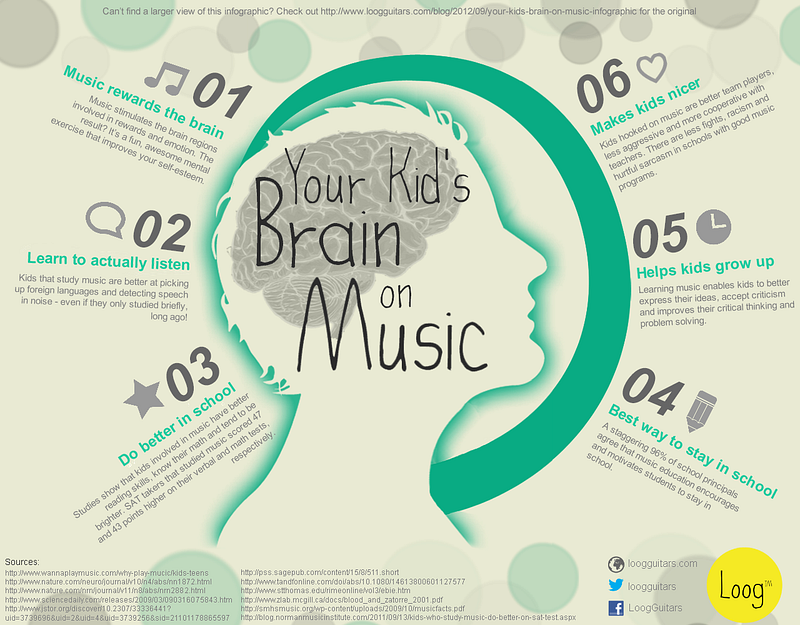
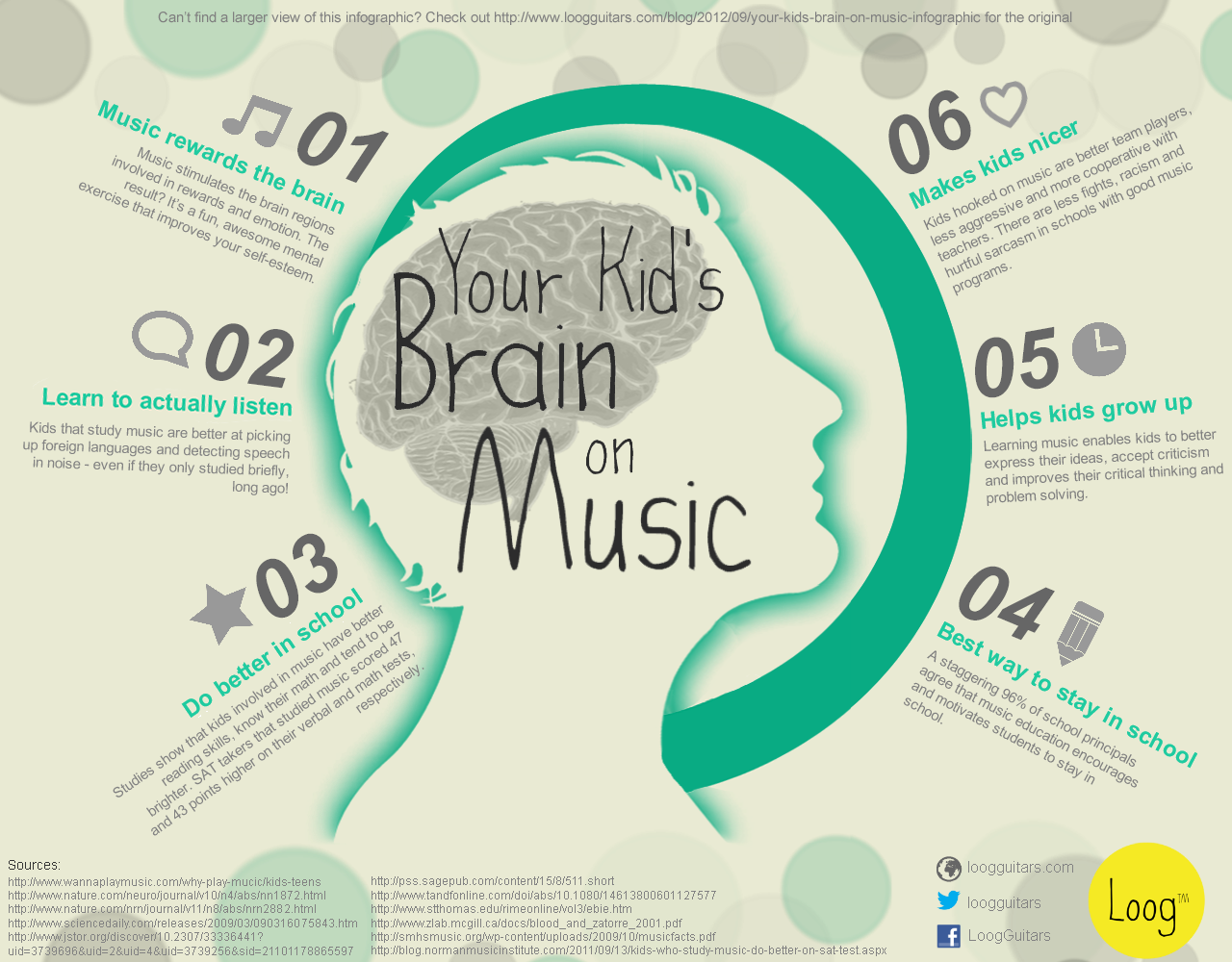
Playing music is a full brain workout. When you play music, both sides of the brain are engaged, and the connection between the right and left sides of the brain develops a stronger pathway. That bridge (corpus callosum) is responsible for processing speed — this increased processing speed in the brain transfers to other areas both academically and socially.
Through my training as a teacher and my experience teaching and homeschooling, I saw that the most gifted student are those who can process information quickly. Anything that helps that processing speed of a growing child is a worthy investment.
It increases self-confidence
Music is something that children can work for and see progress. They feel satisfied when they achieve their goals, and this increases their belief in their ability.
Performances are also something that most children who have played music do. Being able to get up on a stage and play an instrument in front of others also transfers to being able to get up on stage and speak.
I have seen this with my children. I have seen my more introverted children gain confidence and courage as a result of performing in recitals. I noticed that skill transferred over to a natural comfort of speaking and being in front of a group.
It develops physical skills
One of my children had a hard time with fine motor skills. It was a form of dyspraxia, and I knew that putting him in violin lessons would help him tremendously. The coordination of using both the right and left hand simultaneously in music helped to strengthen his motor skills over time. That is just one of the many physical benefits of learning music.
It introduces children to other cultures
Music has been able to speak across cultures when words have not. In the violin and cello, my children learned to play classical music with German and Austrian roots. I learned those as well but also discovered bluegrass from Appalachia. Right now, while living in Hawaii, my daughter is learning to play the ukulele. Through the piano, children can learn jazz or classical music among others. Through percussion like bongos, children can learn African and Cuban styles.
I have found that not only are children exposed to musical traditions, but they learn to have respect and appreciation for them. This exposure is an essential education in the life of a child. It teaches them the value of other cultures, unlike themself.
Final Thoughts
Music is not only great for children to learn because of the things I have listed but also because it is a skill that will travel with them throughout life. Music brings people together and provides a sense of unity. When you invest in the musical education of your child, you are not just investing them, but investing in the lives of every life they touch.