
Why You Should Not Use a CTA in Your Medium Posts
On trust, product, and blurring clear lines
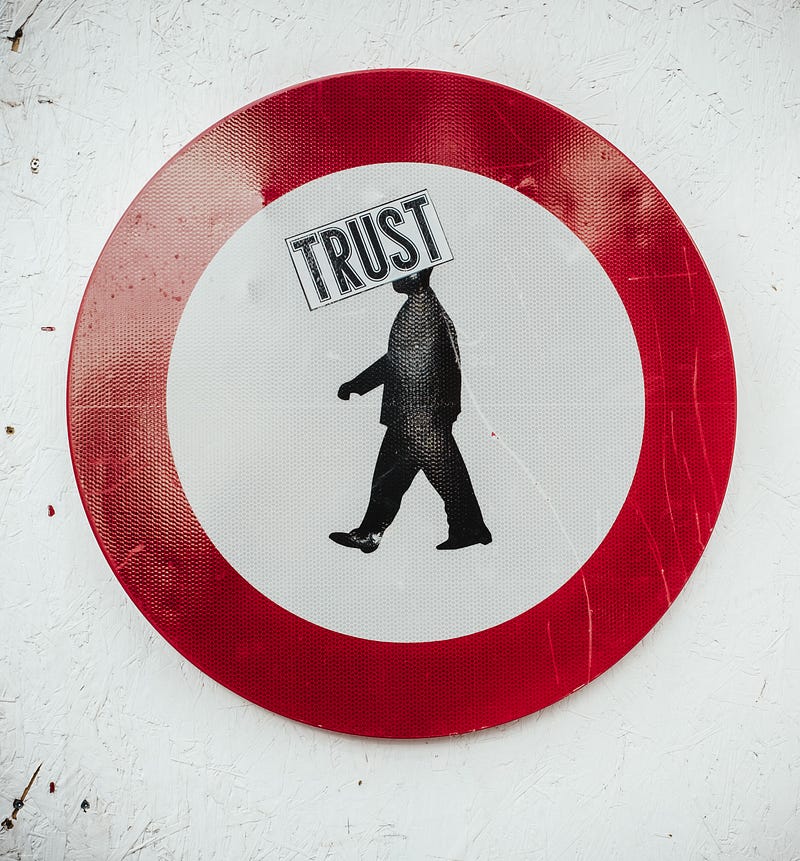
Imagine you bought a new kitchen knife. One of those shiny, Japanese ones with a huge blade. It’s sharp enough to slice your tomatoes so thin you can look through them. It’s majestic. Shiny. Brilliant.
Now imagine this: Across the blade in bold letters, it says: “Buy John’s Tomatoes.” How would that make you feel about your knife?
Chances are, you’d be annoyed. The first few times you make sashimi, you can’t help but think: “I don’t want tomatoes with this.” Then, you start fooling yourself. “Ah, it’s not so bad. I won’t even notice it after a while.”
Sure enough, after several weeks, you don’t. But then it comes back. Again. And again. And again. “Buy John’s Tomatoes.”
It’s not like you got a discount on the knife either. No. You paid the full price. Yet, somehow, you ended up with that damned blade that says: “Buy John’s Tomatoes.”
You love the knife. It’s great. It’s the best knife you’ve ever had. But every time you use it, that stupid slogan comes back to haunt you like a curse — and it taints the entire experience forever.
Right now, this exact thing is happening on Medium. If you read or write articles on here with any kind of frequency, you’ve been exposed to this issue. You’re in at least one of the following two camps:
- For some of the articles you read, you see a variant of “Buy John’s Tomatoes” at the end of them. A call-to-action, asking you to sign up to the author’s email list, buy their book, follow them on Twitter, or any other form of advertisement.
- For some of the articles you write, you include a variant of “Buy John’s Tomatoes” at the end. You want views, and fans, and money, but you also want a bigger email list, more Instagram followers, and new coaching clients. So, you brand the knife.
Marketing isn’t always a straightforward job. Some questions really are ethical dilemmas, and some of them have no answers that make everyone happy. This isn’t one of them. CTAs do not belong in Medium posts. Period.
On Medium, the article is the product. Every member is paying $5 per month to read articles, written specifically for them. When you mark an article for inclusion in Medium’s paywall, you’re saying: “This article is that product. I wrote it for paying Medium members and I want to get paid for it.”
The moment you make that statement, you forfeit your right to advertise. Maybe not by law, but by any measure of honest, trustworthy buyer-seller relationships.
How would you feel if your BMWs GPS constantly sent you new car deals, interrupting your navigation?
How would you feel if a show on Netflix stopped mid-scene so an actor could advertise his Twitter?
How would you feel if you still got mid-roll ads on Spotify after paying for it?
You would go absolutely crazy, and rightfully so. Why should Medium be any different?
Let me say it again: The article is the product. You are being paid.
If you’re being paid poorly, that doesn’t change your decision of making your article a product. If your article doesn’t perform, that’s not the algorithm’s fault. It’s not the reader’s fault. It’s yours.
Maybe, you haven’t built a writing skill that warrants paying yet. Maybe, you haven’t used it in a while and need some time to adapt to what’s changed.
Maybe, you haven’t been patient enough in building a loyal following. Whatever it is, adding a CTA to your posts will only hurt your ability to fix any of those things.
Now, I can already hear someone pointing to Medium’s guidelines on CTAs, saying: “Well, they’re not forbidden.” But, if you read the latest iteration, you’ll see they actually are. What’s allowed is subtle in-text links to cite and promote your work on other platforms. Not outright CTAs.
Others point to the status quo: “Well, if my articles get curated with a CTA, why should I not include one?” The answer is simple: Because it’s still the right thing to do. Yes, you might get 1% of your readers to sign up, but is that worth losing trust with the remaining 99%?
Let’s say you wrote a great article about your favorite productivity hack. You make two versions of it. Except for the CTA at the end, they’re identical. You show both versions to every single employee at Medium and ask them which one they prefer to read. 100% will choose the non-CTA version.
More importantly, if you did the same thing with every reader, their answer would be the same. So would anyone’s. Because there’s a difference between tolerating something and endorsing it.
Right now, Medium tolerates CTAs in member posts. But they still hate them. Maybe, they feel they have no choice. Maybe, they’re not sure how to handle the issue. That’s a loophole.
Great marketing isn’t about finding loopholes. It’s about deciding to be better. To go where no one has dared to go just yet. The question is not whether moving forward is the right decision to make. That’s abundantly clear. It’s…
Will you choose to do it?


