
Future, Psychology, Philosophy, Love
Why You Should Learn To Stop Worrying and Embrace Immortality
Don’t lose your identity, love, and soul in the coming future.

1. Incomplete Solution
No one knows when humans will be able to achieve physical immortality or if it will happen at all. However, the never-ending march of biotechnological advancements, progress in AI development, and massive investments in these areas make such a probability increasingly tangible.
Thus, the issue of physical immortality may become relevant for today’s generations thanks to biomedical approaches that slow down the aging process. This will allow these people to stay alive until an “ultimate” technical solution is developed to fully reverse aging.
Although such a possibility seems like an obvious benefit, at the same time, it raises many contradictions. While nobody wants to die, The Prospect of Immortality frightens many people to death (pardon the pun).
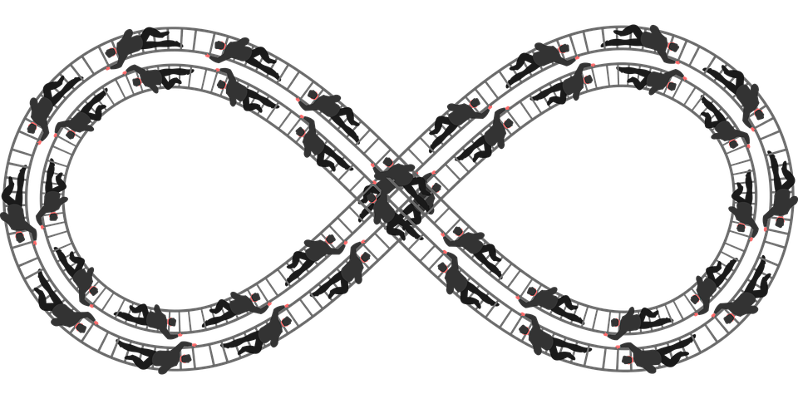
I was one of those people. It took me a long time to change my mind.
2. Who is in charge of deciding?
Does this paradox matter right now?
Yes, because it presents a fundamental moral problem for society and affects future generations’ fate.
Our attitude towards this problem determines whether you will decide how long you will live or whether someone else will decide for you.
In the modern world, conflicts of this kind arise constantly. It is enough to remember the ban on research on embryonic stem cells (2001), heated debates about the right to euthanasia, and the problem of abortions.
Another important example concerns cryonics. Its legal status is not defined in many countries. In some, its application is significantly limited, up to an actual ban (France, Italy). Thus, the will of a specific individual does not have priority over abstract public beliefs.
All of these are acute and painful issues, but even more serious are those related to the intervention for the duration of a person’s life.

3. Life Extension through the Prism of Social Justice
The closer science gets to understanding the aging process, the more relevant this topic becomes.
In the largest mass media, messages like Researchers Say They Are Close To Reversing Aging or How The Ultra Rich Are Trying To Live Forever are increasingly appearing.
For some, this inspires hope, while for others, it raises concerns about the danger of the most acute form of inequality.
Will the fruits of biotechnology progress be available to everyone? Will the right to an infinitely long life be an inherent right for each individual, regardless of their level of prosperity?
These political concerns stem from our ethical beliefs, which also determine the boundaries of technology application. Thus, the critical point becomes the ability (or inability) of members of society to come to a mutually acceptable agreement on these urgent issues.
That’s why you’re here.
So, the contradictions between those who support immortality and those who object to it should be understood. They come down to whether it is morally acceptable for people to live forever.
4. Is it acceptable to live forever?
Supporters of immortality argue that it is a natural desire; therefore, it should be realized to the extent that our capabilities allow us.
Their arguments are simple and based on apparent facts:
fear of death, grief over the cessation of human existence, and pain from losing loved ones.
The dream of eternal life has always been with humanity. It is embodied in myths, religions, or various philosophical concepts. And since we will be able to realize such a dream in the future, there is no reason not to do so.
It should be noted that such people are often referred to as part of the transhumanist camp, but this is not entirely correct. Although all transhumanists accept the idea of physical immortality, not everyone considers themselves a transhumanist.
Opponents of immortality supporters are sometimes called “mortalists.” This name is also not ideal for the same reason as in the case of transhumanists. Further, by mortalists, I will mean those who not only do not support the idea of immortality but insist on its moral unacceptability.
So, mortalists object that mortality is an inherent characteristic of human beings. Therefore, if you use technology that gives you eternal life, you can no longer be called a human being in the strict sense.
This statement, however, is easier to find meaning than logic. In addition, it raises suspicions about the intellectual honesty of their authors (I will briefly touch on this later).

5. Not just genes
No one has yet to answer what it means to be human. And no one has proven that we have some unchanging essential core.
This does not mean the absence of human nature but rather its extreme plasticity and ability to develop in unpredictable directions.
This statement is supported by the well-developed and authoritative theory of gene-culture coevolution in evolutionary biology. It explains how genes and culture interact and influence each other’s evolution: changes in cultural practices can lead to changes in genetic traits, which, in turn, can lead to changes in the cultural practices themselves.
This is one of the main secrets of the phenomenal success of our species. We are not the same Homo Sapiens who spread across the earth about 10–15 thousand years ago. Genetically, we are almost identical, but our society is completely different.
So, isn’t our inventiveness really a fundamental property of human nature?
Humans have always used technology — first to enhance their natural abilities and then to overcome existential limitations. Control over the environment, getting rid of diseases, prolonging life, etc. — where do we draw the line between “natural” and “unnatural” here?
Yes, of course, abolishing death would be a colossal shift in our worldview and would entail a lot of profound economic, political, existential, and philosophical problems. Yes, it would force us to redefine the very essence of human beings. But this is not the step to avoid. We must do it — with all the discretion and responsibility available to us — if we want to understand our destiny as rational beings.
If we are afraid of this, do we have any purpose at all?

6. Bone of contention
This is where the bone of contention is: some people see humans as a transcendent entity that must overcome the evolutionary threshold of the animal, while others prefer to keep them where they are forever, i.e., to leave them mortal.
Mortalists justify their position by saying that humans seek meaning in conditions of limited time. In particular, M. Heidegger (Being and Time) claimed that only realizing death can give rise to “authentic existence.”
Accordingly, the philosopher Bernard Williams insisted living forever would be awful, akin to being trapped in a never-ending cocktail party. He justified his thesis by arguing that life, in the end, would become unspeakably boring. This popular argument is both remarkable and weak.
Did the finiteness of their lives really condition the deeds of great geniuses?
And what about the internal need for creativity, curiosity, awe before the wonders of the universe, and the obsession with finding their solution?
Are these the properties of our temporal limitations or, on the contrary, of our striving for complete freedom from the constraints of the mind?
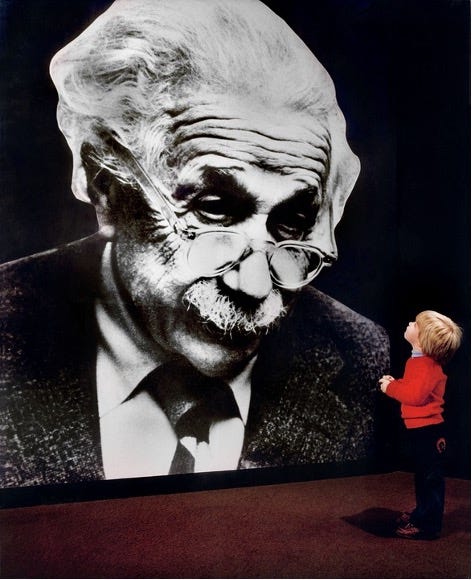
Indeed, would Plato, Leonardo da Vinci, Darwin, and Einstein lose these qualities if they had lived much longer than what biology has allotted to Homo sapiens? Would life eventually become boring for them? Would their existence no longer be “authentic”?
7. Thesis substitution
Mortalists will insist that even such people get tired of life, but they substitute the cause for the effect here.
Yes, even the most creative and energetic people get tired, but it is aging and senility, not life, that tires them. Meanwhile, we are talking about something other than the eternal prolongation of old age but about preserving life in its best form. We are talking about a future where, as Arthur C. Clarke put it, our technologies will be indistinguishable from magic.
Are you tired of living in such conditions?
If this life is just a never-ending party, then it’s no wonder. After all, monotony tires us, and it always comes when a person’s activity does not contain a constant intellectual challenge.
That is why carefree life quickly becomes routine, can turn a person into an idiot, and even lead them to their grave.
And that is why scientists or philosophers (and thinkers of any kind, for that matter) live much longer than ordinary people. And, by the way, unlike the latter, they practically never have Alzheimer’s disease.
This fact already contains an inconvenient truth and a danger of an irreconcilable clash of worldviews between people whose existential goals radically diverge.
It is already easy to understand why some very smart people put forward foolish arguments in favor of the idea that an indefinitely long life is bad.

8. Envy, self-deception, and the blind spot
This may be because, at their core, they are simply nihilists. They do not believe that immortality will be achieved during their lifetime. Therefore, they personally will not benefit from it. From this point of view, it would be wrong for those who come after them to have such a chance.
Essentially, this manifests the ordinary human vice of envy, an egocentric unwillingness to accept that circumstances have not worked in your favor and that you cannot do anything about it.
Of course, it would be incorrect to explain the position of mortalists solely as a cover-up for this very natural human vice. For many people, the belief that death is normal and even good, that old age is beautiful, and so on, is a means of calming themselves, a kind of placebo. This is certainly self-deception, but no one has the right to condemn them for it.
We all deceive ourselves. Every mind has a blind spot.
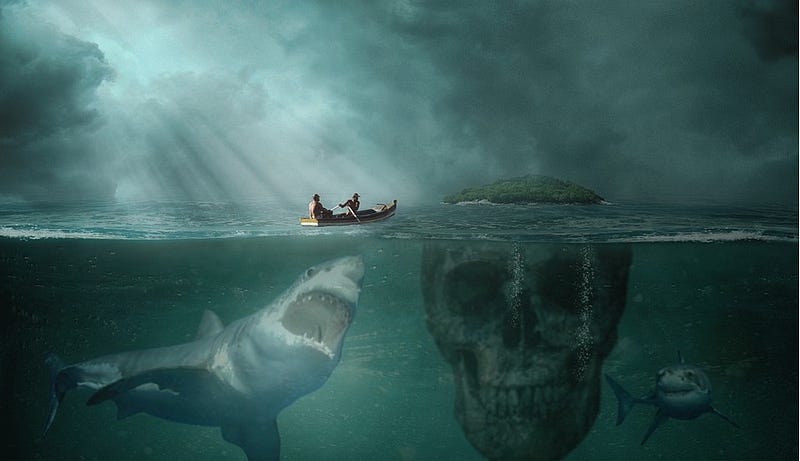
This is precisely the zone where thoughts about the inevitable end are located. A safety catch is triggered as soon as we enter there, and we stop short of the abyss, not approaching its edge. We can glance there fleetingly, but then we recoil in horror. As the great‑and‑terrible Nietzsche said, “If you gaze for long into an abyss, the abyss gazes also into you.”
He held his gaze on it and went insane.
9. The main contradiction
Thus, the normalization of aging and death often becomes a form of its denial.
To make it work, our mind resorts to a trick that Harvard psychiatrist Robert J. Lifton called Symbolic Immortality (this idea was brilliantly explored in E. Becker’s book The Denial of Death). We all know that our body turns to dust, but our projection into the future remains. In some sense, it is still us, embodied in our ideas, deeds, and the memory of our loved ones.
And here, we come to the central contradiction of the mortal worldview. It devalues two main attributes of human existence: personal identity and love.
Personal Identity
Every reasonable person strives to understand who they are. And the more complex the world becomes, the harder it is to achieve.
The real tragedy is that a person may not notice how the best years of their life have flown by while doing something they were forced to do rather than choosing what their heart desires.
Most people just spend their lives working 9–5 without any chance of understanding how it relates to them as unique individuals. They may be left with a couple of decades of retirement, but this can hardly be considered full compensation for the years spent.
Radical life extension would fundamentally change this situation. It would rid a person of anxiety and sorrow over the unfulfillment of their destiny. They could dedicate as much time as necessary to their search.
But mortalists do not see this as necessary.
Love
Is there anything more valuable than love in life?
I mean not only the relationships between lovers but love in the broadest sense — as a feeling of closeness to another person.
Love is life itself. History is filled with examples of people who sacrificed their own lives to save the lives of their loved ones.
Love and empathy are two feelings that make us humans in the most sublime sense.
Death destroys all of this.
Do you accept death for yourself?
Okay, it’s your choice. But do you accept it for your loved ones, especially your children?
With those who do this, I will never agree.
Look at them now. Can you imagine the wilting, suffering, and decay of those in whom you see your continuation and, probably, the best embodiment?
I do not believe that this idea cannot cause pain in the soul of a person capable of thinking and feeling. I can understand humility, but only as long as there is no prospect of changing this tragic state of affairs for that person.
Do we have such a prospect?
The irony is that even mortalists are already inside this perspective. As biomedical technologies continue to advance, life expectancy will continue to increase.
Thus, people will become more and more favorable towards longevity. And there is essentially no boundary between longevity and immortality.
The question is only what to consider as the norm of longevity. Suppose this norm significantly exceeds the predetermined evolutionary limit of Homo Sapiens. In that case, immortality is unlikely to be perceived as something unacceptable.
Of course, its philosophical basis must be developed, and solutions to accompanying problems must be found. But that is the subject of another story.
We need to seriously discuss this.
10. Summary
So, we can say with certainty only three things about the future:
1. It is inevitable
2. We have no idea what it will be like
3. It will be highly challenging for each of us.
Humans have tried to cope with a hostile nature for their own survival for millennia. When this task was accomplished, we embarked on the path of technological progress of our civilization. And now, we find ourselves where technology offers us to intervene in our very essence and change our perception of what it means to be human.
Until now, this definition has included the finiteness of existence. Everything can change and is already gradually changing.
Some will never agree to this, but some will want to cross this threshold.
Would you embrace immortality?
You also may like my other stories, such as these:
Dear reader, subscribe to my updates and share your thoughts on our present and future with me!


