
Why You Should Have Faith in Failure
It’s not just some myth from rags-to-riches fairytales.
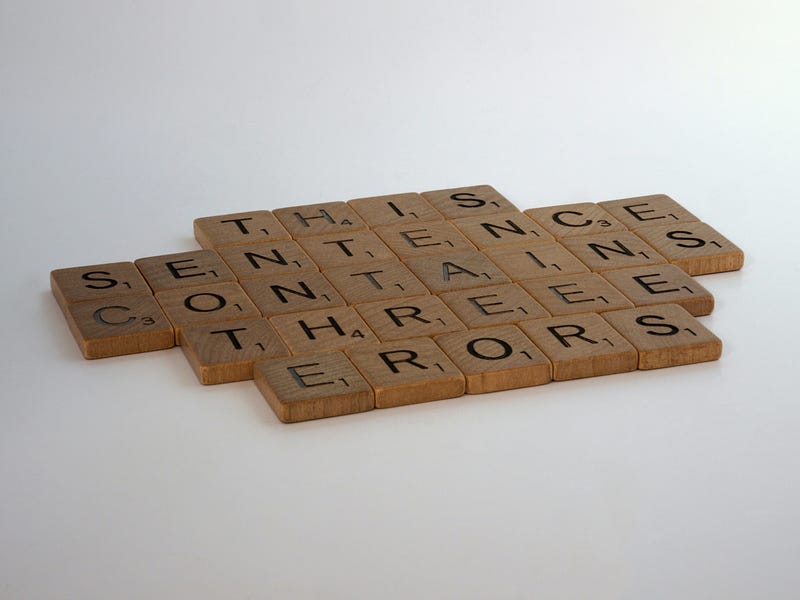
I like to think that, if I had been friends with J.K. Rowling, I would’ve been an uplifting beacon of hope by telling her to “keep trying.” Even after she got her 12th rejection letter for an obscure manuscript she called “Harry Potter” something.
Of course, now we know she could buy all those 12 publishers and make them dress like house-elves for a laugh. But who knew back then, when she was just a single mum living off welfare, that she would become the author who survived?
Now she embodies the archetypal hero of the rags-to-riches narrative, but back then there was no reason to believe that her tolerance to failure would be rewarded after 12 rejections.
This means that we only believe in failure only when we have proof that it worked at the end. But we can’t know if it’d work for us unless we bear its weight first. For that, you need more than just belief — you have to have faith in it.
The distinction between belief and faith determines whether you call it quits when your dream sits on its 12th rejection, or whether you take a leap of faith into the 13th one.
Leaps of faith are less common now than 2,000 years ago
They had fallen in disgrace. This demise can be traced back to the year AD 1 — let me do a quick highlight reel of what happened.
That’s the starting point of the “knowledge doubling curve,” a concept coined by futurist Buckminster Fuller. If the cumulative knowledge of humanity in AD 1 amounted to “1 knowledge unit,” he theorized, then it took us around 1,500 years to double that quantity.
From there, technological advancements started to narrow the line’s upward curve. It only took us 250 years to go from 2 to 4 “units of knowledge.”
In the year 1900, we’ve doubled it again, reaching 8 “units of knowledge.” Now, that’s a manageable quantity of knowledge. Think about how life worked for most people back then: they were born, spent their youth learning a craft, then repeat it until they retired.
But this system quickly started to crumble. The next doubling happened in the 50s, the next in the mid-70s, another one in the late 80s. Now it’s doubling every year, and it’s estimated that soon it will be doubling every 12 hours.
That’s a lot of knowledge units. That means if there are 5,000 knowledge units right after you finish your morning coffee, humanity would’ve piled up 5,000 more by the time you go to bed. In a couple of years, it would kinda render the unit meaningless, as the numbers will be too big. But hey, we still measure the thrust force of rockets in “horses of power.”
It’s hard to have faith in failure when there’s too much of it
The point of faith is to give hope to hopeless circumstances, to inject meaning into suffering.
But we’re exposed to too much failure, and too much of it amounts to nothing. Information keeps raining down in what seems to be a sequel to the biblical flood, where the animals are not to save but our sanities are.
You can’t just simply opt-out of this if you want to live in modern society. Remember the simple folk of the 1900s. Back then you could carry your old-fashioned believes and dogmas until the 90s, and it wouldn’t matter: people allowed you to be a little racist anyway.
But now? Fashion seasons became fashion weeks, our attention span lasts seven seconds, videos last only six. One year is seven for a dog, but a lifetime for a Google algorithm.
Everything goes faster, which means, everything changes faster. And acceleration becomes the norm, we’re forced to be in a perpetual stage of learning. The modern landscape has become a narcotized Galapagos of ever-changing ecosystems, where the competitive advantages of today will be the liabilities of tomorrow morning, and where the only way to survive is to be the one that adapts faster than the rest.
And because error is inherent in learning, there’s no end to failure, not a real reward after enduring the suffering. Our prayers will go unanswered, for this doubling curve of madness is still accelerating. So what’s the point of having faith in failure if it’s not merciful with us? Is it worth enduring if there’s no end, no ultimate meaning to it?
The thing is, that’s not our choice to make. A lot could go wrong if we decide to opt-out of failure. Not just because some of our dreams won’t even get to their 12th rejection, but because in the learning process, we can’t replace the role of failure with anything. Well, maybe with more spaghetti.
The vital, irreplaceable role of failure
This is the point of an engineering problem where kindergartens performed even better than engineers.
It’s called the “Spaghetti Problem,” which was not about settling once and for all on one best official sauce (it’s clearly pesto), and the other pressuring issues in the pasta business. It was about building a tower.
Several test groups, segregated by profession or age, were given the next list of materials: twenty pieces of spaghetti, a meter of tape, a marshmallow, and a piece of string. Their objective was to build, in eighteen minutes or less, the tallest possible freestanding structure that would support the marshmallow at the top.
Now, you would think the kindergartens weren’t even able to solve the problem, as they would’ve eaten the marshmallow before listening to the instructions. But their towers averaged 1 inch taller than the group of engineers.
While engineers were carefully planning and imagining the most efficient tower, kids started piling up stuff, watching it fall, then piling it again.
Experimentation taught them what didn’t work, and each failure fed a feedback loop of accelerated learning. That’s why tech companies don’t just design, but prototype, and why musicians don’t just read musical notation, but rehearse.
That’s the embodiment of having faith in failure: you don’t know what the tower’s gonna look like in the end, or exactly what iteration of your product the public will like. Yet you keep going because of an intuitive hope that you’ll get an answer.
It’s only a modern inference that having faith in anything is about “blindly believing that some things are true without any proof or reason.” In reality, faith is the instinctive feeling that you’re on the right course. It’s a glimpse of an idea, a sudden eureka, a suspicion floating in your mind. “Will this work? Let’s take a leap and find out.”
Conclusion:
I hate to admit it, but after her 12th rejection, I would’ve had no faith in J.K. left in me. Unless, of course, she was waving a wand around turning water into wine, or curing someone’s leprosy with the emanating odors of some magical concoction.
But that’s just not how enduring failure works. It’s frustratingly ordinary, it doesn’t look anything like a hero’s journey, and it has the same sense of importance than the place where walking movie extras go when they step outside the frame.
Failure does not have a grand plan for us, it feels meaningless. But that’s precisely why we fabricate meaning around it — by having faith in it.
Faith was never about gaining an understanding of the universe, but about making our place in it matter. It’s about seeing a regular woman writing about magic in an Edinburg cafe, and hope that she has her flying broom parked outside.
Not just proof, but also hope. Not just understanding, but also meaning. Who knows, your dream could be just one rejection away from becoming true. Beliefs won’t be able to help there, but a leap of faith might.