
Why You Should Avoid Argument Of Exclusion
When You Discuss The Existence of Human Race
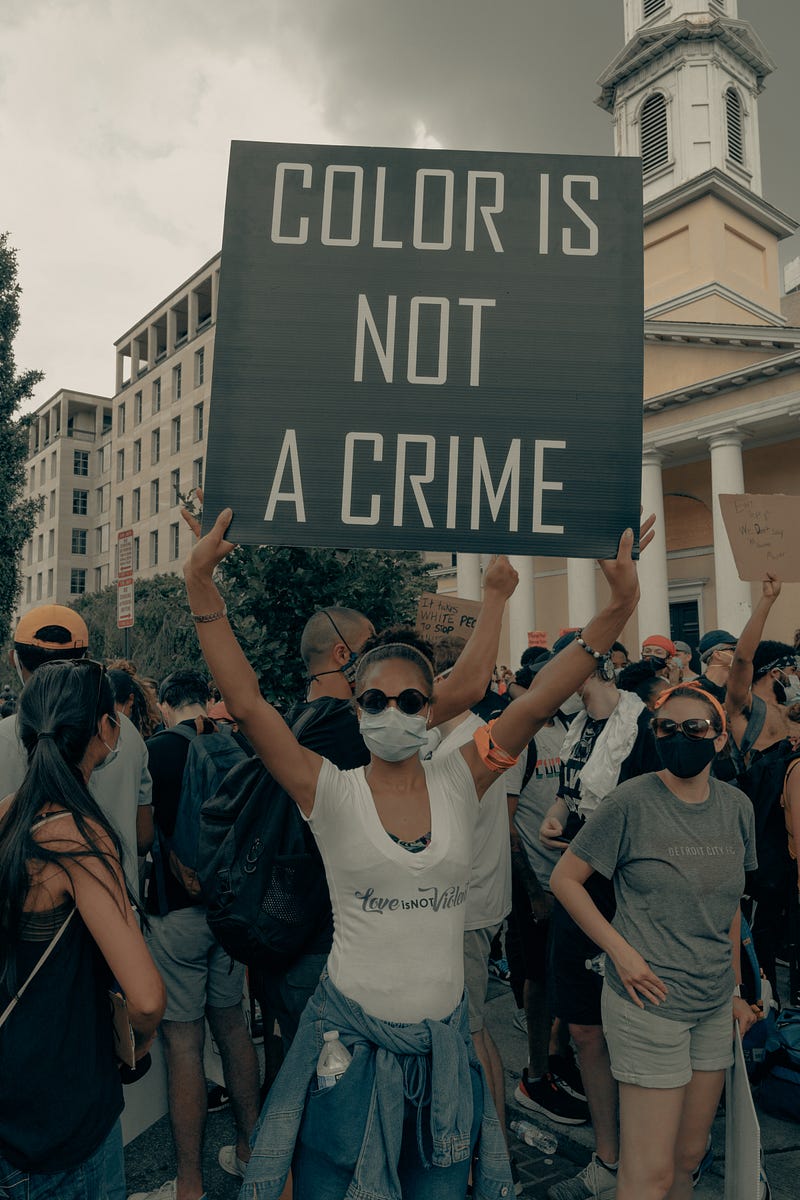
Racism has always been hot, saucy sensitive topics and debates of the twenty-first century. An issue such as racism is one of ‘human interests’ subjects’. It has been ongoing studies and research in many universities. But lately, the tensions are inevitably the boiling water in many heads.
When a writer discusses racism, dragging readers into opinion isn’t wrong as long as research, studies, investigation support the argument and of course, acknowledge the resources.
When the opinion is merely from ‘what I think’ without any references, then it is a baseless argument. A baseless argument is like building a house with no foundation. The house is crumbling before it even begins to construct the roof.
There is a difference between a writer with an opinion and an opinionated writer. An opinionated writer often uses an argument of exclusion rather than a resourceful argument backed up by facts and referential researches.
Opinionated stories are often sensational because the opinions are often subjected to the writer’s thoughts without any references to research and studies.
Stories of racism often go viral not because of the trend, but it is often written solely from a writer’s opinion. An opinion of racism can be based on individual experience or a collective thought from ideas and memories.
So a story goes viral isn’t always for a good reason, but the controversy surrounding the high-level subjectivity of the article.
What is the sign of the argument of exclusion?
One significant sign is when a writer uses the conditional sentence to navigate or convince or enforce readers with the reality check. This argument of exclusion is nonsense, baseless, and unnecessary.
An argument that discusses the existence of human race, such as racism, when it is written with ‘conditional sentence’ to pinpoint and enforce a writer’s idea to the readers is unrealistic and baseless, therefore should be labelled ‘An Opinion’. A publication should filter many sensitive issues, such as racism and religion under this label. Mainly the ones are written based on an opinion. A sentence such as this one:
Even if Black people didn’t exist, the human race would find a way to practice racism against each other.
Though many readers could find themselves aligning with the writer’s ideas, it doesn’t mean the story is referentially resourceful. Remember that it’s an editor job to filters the story with standardised quality for the publication.
For a publication with advanced readers such as I C, It is an editor job to filter which one is a story based on opinion and which one is written with a statement backed up by studies and research.
The recent dead, Medium curation, for example, favoured stories not only a writer’s personal opinion but the opinion with references of research and studies. Though it’s not necessarily the editors should cross-check with the referential resources, at least there is a specific mechanism for the story to be curated. It makes a story a strong voice based on a resourceful foundation. It separates a responsible writer from an opinionated writer.
A writer’s idea forms the sentence above by utilising a conditional sentence to navigate and enforce the readers into the opinion of racism in the human race — which is again a sensitive topic.
It is not to the extent that the story is dangerous, but this kind of argument, the argument of exclusion proposing ‘If Black didn’t exist’ is from an unrealistic condition of the human race existence, not based on the reality of human race existence itself.
Though the argument isn’t dangerous, this kind of views only creates friction, unnecessary noise, and possibly attract to divide us. We all know we shouldn’t be fed by this nonsense argument when we discuss the existence of the human race.
If an editor decided to publish an opinionated story, I suggest the story itself should be labelled ‘an opinion’ by the publication. It means the opinion doesn’t always represent the voice of publication and opinion is solely based on a writer’s personal view that merely subjects to the writer’s ideas and experiences.
As much as the writer’s conscience to justify the voice to let readers know ‘We Need To Stop Finding Ways To “Divide & Conquer”. Unfortunately, the writer dismissed the critical point of the story that it wants to represent. So the story is a crumbling foundation. But then it stops at
What unifies us is Much powerful than what divides us.
Indeed. When such a story is from an opinionated writer that is more powerful to divide us rather than unite us.
But why such a story published by I C without an ‘Opinion’ label or filtered?


