
Why You Should Always Begin At the End
The Importance of Starting with the End in Mind

I love to dig deep into unconventional wisdom. The ideas within contrarian approaches to life fascinate me no end.
By definition, common knowledge evolves to be what is it because its application tends to produce reliable outcomes.
Put it another way applying what is known as ‘conventional wisdom’ produces conventional— read ‘uninspired/non-unique’ — outcomes.
Or does it?
Contradictions are rife.
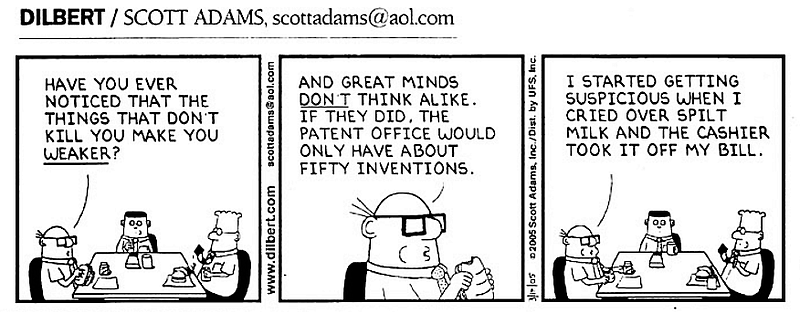
Think about it, the world tries to get people to conform — you are expected to toe-the-line. That same world turns around and elevates to hero status those who do the exact opposite.
It is the mavericks, non-conformists and rebels who leave an impact on the world and not the traditionalists.
Some examples…
- Starbucks CEO Howard Schultz’ own business partners didn’t think Americans would pay for lattes and cappuccinos. He didn’t listen.
- Walt Disney was fired from the Kansas City Star because his editor felt he “lacked imagination and had no good ideas.” He didn’t conform to popular opinion.
- Arianna Huffington talks about the people — including her friends — who tried to dissuade her from launching The Huffington Post in 2005. She persisted.
- Oprah Winfrey was fired from her first TV job as an anchor in Baltimore. She was told she wasn’t good enough for broadcast TV. She ignored the negativity.
- Colin Kaepernick’s career has been obliterated because he chose to kneel for a cause he believed in rather than stand with his hand to his heart for the US National Anthem.
If any of these people had listened to the conventional wisdom, some trite throw away nugget like, “The definition of insanity is doing the same thing over again and expecting different results”, they would probably have stopped fighting for what they believed in — and the world would be a poorer place because of it.
The Art of ‘Beginning with the End in Mind’
Coldplay’s music video to their hit single The Scientist always unnerved me. It’s not just because my mind is always trying to figure out how they pull off Chris Martin moving in reverse while singing in time.
There’s a deeper meaning to the video.
It begins at the end with Chris lounging lazily on a mattress in a pensive mood. Then he gets up and spends the rest of the video singing about getting back to the start — and then proceeds to do exactly that.
The video is about a missed opportunity that can somehow be reclaimed by returning to the beginning.
This way of thinking is not an unfamiliar by any stretch of the imagination. You have probably heard it expressed in many different ways and never considered why it was important.
It is not new but for some reason just is not the default mode of thinking for many of us.
First Impressions
Why are first impressions so important, for example?
Psychology shows that the human brain uses shortcuts to enable us to make countless split-second decisions. The ‘halo effect’ is used to define one of the ways your brain circumvents lengthy processing times.
Think of it this way: You meet someone very friendly and decide that you like this person. They get put in a box in your brain labelled ‘good’.
Are you more likely to listen and agree with people you like? Yes.
Do you on average think people that you like are smarter than those you dislike? Also yes.
Are you more likely to give those that you get along with the benefit of the doubt? Yes, yes and yes.
Now that you understand all of the advantages that come with making a strong, positive first impression on those you meet, you can suddenly understand more clearly why it is such a powerful concept.
You only ever get one chance at making a good first impression. Make it count.
Setting the Tone
Like making a good first impression, setting the tone for interaction or relationship works to the same principle.
I recently walked into a meeting with my boss to request a voluntary redundancy package.
The company was experiencing some pretty major headwinds and had announced that it was going to cut global staffing by 30% in the coming weeks. Considering I had been itching for an exit from the industry for a few years, I saw a perfect opportunity to leave with a nice payout.
Truth be told, I did not need the payout. I had been interviewing for months prior and had already found two roles I liked — one had even made me an offer. A decent redundancy package however, would be a fantastic financial cushion — if it was on the table then I wanted one.
The meeting involved HR because corporations are always insanely on edge about potential repercussions from a staff termination gone awry. I needed to put everyone at ease to get what I wanted — a quick dismissal.
As soon as the meeting convened I set the tone by smiling a lot and even making a few jokes. I made a point to specifically empathise with my manager and the HR representative who had to deal with the anxieties of carrying out redundancies while not knowing what their own fates would be.
I maintained the most helpful, open and amicable tone possible in all subsequent meetings.
Within a month I was unshackled from the company with a signed and sealed redundancy package.
If you can set the tone for very important engagements or relationships it makes an immense difference in getting you to the desired endpoint.
Creating Goals
A goal is essentially an endpoint.
You’d be hard-pressed to find any SMART (Specific, Measurable, Attainable, Relevant, Time-bound) goals that go: turn on your computer, get out of bed or pick up the phone.
These read more like steps or tasks to get you to stated goals.
The goals are more likely to read something like Post two 5-minute long articles on Medium by the end of the day, Get to my appointment by 8 am this morning or Make twenty calls to potential clients by lunchtime.
Goals are sign-points indicating where you want to be a the tail end of an endeavour.
They are always set the start of the activity because you want to have something to aim for. Some way of keeping your eye on the prize and staying the course to achieving your desired results.
Corporate speak has condensed a crucial concept to buzz words but the power of setting goals is in the pudding.
Living Everyday Like Your Last
This idea needs no lengthy prose. At the end of their days, few people have no regrets.
A lot of the things people wish they had done tends to revolve around those they love — those things, places and people that made them happy.
Scarcely any people on their deathbeds wish that they had spent more hours at the office, bought more fancy cars or clothes or watched more TV.
Pausing once in a while to reflect on the end of life helps to clarify your current pursuits.
If you lived every day as if you expected not to see another your perspective about what matters to would undergo a radical change.
Considering that no human on earth knows for a fact that tomorrow is a reality for them, isn’t it amazing that we do not already do this stock-taking naturally?
Let’s Recap
Conventional wisdom is essential regurgitated brain-numbing, potential-limiting poison. Follow enough of it and watch your life splutter on in a non- distinctive mash of mediocrity.
The way to live your life on purpose is to project into the future to the desired endpoint.
Successful people are rebels who do this instinctively. You probably do as well without realising why it is important.
Do more of these:
- Make a good first impression
- Set the tone
- Create goals
- Live every day as if it were your last
At the end of the video, we see Coldplay’s lead singer Chris Martin driving backwards from a fatal car incident which looks to have taken the life of his girlfriend.
But fear not, calamity has been averted by his going back to the start and beginning with the end in mind. They drive away happy and still very much alive.


