What Inspirational Capital Is and Why You Need It

As we are living through disruptive times and a technological revolution, we are about to see a remarkable decade full of innovation. Self-driving vehicles, 3D printing, smart homes, self-repairing robots, voice assistant technologies, flying cars, reusable rockets… You name it.
As artificial intelligence is expected to replace 40% of all jobs in the next 15 years, we will witness the end of the job market as we know it. The jobs of tomorrow have not been invented yet.
How do we thrive in such a disruptive era?
My answer: We need to develop ‘inspirational capital’.
Defining Inspirational Capital
In this article, I will introduce you a new term: ‘inspirational capital’.
I define inspirational capital as the individual capability for wonder, enchantment, curiosity, learning, self-disruption, creativity, and skill development.
These capabilities are becoming more and more important in the workplaces of tomorrow.
Everyone is expected to keep learning, create value, adapt to changing circumstances, and innovate at the speed of life.
The rate of change and innovation has become so scary that we all need personal anchors, principles, and systems in place.
Developing your ‘inspirational capital’ will enable you to design such personal anchors, principles, and systems.
The journey of self-making is difficult and complex. Maximizing your inspirational capital will make this journey easier, more engaging, and memorable.
The magic of inspirational capital comes from the powers of curiosity. If we are really curious, we go to great lengths to learn. Curiosity is like a sense of itching — you have to scratch it. This allows instant learning to happen naturally.
Therefore, inspirational capital can be used as a path to learning and creativity. If you want to create enterprises, brands, learning, and skill development; you need to invest in your inspirational capital every day.
How do you do this exactly?
The Formula for Maximizing Your Inspirational Capital: Curiosity + Exploration + Wonder + Passion
In this academic year, I made a commitment to myself that I would not teach anything to my students that does not excite me. I would only teach things that truly amaze and fascinate me. So I decided to radically transform myself and my teaching approach.
I am offering two courses at Norwich Business School at University of East Anglia. I offer an undergraduate module titled “Employability, Creativity, and Personal Development” and a masters module titled “Management Skills and Personal Development”. I wanted to innovate and re-create both of these modules using a new teaching approach.
My new teaching approach is based on maximizing my inspirational capital. I try to increase my inspirational capital through four principles:
1. Being Curious and Asking Questions (Extreme Curiosity)
2. Hunting for Originality and Inspiration Everywhere (Trans-disciplinary Exploration)
3. Learning New Things that Amaze Me (Bewilderment and Wonder)
4. Sharing my Enthusiasm with my Students (Passion)
According to this teaching approach, I would only teach new things that I learned in the last 15–20 days before my lecture (I would not include anything that I learned before that date). This meant that I would spend a lot of extra time (min. 20–22 hours every week) to learn new things that astonish and amaze me.
It also meant that I threw the traditional curriculum out of the window. I got rid of all textbooks — I find regular textbooks inherently boring and out-of-date. To spice things up, I created my own text, titled “Self-Making Studio”:
In my teaching, I only shared fresh, exciting, and original things that I learned recently.
I allowed my feelings to guide me. If I feel extremely passionate and excited about a topic, then, I know that my students will also find that topic refreshing and original.
Since I am sharing my own enthusiasm, my passion when I am teaching these things is remarkable.
This approach totally transformed and energized my teaching.
I believe there is a tremendous need to innovate faster in our lives and be more open to wonder, curiosity, and creativity. Otherwise, we are facing the risk of falling behind. In fact, I have written another article on this topic — you can find it here:
We live in a disruptive era where a perfect storm of technology will shift the landscape we operate in.
Multidimensional technological forces involving artificial intelligence, automation, 3D printing, AR/VR, machine learning, Industry 4.0, internet of things, and blockchain are rapidly transforming the future of work, organizations, and jobs.
However, as individuals, we are still largely stuck within our linear assumptions. We cannot foresee any black swans or non-linear changes that are rapidly coming to us.
We are in the midst of a disruptive era. 75% of S&P 500 firms are estimated to be replaced within 15 years.
Millions of jobs will become obsolete, and be replaced by automation and machine learning. According to World Economic Forum’s “The Future of Jobs” Report, machines are expected to perform more current work tasks than humans in 2025 (compared to 71% being performed by humans as of now). Artificial intelligence is expected to add $15 Trillion to the world economy by 2030. In the longer term, we will also witness a world where gross world product will be dominated by artificial minds (machines, algorithms, and robots) creating new jobs and new production possibilities.
In the next decade, we need new ways of working to inspire ourselves and create innovation in an era of non-linear change.
We need to develop ‘new era’ skills for future jobs that are yet to be created, including:
- the skills to work with robots/machines/algorithms;
- self-directed learning; cognitive flexibility to handle complexity and ambiguity;
- transdisciplinary sense-making;
- creativity, imagination, and design thinking;
- innovation and experimentation skills;
- entrepreneurial skills and practice;
- openness for change and adaptive skills;
- cognitive stamina and resilience to deal with failures and mistakes;
- skills for crowdfunding, self-employment, and sharing economy;
- investments and personal finance, and
- digital skills, and new media literacy.
The traditional career ladder and career promotion strategies are not compatible with the new requirements of a new age. We need to learn from entrepreneurs and artists to adapt to and thrive in such a disruptive era.
We need to create our own creative assets, imagination experiments, and entrepreneurial projects in our daily lives.
We need to be more experimental, innovative, and courageous in designing our lives and careers.
Whenever we are working, a good question to ask ourselves is: “How would Elon Musk do (or disrupt) this job?”
I recommend everyone to allow more time for increasing our inspirational capital. We should allocate time in our daily schedules dedicated to personal learning and development (Curiosity + Exploration + Wonder + Passion).
I will re-visit each domain now and present you with strategies, resources, and inspiration.
1. Being Curious and Asking Questions (Extreme Curiosity)

In these disruptive times, you will need curiosity, play, and imagination more than ever. These will be the most hight sought skills in workplaces of tomorrow.
Why? Because you cannot program computers, machines, robots, or algorithms to be imaginative and curious. They can compete with humans on productivity, but not on deeper creativity.
Only humans are masters of curiosity and imagination. And these will remain our competitive advantage. We humans can waste a lot of time, but we are also masters of surprise, mystery, and adventure.
“You live in interesting times: Curiosity is your life jacket in these times.” Fahri Karakas
In a world of crazy change and disruptive innovation, your brain needs to be active all the time. The best way to keep your brain active is to entertain it every day.
How can you do this?
You can best do this by being curious. Curiosity will help you use your mental muscles and enable you to develop new perspectives, ideas, and solutions.
Curiosity is a game-changer for your life
As you are curious, your brain opens up to new worlds and possibilities. You start to detect patterns that you have never seen before.
When you are curious, your brain is able to imagine a new world that you have never seen before. Being able to imagine new possibilities and new worlds is becoming one of the most valuable skills in building the future.
When you are curious, you can build new systems, inventions, products, processes, and solutions that solve tomorrow’s problems. You can see things in fresh ways that you would not see otherwise.
When you are curious, you start searching for multiple answers and asking “Why?” questions. You do not stop at one right answer and seek unorthodox solutions. You stop taking things granted, and dig deeper. You learn to think independently and question everything.
When you are curious, you can learn much faster because you are intrinsically motivated. Everything becomes more interesting and engaging. Your brain opens up, lights up with exciting possibilities, and becomes stronger.
When your brain is entertained and rewarded, your hippocampus becomes a hub of stimulating neural activities and connections — think of thousands of bulbs. You can learn, remember, and grow much faster. You can build new connections among seemingly unrelated things — which is the basis of creativity.
When you are curious, you can search for solutions and innovations that are normally seen as unachievable by the experts. You discover how imagination matters more than knowledge, and how it is the engine of all inventions.
When you are curious, you start playing and experimenting with exciting things. You can disrupt and create the next wave of discoveries. You dream about exciting possibilities that will enlarge your world and your universe.
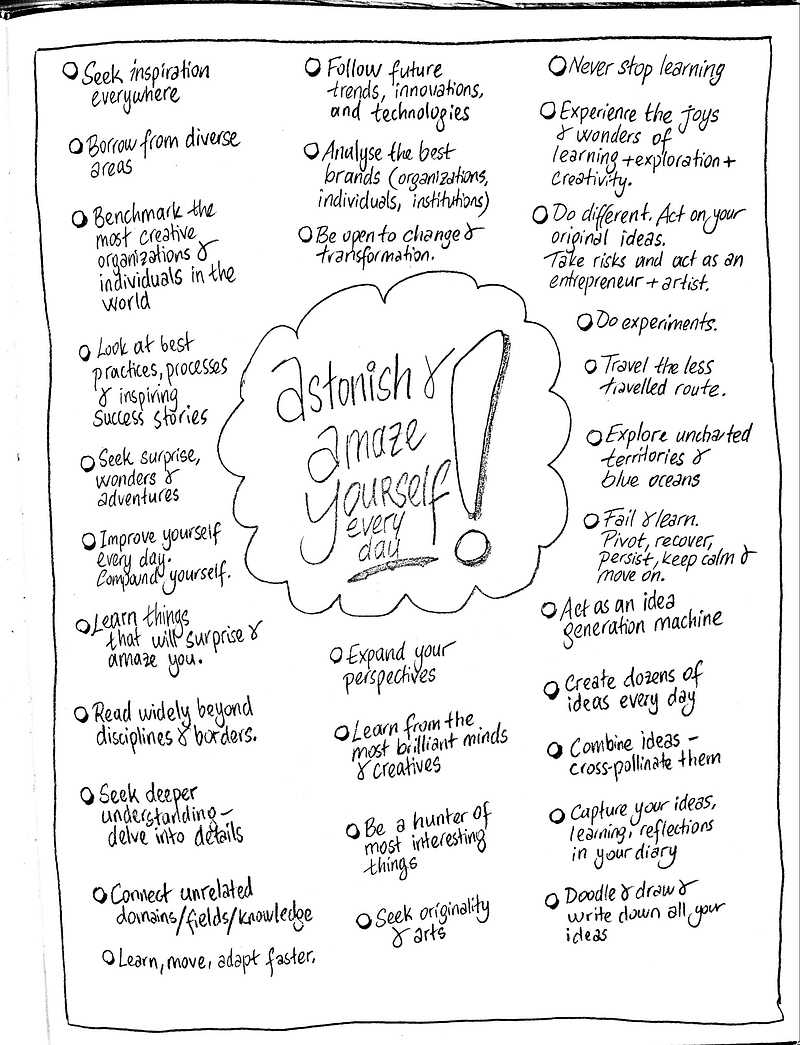
In short, we need to astonish and amaze ourselves every day.
Astonish yourself every day
How do we astonish ourselves?
Please look at the doodle poster below and create 5 small practical actions you can implement starting today.
2. Hunting for Originality and Inspiration Everywhere (Trans-disciplinary Exploration)

We need to hunt for interesting and original ideas every day. This is like fishing — you want to cast a wide net spanning multiple disciplines and domains.
When you are fishing for ideas, have an open and flexible mind. Open up your perspectives by hunting for inspiration from multiple domains. This means you need to read and learn widely across disciplines. You will challenge yourself to read in areas that you are unfamiliar and uncomfortable with. You will be always ready for multidisciplinary inquiries. You will keep asking questions that are significant and beyond borders.
Create room for open-ended discovery
I have developed a new habit to create more room for open-ended discovery, surprises, and emergence in my work.
I challenge myself to share with my students about 20–30 minutes of exciting and new things that I have learned during the past week.
This is what I call a ‘refresher hackathon’ for my teaching.
Everything that I share during this time has to be fresh and original things that inspired me in the last few days. To keep doing this, I have to keep learning new things every day.
I try to navigate uncharted territories and I scan very different disciplines to hunt for inspiration.
I constantly tap into diverse sources of inspiration including books, movies, artwork, TV dramas, articles, web sites, magazines, TED Talks, podcasts, documentaries, radio programs, and YouTube videos.
I also delve into arts, sciences, theatre, design, sports, fashion, engineering, pop culture, entrepreneurship, self-making, brands, magazines, trend reports, emerging lifestyles, inspiring careers, start-ups, innovators, and technology.
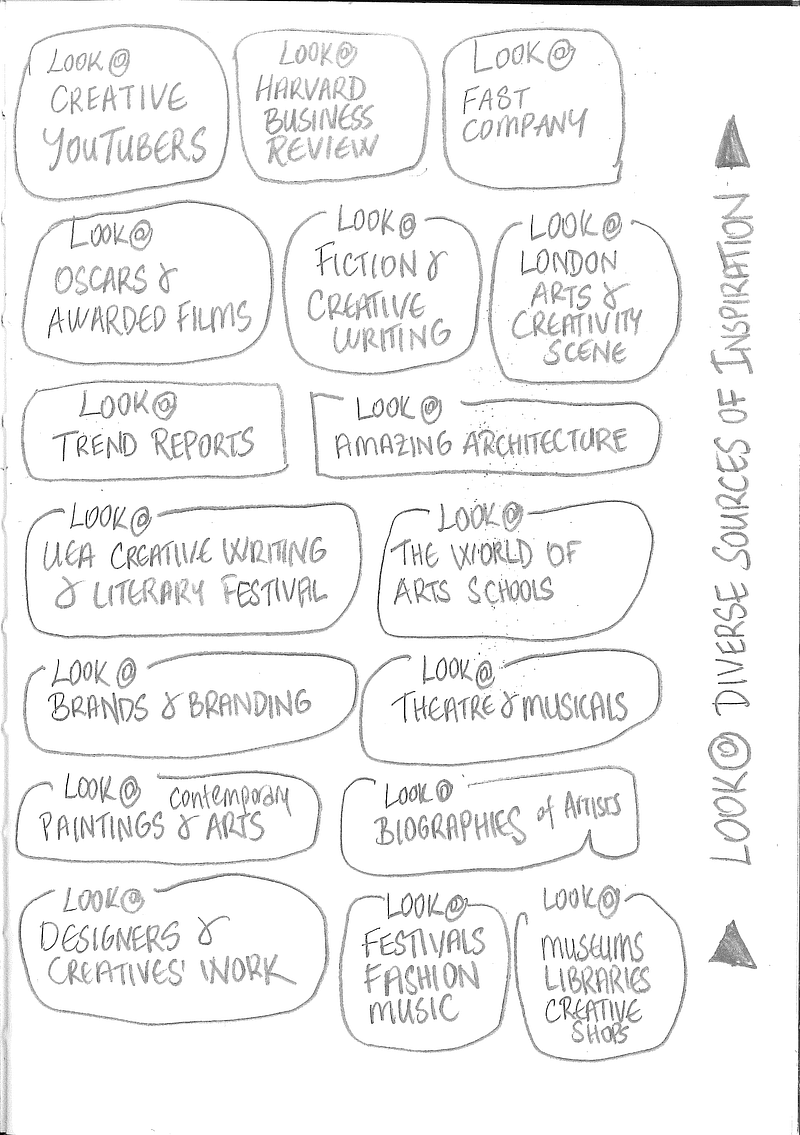
Let’s say we want to form a habit of seeking inspiration from unlikely sources in our everyday life. How can we do this?
We can choose a topic or focus on our hunt for inspiration every day. For example, we can seek inspiration from the world of ants on Day 1.
We will then delve into the wonderful world of ants & become an expert on ants.
We will perhaps find and observe an ant colony for 10 minutes. We will Google everything about ants and ant colonies. For example, myrmecology is the field of entomology that focuses on the scientific study of ants. What else can you learn about ants?
Your job is to learn as many things as you can about ants using multiple disciplines. History and ants? Ants and culture? Ants and architecture? Ants and ecosystems?
Ants are studied using the perspectives of complexity sciences, systems sciences, evolution, social systems, biodiversity, machine learning, networks, and organizational sciences.
Try to learn as much as you can — delve into the wonderful world of ants. What are the top things you can learn from ants? How can you get inspiration from ants for your project?
Try to create something new and fresh about ants. This might be an artwork, an essay, a video, a doodle, a performance, a poem, or a story.
Every day, choose a different focus for your scavenger hunt. Go on a different route every day. Keep learning and searching for things that you have never heard before. Learn beyond borders and bring in these external perspectives into your task and domain. That is how you create fascinating work.
3. Learning New Things that Amaze You (Bewilderment and Wonder)

In our lifetime, we are confronted with massive disruptions and breakthrough innovations. A 2017 McKinsey & Co report predicts that up to 375 million people may need to find jobs in new sectors to offset the unemployment threat posed by automation. We are entering a world where decisions are made through AI algorithms, avatars are embodied in virtual reality simulations, customer conversations are handled by (ro)bots, and transactions are processed using blockchain tokens.
How do we not only survive but also thrive and stand out in such a world? The answer is to learn new things that bewilder us.
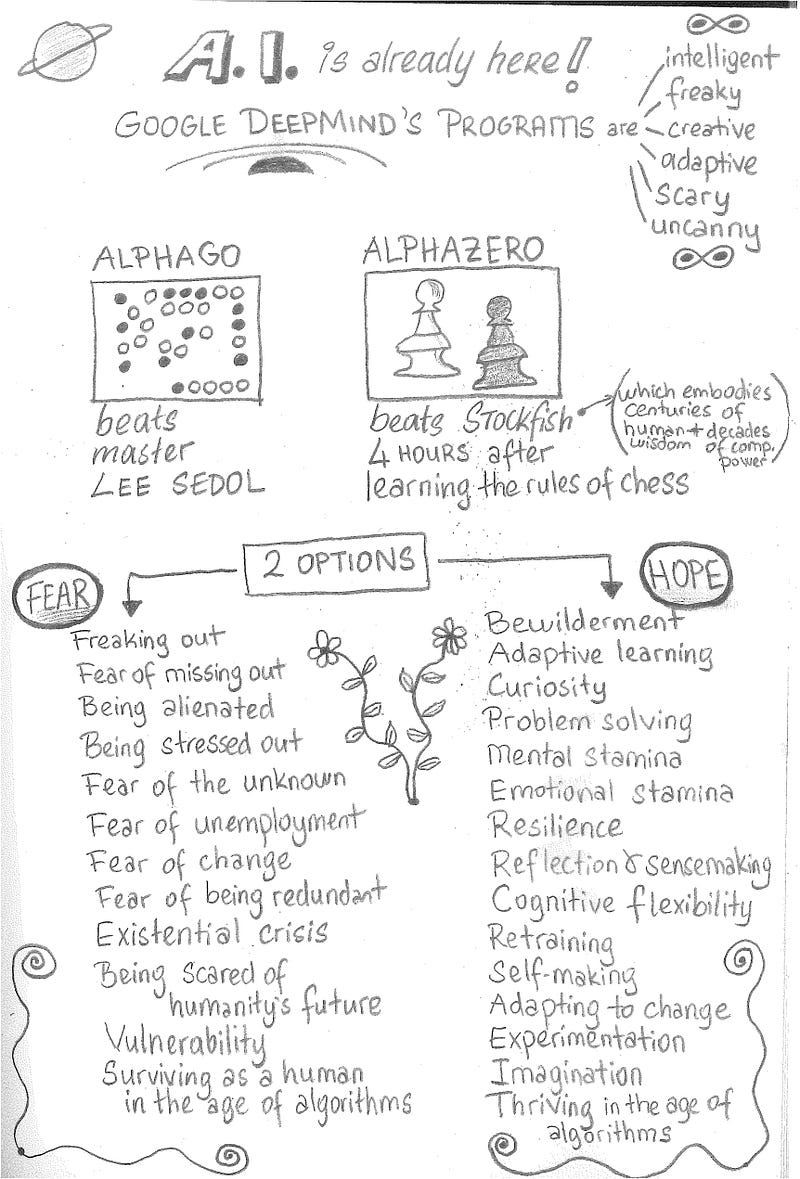
To advance in the path of bewilderment, we have to constantly learn, be open to change, and disrupt ourselves. We also need to find our own strengths, meanings, and voice in the middle of all the chaos and noise surrounding us.
We need to invest in ourselves — especially in areas that we can naturally be better than machines (such as being creative, expressing ourselves, generating emotions, storytelling, building relationships, using intuition, and making jokes).
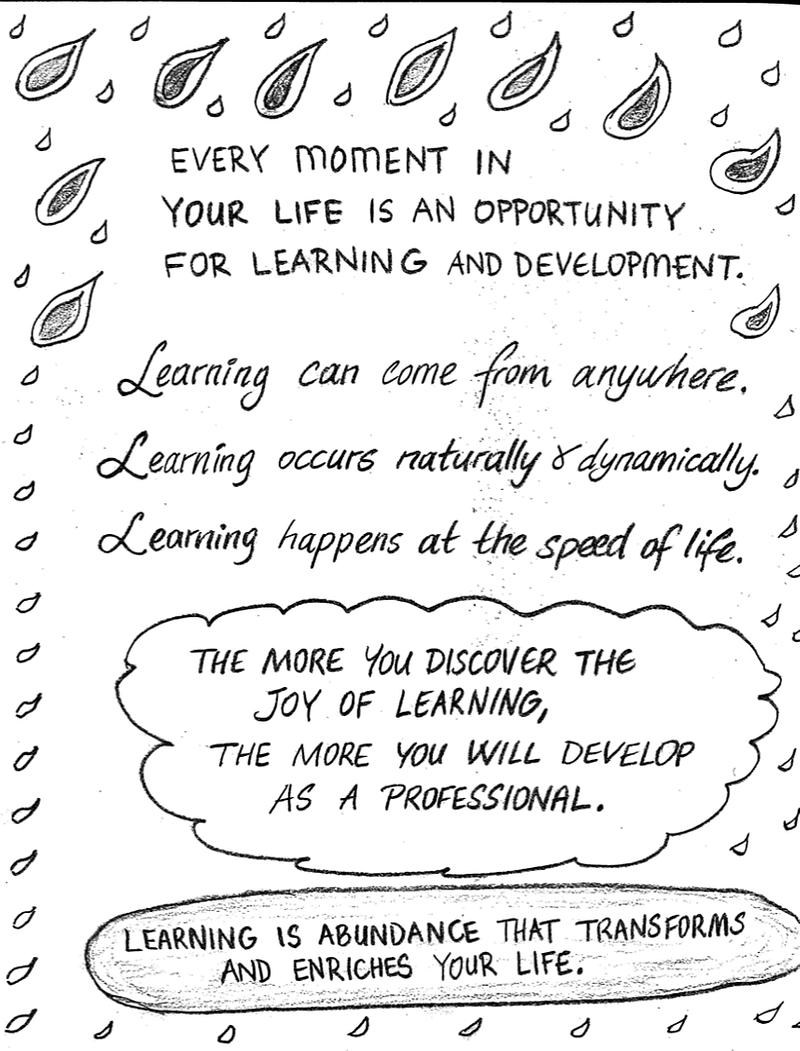
In order to keep bewilderment and astonishment alive in your life, you need to take some risks.
One way is to get lost in and around the city that you live in. For example, I take my trike and go on explorations and adventures whenever I can. I have discovered a lake, old city walls, a couple of villages, rivers, hills, parks, historical sites, and forests in and around the city of Norwich. I love the adrenaline of getting lost. It gives you a fresh perspective and a bit of adventure each time.
Getting lost on the Internet among the things that captivate your interest is also very rewarding and enjoyable. I have got lost doing research on Pixar the other day: Their history, Oscar awarded movies, animation techniques, organizational design…
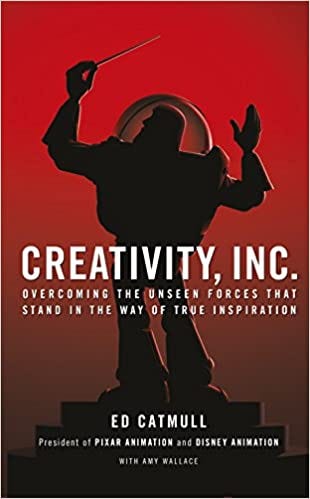
I read “Creativity, Inc.: Overcoming the Unseen Forces That Stand in the Way of True Inspiration” by Ed Catmull. It was a fascinating book providing compelling insights on how an organization can be designed and optimized to foster collective creativity. I learned how Pixar garnered 27 Academy Awards for its iconic movies. I learned about the dynamics of the animation industry and competitors of Pixar such as Dreamworks and Studio Ghibli. I looked at the background stories of Pixar movies such as Toy Story, Monsters, Inc., Finding Nemo, The Incredibles, Up, Wall-E, Coco, and Ratatouille. Then, I wondered how Pixar could cultivate such fascinating storytelling capabilities. How could they make their plots so inventive? How could they create such emotional authenticity and care in their storylines? I delved into 22 Rules of Storytelling that Pixar follows.
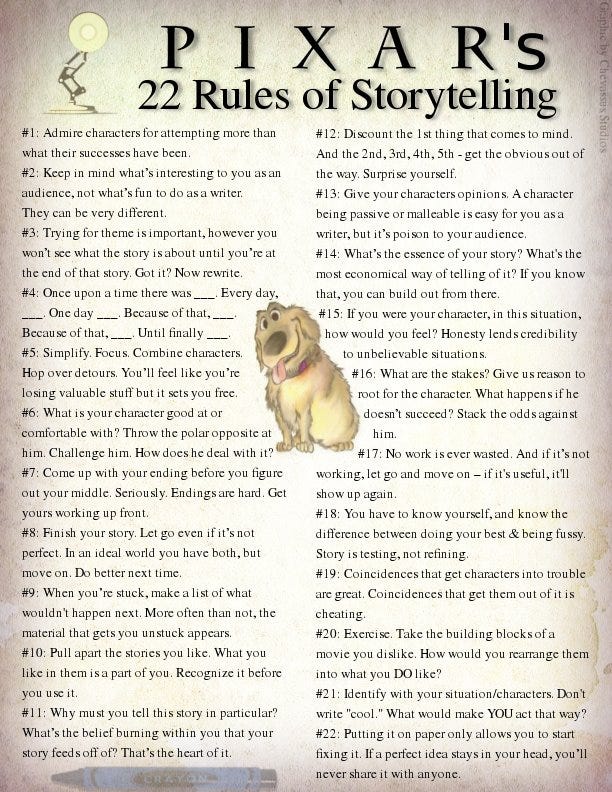
So, I seemingly lost lots of hours. I wasted an entire day learning about Pixar and their work. I got lost in the midst of all. I produced nothing.
Was it worth it? Absolutely!
When we lose time in learning and exploration, that time is not wasted at all. Like Peter Pan, you are enjoying new adventures. You are immersing yourself into things that excite and captivate you.
Life is as much about this type of bewilderment and exploration as it is about success.
When you are always rushing towards the next goal to be conquered, you are forgetting that life is also about exploring, wondering, daydreaming, getting lost, experiencing adventures, spending time with beloved ones, learning, slowing down, reflecting, and wasting time.
Create more room (time and space) in your life for learning. Learning just for the sake of learning. Learning for fun. Learning for joy. This is where the magic happens.
4. Sharing Your Enthusiasm with Others (Passion)

When you learn new things, you need to share your enthusiasm and passion with the world out there.
Let’s say you got excited and inspired when you learned something new. You need to share it with the world instantly. You can write a blog about it. You can shoot a small video on it and upload it to YouTube. You can share it with your colleagues or friends. You can teach it.
Make sure that you practice sharing regularly in your life. Make it an indispensable habit. Share what inspired or excited you. Do not care about how it will be received. Do not judge or censor yourself. Your sharing does not need to be perfect. It needs to be instantaneous and practical. Quick and dirty is fine. Even if you have 5 minutes, you can do a micro-blog about what inspired you. You can write a 1-minute Medium post on it. Write it in five minutes, publish and ship it, voila! Repeat this every day, if you can.
Take-aways
1. Be very curious, ask questions, and search for answers.
2. Hunt original ideas and seek inspiration everywhere. Go beyond your own discipline and domain to explore new things.
3. Learn new things that amaze you every day. Search for wonder. Bewilder yourself.
4. Share your enthusiasm and passion with other people. Teach what you learned.
Conclusion
Time for learning, playing, or exploring is not wasted time. We need to provide ourselves more opportunities for pure-play, exploration, and adventure. This means sometimes we will be wasting time and that is OK; as long as we keep learning and exploring.
The moment that we stop learning is the moment we die.
Small is beautiful, so we need to compound our learning and creativity. If we invest in our learning and creativity every day, we will get amazing returns in the long term.
Your imagination knows no boundaries and it is literally without any limits. So, we should use it more often. We need to use it to do something different and do better.
In a fast, complex, and uncertain world, one of the best assets you will have is your inspirational capital.
This is the secret:
Amaze, astonish, and delight yourself every day. If you can do this through learning, you can also inspire others.
Fahri Karakas