
Why You Don’t Need to Wake up Ridiculously Early
Early rising is scientifically futile for 70% of humans.

Waking up early is marketed as the secret to succeeding at everything in life. Self-help books and articles eternally mention the benefits of waking up early, and how this is the one hack to achieve all your goals.
According to an analysis by Forbes from various studies, waking up early is proven to improve:
Productivity
Grades
Optimism
I am personally an early-riser too because I like to move and meditate in the morning. It helps me set the tone for my day. That being said, it isn’t a rule of life everybody has to abide with. For the longest time during university, I never understood my classmates who would sleep at 3:00 a.m. and wake up at noon. I always thought that they’re wasting away their life and are unhealthy.
But we need to stop shaming them, not just out of kindness but because science says that our brains are wired differently when it comes to our sleep clock.
Dr Matthew Walker is one of the greatest intellectuals who has contributed to over 100 scientific studies focussing on the impact of sleep on health. He is currently the director of the Center for Human Sleep Science at University of California, Berkely. In his book Why We Sleep, he claims that our population is divided into:
- 40% early risers
- 30% night owls
- 30% somewhere in the middle
He also elucidates that night owls are not lazy people who want to stay up late and chill. They just function that way.
“Night owls are not owls by choice. They are bound to a delayed schedule by unavoidable DNA hard wiring. It is not their conscious fault, but rather their genetic fate.” — Dr Walker
How do we fall asleep?
Have you ever experienced a jet-lag?
Even if it’s broad daylight, you can fall asleep like a baby when you’re jet-lagged. This is because your internal body clock says it’s time to sleep. This internal body clock or circadian rhythm helps your body sleep and wake up between certain hours.
Circadian rhythms are physical, mental, and behavioral changes that follow a daily cycle. They respond primarily to light and darkness in an organism’s environment.
They aren’t just present in humans but even in plants and animals. While circadian rhythm can be passed as an internal clock, there is also a master clock that controls the circadian rhythm known as Suprachiasmatic nucleus (SCN).
Your optic nerve constantly sends a message to your brain depending on the light incoming light. When it starts getting dark, SCN tells the brain to produce melatonin which makes you drowsy. This is why they tell you not to use your digital devices before you sleep because your brain can’t release melatonin as it doesn’t perceive the light to be any different from daytime.
Types of Sleepers
Your circadian rhythm is influenced by candidate genes which exist in most cells in the body and brain. This helps the body to regulate various functions, such as:
- hormone levels
- metabolic function
- body temperature
- cognitive faculties
- sleeping
Your circadian rhythm has a typology too, known as chronotypes.
A chronotype is a person’s circadian typology or the individual differences in activity and alertness in the morning and evening.
Further breaking down the 30–40–30 statistics of sleepers, this typology explains that people fall into four categories of chronotypes.
1. The Bear Chronotype

- Sleep and wake cycle goes according to the sun and moon
- Easily wake up and fall asleep
- Productivity: best before noon
2. The Wolf Chronotype

- Night owls: They have trouble waking up in the morning
- Peak productivity: noon to 4:00 p.m.
- Can also have another productivity boost at 6:00 p.m.
3. The Lion Chronotype
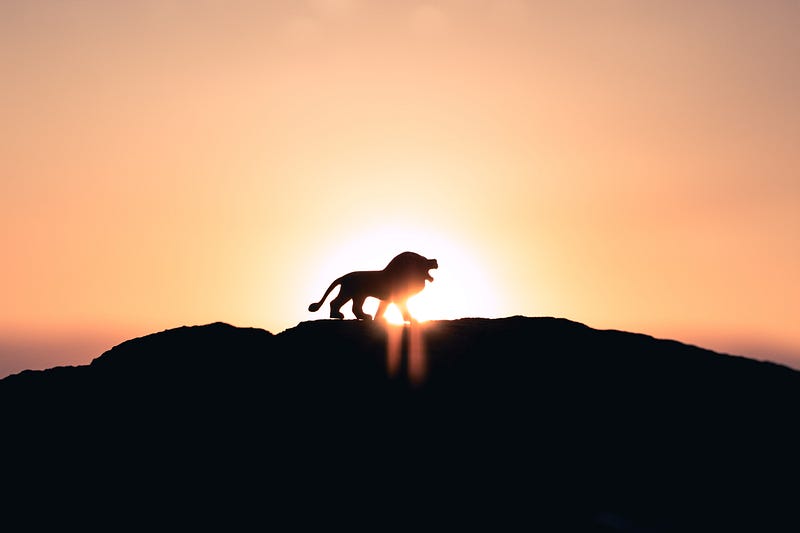
- They wake up early morning
- They tend to fall asleep around 10 p.m.
- Productivity dip: noon
Dr Michael Breus, a sleep doctor claims that many people have lion envy. They want to be the type of person who wants to wake up early and get going.
4. The Dolphin Chronotype

Eva Cohen, a sleep coach explains that dolphins often cannot get enough sleep due to their sensitivity towards light and sound.
Dr Breus claims that this population of people often suffer from insomnia.
They are at their peak productivity from 10:00 a.m. to 2:00 p.m.
How promoting early rising impacts the 70%

Encourages self-blame
Imagine a person who’s DNA is that of a night-owl. He pushes himself to wake up early because he constantly reads how CEOs and successful leaders wake up at dawn.
But he fails repeatedly to wake up early. He just doesn’t feel good. Yet he keeps trying because it’s the trending mantra. And he fails again, only to blame himself for not being focused enough to follow a routine. Not realizing this routine isn’t meant for him.
Can decrease self-worth
I have been waking up at 7:30 a.m. for a year now, a schedule which suits me well. Yet every time I read a 5:00 a.m. post, I get a mini guilt-trip, thinking ‘will waking up at 5 make me more successful and productive?’
I ran a health blog on Instagram for half a decade where people were inspired by my early-bird lifestyle. But it also made them feel bad about themselves. I got messages where people said my life must be perfect because I ‘have it all sorted.’
60% of people using social media report that it has impacted their self-esteem in a negative way.
This only exacerbates when people compare themselves to others.
The 9–5 is a (highly ignored) living nightmare.
If you’re an early-riser, imagine your office finishing at midnight. Won’t you come home so tired and worn out? How would you feel? Maybe your focus and productivity will decrease too if you’re more comfortable sleeping before midnight.
This is what our night-owls feel every day.
Society has set rules for them to wake up hours earlier than they’re comfortable each day of their life from school to the workplace — to put in their best performance. While this is improving now with flexible working hours, the improvement has a long way to go to fit everybody’s comfort and convenience because of their biological capability.
Key takeaways
- Find your chronotype to understand yourself better.
- Be aware of your sleep hours and productivity time.
- Accept your chronotype, it’s what makes you unique!
- Don’t be blinded by self-help which tells you that waking up early is the only way to go.
- Sleep well and sleep enough.


