
Why you cannot be racist and appreciate great music
Chuck Berry
Ray Charles
Nat King Cole
Whitney Houston
Tupac Shakur
Travis Scott
Michael Jackson
Bob Marley
Jay-Z
Kanye West
There are two commonalities that can be drawn from the list above:
- All of these people have made music that has affected millions of lives.
- They are all black.
As the Athenian philosopher Plato once said, “Music is a moral law. It gives soul to the universe, wings to the mind, flight to the imagination, and charm and gaiety to life and to everything.”
Music is a universal language that we all understand. Furthermore, it is a language that holds a great deal of power. This article will briefly explore the influence black artists had on the musical landscape of the past two centuries.

Blues
Blues music originated in the early 19th century on plantations in the South of America, near the Mississippi Delta. Based on work songs sung by slaves as they toiled away in the cotton fields, the lyrics of Blues dealt with overcoming adversity, stating what was on your mind and when possible, having some fun.
In the 1930s, the Delta Blues made its way up river to the Midwest and evolved into the Chicago Blues. This birthed African-American artists Robert Johnson, Lead Belly and my personal favourite Muddy Waters. However, life for these artists was not the glamorous life we have come to know of our established musical artists in 2020. Aside from dealing with The Great Depression, which had stormed America in the early 1930s, black Blues talent had to contend with ongoing racism. (Retrieved from: https://www.allaboutjazz.com/a-brief-history-of-the-blues-by-ed-kopp.php)
Blues music gave the black community a temporary exit from their daily struggles. The dynamic sound of Blues music did not just give the African-American community a seat at the table but completely created the chair. That was the power of a genre of music that would go on to inspire the next century of musical culture.
Jazz
In 1917, the Great Migration began and it saw millions of African-Americans move from the South of America to bigger cities, one of them being New Orleans. The beauty of New Orleans is that it was a more racially egalitarian city and therefore, offered the perfect canvas for Jazz music to be developed.
Jazz was the genre that finally forced a foothold into racial tension and allowed people with differing cultural backgrounds to begin working together. The reason behind this is not just due to the music but, also highly based on the division laws setup in 1894 that divided dark-skinned Creoles (basically a mixed race person) from lighter-skinned Creoles. This forced division gave an incentive to black artists to start working with other races and adopting their musical approach. As technology advanced so did the ability to record music and distribute it. By the late 1920s, Jazz had expanded to other major cities as far as Chicago. (Retrieved from: https://theconversation.com/explainer-the-history-of-jazz-51729)
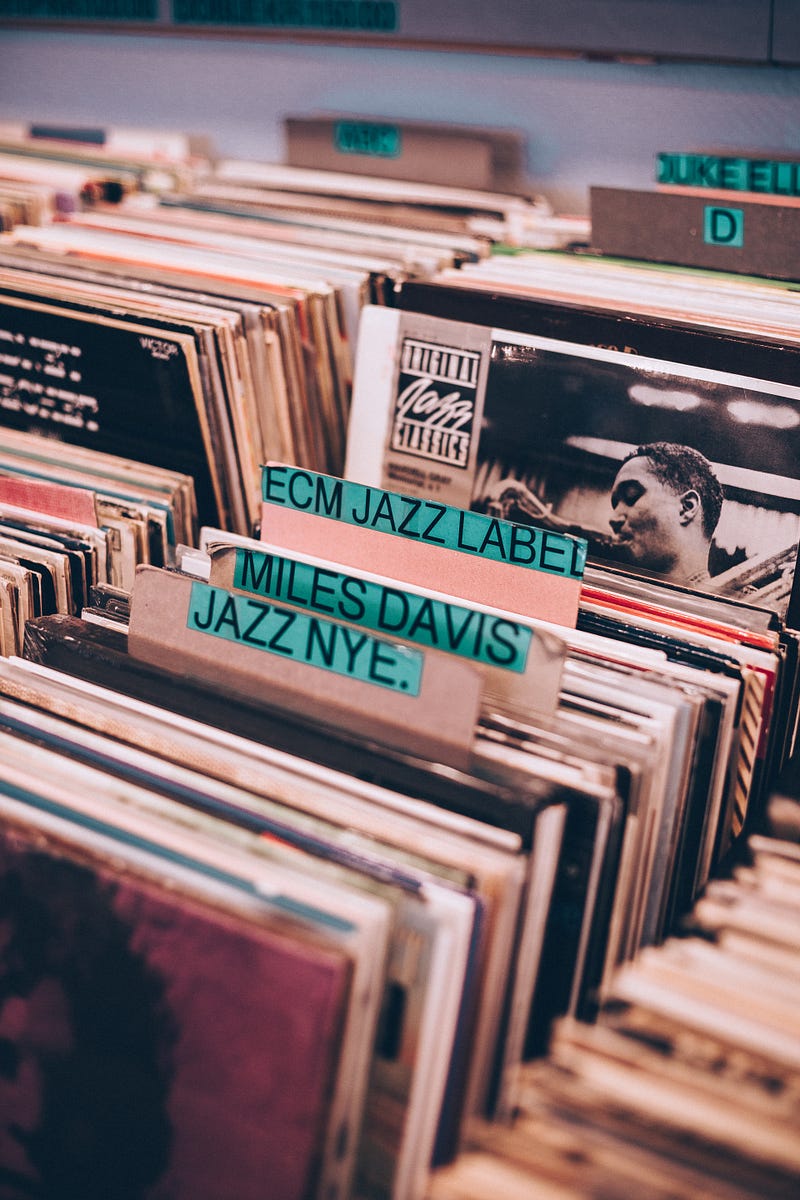
Downtown Chicago Jazz clubs featured legends, with the likes of Louis Armstrong. The range in the genre allowed for more experimentation than ever before. Artists like Miles Davis brought together Jazz and Soul music. In addition, elements of Jazz can still be seen in todays music such as, in the album “To pimp a butterfly” by Kendrick Lamar.
Rock ‘n Roll
I will say it now as much as this may upset some people out there, Rock ’n Roll is not a “white” origin genre. Its origins sit in the African-American community.
After World War Two had ended, many African-Americans moved all over America with the goal of being a part of the booming Industrial era. In addition to this, many black artists with a Blues background moved around and took their music with them.
In the first few years of Rock ’n Roll music, it was actually geared towards a black only market and was branded as “race music” by major record labels. However, as the mid-1960s rolled around, white teenagers took a liking towards this “race music” and so birthed the harsher themes of Rock ’n Roll.(Retrieved from: https://www.newyorker.com/magazine/2015/11/16/the-elvic-oracle)
One name that sticks out more than any other for me is that of Chuck Berry — the real king of Rock n Roll (sorry Elvis). Along with greats like Little Richard and Fats Domino, Chuck Berry became the full package Rock ’n Roll superhero the world never anticipated. If you don’t know who Chuck Berry is or if you have never had the pleasure of his music touching your ears, stop reading this article now and watch the following:
Chuck Berry was such an icon both musically and as a leader. His autobiography talks about the difficulty in playing for both white and black crowds. He notes that his aim was to try to break racial tensions and separations through his love for Rock ’n Roll music, which he did.
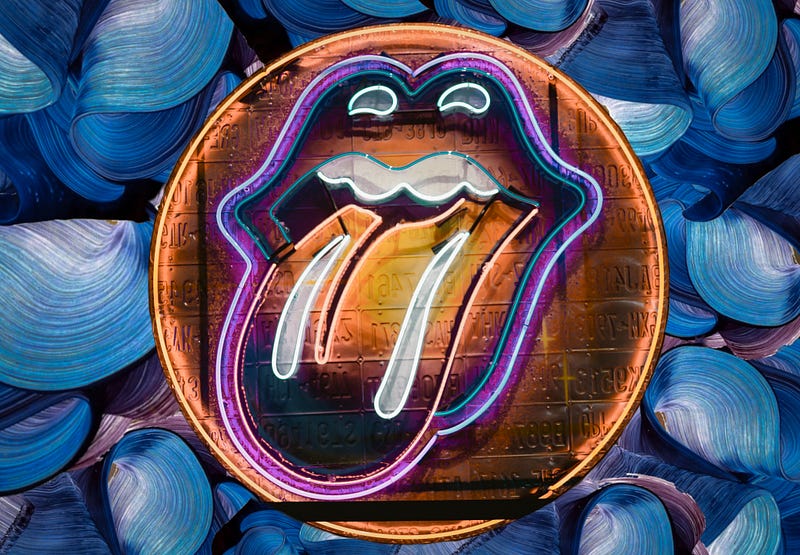
As the decades passed by and the popularity of Rock ’n Roll grew, it was seen as a “white genre”. As the world reached the end of the century, Rock n Roll was birthing legends from all over the globe. Personally, it could not be more relevant, my namesake Mick Jagger is the frontman for The Rolling Stones — arguably the greatest Rock ’n Roll band of all time.
This being said, it is hard to argue the truth that Rock ’n Roll holds an African-American beginning. In my opinion, Rock ’n Roll has a black origin and a white revamp. That’s it.
Hip-Hop
At 24 years old I have had the honour of growing up listening to some of the greatest lyricists of all time. Jay-Z, Kanye West, Dr. Dre and Snoop Dogg are but a few of the living Hip-Hop legends the world has been blessed with.
Hip-Hop has been associated with black culture ever since its inception. For a lot of people the term “Hip-Hop” refers to rap music but the mixing pot of the genre is so much more than meets the eye. It is a mixture of urban influence, dance, art, DJing and fashion.
The roots of Hip-Hop begin in the 1970s — while most people were living the “Hippy” era under the sounds of the Bee Gees , something new was stirring on the streets of New York City. Immigrants from the Caribbean brought with them the art of “toasting”, a type of rhythmic spoken word. This mixed into the American culture and Hip-Hop was birthed.
The second wave brought the DJs, often engaging in battle of music song selection. To make these battles more interesting, DJs would look to bring in spoken word with a MC. A MC would get a crowd hyped up by intellectually bringing together lyrics made up of rhymed words and phrases. (Retrieved from: https://web.stanford.edu/class/e297c/poverty_prejudice/mediarace/socialsignificance.htm)
In 1979, Hip-Hop group The Sugarhill Gang released the record “Rapper’s Delight” and the genre exploded. Next came Run-DMC in 1984 becoming the first Hip-Hop group to sell more than half a million records.
Let us nerd out for a second and look at the genre of Hip-Hop, from a technical perspective. It is based mainly on the following 3 items:
- Drums
- Electronic synthesizers
- Samples
The genius of Hip-Hop is the practice of resampling. Ideally taking pieces of looped sounds from various other media (music, movies etc.) and bringing it together into something brand new. This is why you can often hear pieces of blues, soul, jazz, R&B and funk in this genre. The perfect example is the 2016 song “Famous” by Kanye West which samples Nina Simone’s 1968 record “Do What You Gotta Do”.
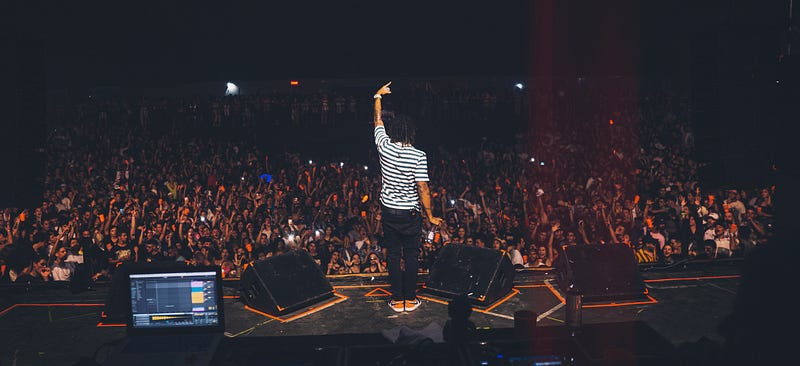
Hip-Hop has made its way to every corner of the world. It has taken over sneakers, clothing, business, linguistics and culture. It is in my opinion not only the greatest genre of music but, in the year 2020 one of the most important, due to its ability to add social commentary towards the injustices that black people are experiencing daily.
As I conclude writing this article, I will leave you with this:


