
Why You Can Never Say You’re Fluent in Japanese
Understanding culture is as important as learning vocabulary and grammar
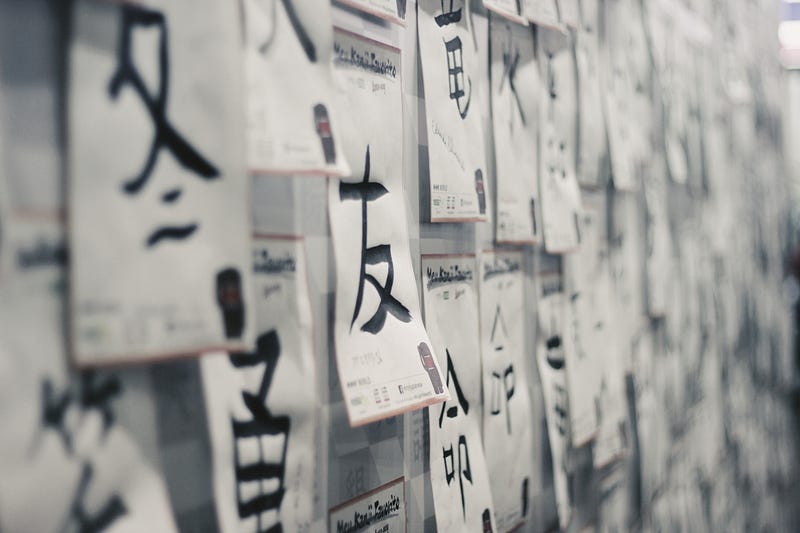
When I first moved to Japan, I was often confused. Whenever I asked anyone if they could speak English, the answer would inevitably be “Sukoshi dake” (Just a little).
As we started talking, I’d find the person understood a lot more than they professed. At a minimum, everyone had 6 to 10 years of English classes. While they might have difficulty conversing, they knew English grammar better than me.
Occasionally I’d meet someone who despite the usual protests, turned out to be completely fluent. It took a while to learn they’d spent a whole year in California or 6 months on a working holiday in Australia. One person who claimed she knew sukoshi dake actually had a master’s degree in English literature and could quote Shakespeare and Virginia Woolf. In a British accent.
So why didn’t they answer that their English was pretty darn good? Or that they’d scored 960 on the TOEIC?
At first I thought this was Japanese perfectionism. Anything less than perfect didn’t seem to count. A 960 TOEIC score wasn’t 990. Or they had trouble distinguishing L and R.
Or maybe Japanese were just introverted, and were uncomfortable conversing with strangers in a foreign language.
While it’s true I’ve met more shy Japanese than Americans, that hardly describes an entire country. In fact, my mother-in-law has never met a microphone that didn’t fit perfectly in her hand. Shy? Hardly.
It took a while to realize that neither one was the real reason.
It wasn’t until I saw the opposite interaction that I started to understand.
When my American friends spoke even a little Japanese, they were always met with effusive compliments: “Nihongo o-jouzu desu ne.” (Your Japanese is so good!)
The Americans would puff out their chests and reply proudly, “Watashi wa pera-pera desu yo!” (I speak Japanese fluently!) Yeah, right…
And in that small little smirk I’d see hiding behind the Japanese faces, their wry replies of “Yokatta desu ne~” (That’s great!) I finally grasped what was happening. There is no real understanding of language without first understanding culture.
Language is not words but communication. And communication has so many cultural assumptions built in that without understanding culture, people are talking past each other without really understanding.
Humility is the Key to the Japanese Language
Humbleness and humility are core to Japanese culture. They’re even baked right into the language.
If you’re not using honorific and humble forms when speaking, you’re translating English into Japanese words and grammar but you’re not speaking Japanese.
In Japanese, you always speak of yourself as a lowly, worthless speck and your opposite as a god on earth.
Which means that when someone asks you if you can speak English, you can’t simply answer, “Hell yes!” The only correct answer is that you’re an insignificant speck who is incapable of accomplishing anything.
Once I finally came to realize that the answer given was not the true answer, a little game ensued: compliments and questions to suss out the real story.
“Your English is great — how long did you study? Your pronunciation is perfect — you must have lived overseas!” Even when speaking in English, I was learning to think like Japanese.
These would be followed by yet more protestations that yes, they might have lived in London for 4 years, but they hadn’t picked up English.
Of course they had — their English was better than mine — but they couldn’t say so because that would not be humble. I had to learn to read between the lines — what was said only told the story when I learned what to listen for.
Once you come to grasp that the protocol of communication varies between languages as much as vocabulary, you can start to learn how to understand by paying attention to not just what is spoken but what the speaker really means.
How to Say You’re Fluent
If an American asks me if I speak Japanese, my answer is “Good enough to write a textbook.” That elicits oohs and aahs and expressions of amazement.
It’s a bit of an exaggeration — my Japanese is far from native — but in America, exaggeration is required, and I did really write a textbook long ago, even if I had to collaborate with a native speaker. Anyone who doesn’t exaggerate their accomplishments in America will have trouble finding a job. Or get a date.
But when a Japanese person asks me if I speak Japanese, I have to under-exaggerate — the only correct answer is “sukoshi dake.”
But that presents a problem, because I need a way to signal that I’m reasonably fluent in the language and it’s probably easiest for us to speak in Japanese.
Still, if I blurt out, “Pera-pera da yo!” (I’m fluent!) it only proves a lack of cultural fluency that will put off the person I’m speaking with.
So when a Japanese person asks me if I can speak Japanese, my answer is to smile and clear my throat with a very Japanese, “Eeto, ne.” Then in perfectly accented Japanese, I apologize profusely for not being able to speak Japanese:
“いや~、申し訳ないです。昔はある程度分かったんですけど、最近はもう全部忘れましたね。” (I’m really sorry. I used to know a little Japanese but recently I’ve completely forgotten it all.)
Or if I’m in a playful mood, I might answer: “さぁ~, 悪いんやけど、関西弁しか分からへん。” (Sorry, I can only speak the local Osaka dialect.)
These elicit a knowing laugh and we can begin a conversation in Japanese.


