Why writing makes a big difference
4 steps to reversing your fear of writing
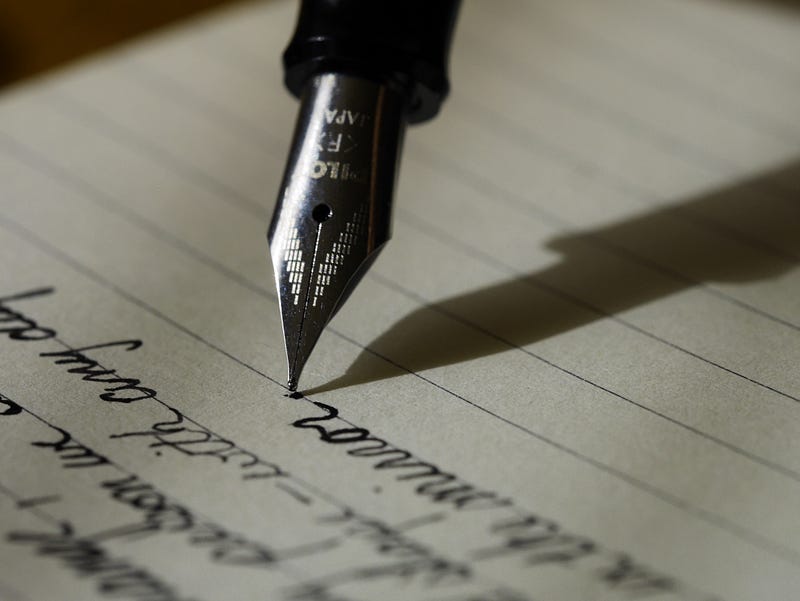
What’s real? Sometimes what I just dreamed and wake up and remember, is real to me. To the trusting, sometimes instead of experiencing first person, observing and accepting the present moments is the real happening. Thoughts and feelings are like wandering dreaming sensations. So not writing about it keeps it in a private world of sole comfort. Thoughts gathered in from the emotions then are like a whirl of conversant, creative words later with their friends.
While working on some writing, I listen in the background to other shows. I notice on YouTube, by casually clicking to a Trump rally, mild Adolf Hitler 2.0 moments, the verbal lilt is similar to common acceptance, by the way the audience catches the meandering, the wavy paltry of inciting subjects. But for a sudden insertion of name calling it sounds harmless as if there were no other existing reality. At first, it sounds like a common family reunion style or a wedding announcement style. It’s off-the-cuff, non-written talk. If this rally and other talks are accurately reported by some, well, that’s one reason why writing makes a big difference. Some people read between the lines.
Writing Blocks
Self-doubt is a big part of writer’s block. A group of “blocked” professional writers in a variety of disciplines from screenwriting to poetry were studied in the 1970s. After several months Yale researchers Jerome Singer and Michael Barrios discovered that there are four main triggers of writer’s block:
- Apathy. Felt constrained by the “rules” of writing so were challenged to find their creative spark.
- Anger. Narcissism from the studied writers showed they were angered at creative works not being noticed.
- Anxiety. These writers worried that they weren’t good enough.
- Issues with others. They didn’t want their writing to be compared to others’ work, causing a fear of writing anything at all.

Four Writing Steps
Whether from what you’ve seen in a dream, from memory, or for other choices it’s relatively easy.
1. Get the writing muscles moving and your brain will catch up before you know it
a)Use feelings, sounds, you heard, colors, and visions you remember, ASAP b) Write down some descriptions of the room you’re in, or the view if sitting outside.
2. One of the best ways to prevent a writing block is to read
a)Read an article on a magazine cover
b) Read a story from the headlines
c) Make a To-Do List of things on your mind. Then read it.
3. The inspiration for many writers is their writing heroes.
a) Start reading all the writings that you’re attracted to from an admired journalist, short story, or other media topics
b) Prompts from writer-specific sites can be more in tune with the level at which professional writers work
1 The 30-minute challenge about anything to a timer
2. The pretend you’re talking-to-a-friend technique- Tell a friend about your new idea
3. Looking without, instead of looking within- For writing a short story, brainstorm a) central conflict b)Create a brief outline c) Pick a point of view d) Select the right story structure -1 linear,- 2 non-linear