
Why women’s imposter syndrome is a gender issue.
Don’t feel capable enough? …Probably Not your fault.
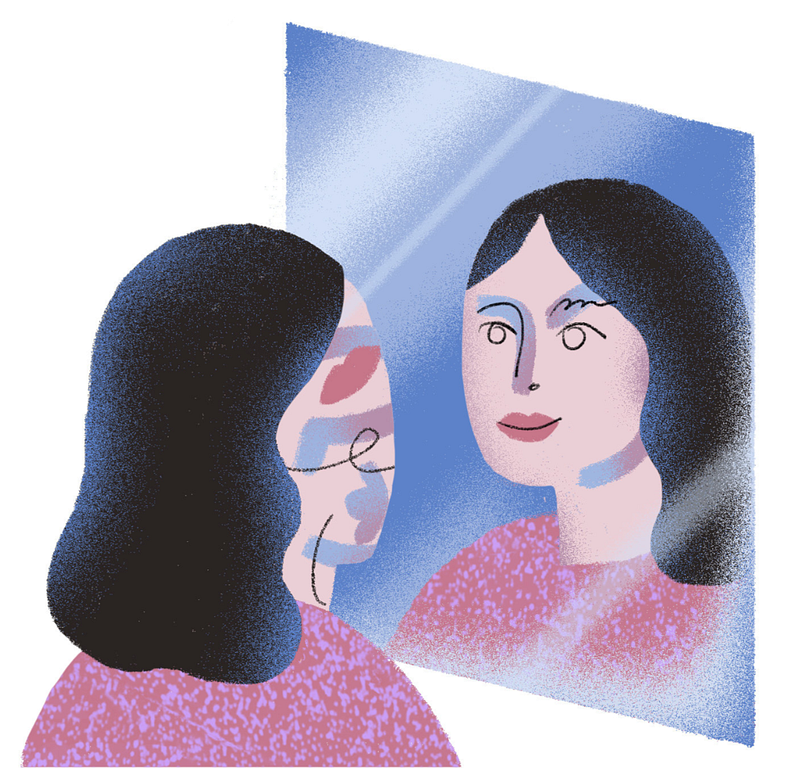
This article was going to be about how women should overcome the Imposter Syndrome. But then I realised this is not a mental health issue or a personal problem. It's a gender-based issue.
Majority of the people today who suffer from Imposter Syndrome are women. Some of the symptoms of imposter syndrome is feeling “not good enough”, lack of self-confidence, believing that your achievements are probably just luck.
But the most surprising aspect is, that this feeling is not associated with just young women or women who are still growing in their career. It's associated with women of all age groups, social standings and economic conditions. It's associated with CEOs, politicians, journalists — powerful women.
Maya Angelou — “I have written 11 books but each time I think ‘Uh-oh, they’re going to find out now. I’ve run a game on everybody, and they’re going to find me out.’
Sheryl Sandberg in her famous book Lean In talks about a conference that she’s invited to called Powerful Women. She is so uncomfortable with the usage of the word “powerful”, that she calls up the organiser requesting her to change the word. The organiser in response tells her that she’s used the word “Powerful Women” on purpose.
This feeling of misplaced anxiety, when associated with words like “power”, “leadership” or “headstrong”, is common amongst women. We often do not want to be associated with strong words publicly. We feel undeserving of such words.
Ask a woman— Do you feel good enough? Strong enough? Smart enough? Worth of that high paying job? Or worthy of being a good activist or a businesswoman or a homemaker? Or are you a female model who feels pretty enough?
The answer is usually “No”.
Paula Williams said, in her talk about being a woman post-transition,
“The more you’re treated as though you don’t know what you’re talking about, the more you begin to question whether you do in fact know what you’re talking about ”
Which is the same thing we can say for women who feel like they aren't enough? If everything around us constantly relays the same message that we’re not enough. The more we doubt ourselves if we are actually enough.
I personally remember having no confidence issues as a teenager. I was the head girl of my school, constantly at loggerheads with one person or another. But it never affected me. Yet in college, I was much quieter and subdued. I did not stand for any positions or put myself in the line of any controversy. I suddenly felt undeserving of leadership posts though I’d held so many all through high school.
Instead, I felt more permeable, more sensitive, more concerned about what people thought about me. Yet there’s not a single incident that I can pinpoint and say “yes that's what started it”.
That is the impact of being conditioned by things around you.
I recently came across a bunch of advertisements for women for self-development workshops and hair care. Most of them had taglines like this.
“You are Better Than This”. “You are worth it”.
Have you ever heard of tagline telling men, they’re “worth it”?
Advertisements for men involve beer shampoos or how to get laid, ways to them feel more masculine. But they are rarely about how men’s dicks should look, or how much better of they would be if they had a deeper voice. Or how they would excel in the workplace if they were less “loud”, “aggressive” or any other traits that we associate with males.
Most studies point at girls starting to lose their self-worth around adolescence, which has got nothing to do with hormones and everything to do with advertising. Young girls usually start losing their confidence around age 13 and then spend their entire adult lives all the way into their 50’s rebuilding that self-worth. Trying to stop feeling like an imposter every time they succeed.
Yet surprisingly the answer to getting rid of the imposter syndrome for women is not by changing the advertising industry or stopping companies from cashing in on our insecurities. Of course, that would help. Especially adolescent girls.
But this story is something much bigger and deep-rooted. This is affecting every female in our society.
It's about Implicit bias. Biases are natural to people. But when they're implicit we don't realise have them, because of which we never acknowledge or try to change them.
That is exactly what the Heidi-Howard study talks about. A popular study where a group of Harvard students were given the resumes of successful entrepreneurs. Some of the resumes carried the name Hiedi and other Howard. People instantly took a liking to Howard who was capable, successful, competent. But instantly disliked Heidi who was arrogant, sharp and fierce.
Most of the students, girls included did not like Hiedi. They wouldn't work with her. But both resumes were of the same person. The only difference being the gender.
Imagine then being Hiedi every day in the workplace. Where there always be a subtle bias. If you're too competent, strong or vocal you will be hated. But of yore quiet, too maternal or too soft people will not take you seriously. They won't think you're good enough.
How can anyone escape such a double bind? If we constantly subject women to impossible standards everywhere. How would anyone feel capable or competent?
At work, a women’s personality is not considered worthy. At home, they're not good enough parents because they are subjected to impossible standards of perfect moms. When they look in the mirror they're subjected to the standard of advertising set by the cosmetic industry.
And you tell me the Imposter syndrome that women face is their problem?
This is not a Woman’s problem. If a woman feels like an imposter at work, at home or anywhere else. It's everybody’s fault. It’s the employer or employee who has a bias about what the “lady boss” should behave like. It’s the fault of the husband who hasn't taken the effort to make his wife feel less “guilty”, its the fault of every single magazine that women buy to lower their self-esteem.
We keep trying to tell women how to change gender norms. Behave in a particular way at work, manage and create a near-impossible work-life balance. That way so that you don't get divorced and your children don't hate you. But what about society, can we all just for once be accountable.
As Maureen Fitzgerald said in her TED talk
“What if Women aren’t the problem, what if what people think about women is the problem”


