
RESPECTABILITY POLITICS 101
Why Women Should Never Be Denied Service for Wearing a Hair Bonnet
Black women have a long history of wearing hair covers in public
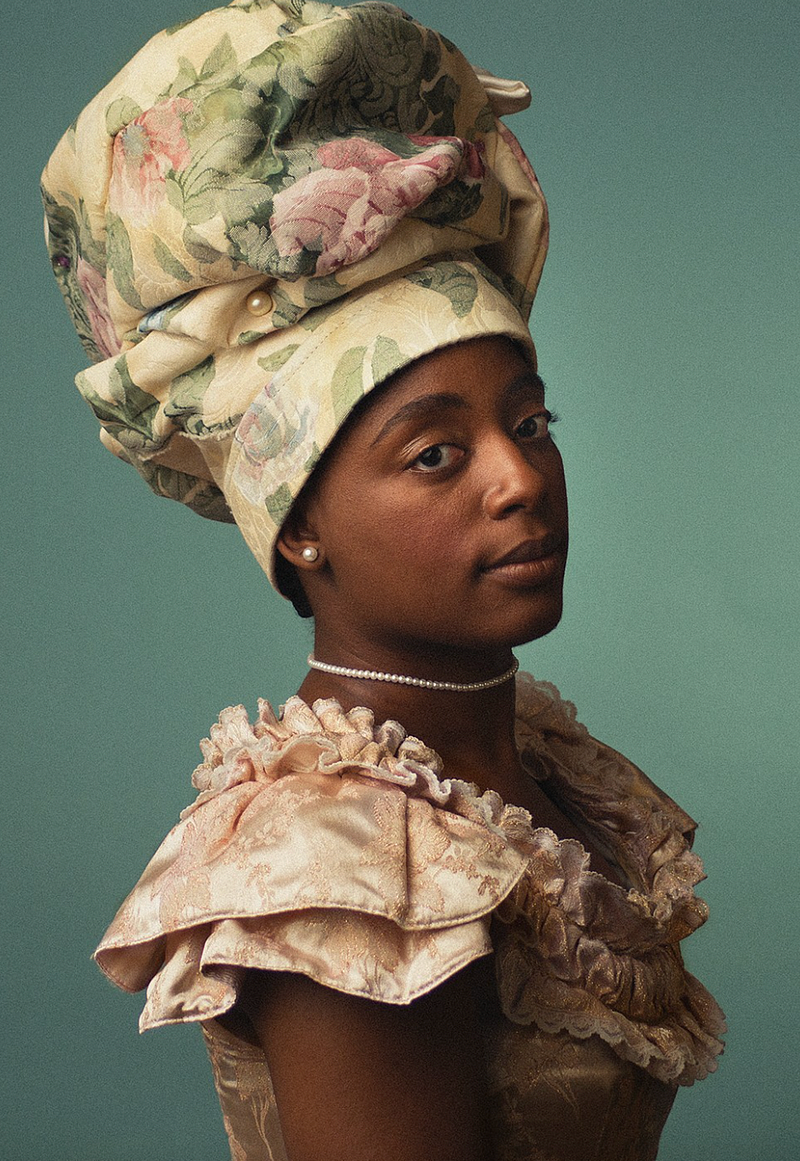
At Dr. Sutton's dentist's office, a sign reads, "No bonnets, no house shoes, no pajama bottoms," and the response from Black women online has exposed a frayed thread. On the one hand, some suggested that Black women should never wear bonnets in public and that we are responsible for presenting ourselves in a certain way when we leave the house. In contrast, others pointed out that their critique is rooted in respectability politics, a notion derived from white supremacy. For those unfamiliar with the phrase, respectability politics refers to the hoops many Black people jump through to look and appear "presentable" in a white-dominated society, hoping to be accepted and avoid the sting of racial discrimination and the pressure placed on Black people who refuse to comply.
And this isn't the first time bonnets have become a hot topic within the Black community. In 2021, comedian and actress, Mo'nique sparked controversy when she urged Black women to stop wearing bonnets in public, insisting that doing so is a sign that we have lost their "pride in representing ourselves." Now that a Black dentist has decided to deny service to women who choose to wear a bonnet, the issue has raised renewed scrutiny — this dialogue isn't going away, so we might as well dig in. If someone doesn't like seeing someone wear a bonnet, they have every right to express their stylistic whims, but denying them service crosses a line. The problem with shaming Black women for wearing bonnets in public is that it completely ignores history, culture, religious practices, and the freedom Black women are entitled to.
What is a bonnet?
A bonnet is a hair covering that typically has an elastic band, though they vary widely. Some are designed with a plastic, waterproof covering to wear in the shower and protect your hair from getting wet; others are made with a silky texture or cotton and can be worn anywhere. A bonnet is in the hair-covering family, like a headscarf, turban, or headwrap. While some women cover their hair for personal reasons, others wear hair coverings for religious or cultural reasons.
For instance, some Muslim women wear a hijab, "an expression of their faith and personal relationship with God," Catholic nuns traditionally wear veils with three layers, a veil, a wimple (an under-veil), and an upper veil. Jewish women may wear a tichel, a head scarf as "a sign of a woman's married status," and some Sikh women wear headscarves. In contrast, other women wear a turban to give them a sense of "individual identity," Amish women wear a bonnet, called a kapp (prayer cover), publically, to name a few instances. Now that we've gotten that out of the way, making it clear that women from all different races, ethnicities, and cultural backgrounds wear hair coverings for a variety of reasons, let's get to the root of this tradition amongst Black women.
A brief history of Black women wearing headwraps
In the sub-Saharan desert, "the head wrap was shown as a symbol of class, wealth, and relationship status" for African women. We can see this tradition in the “idukas in isiZulu, duku in Chichewa, to gele in Yoruba.” At times, wearing a headwrap would show that a woman achieved a certain status in her life, such as getting married, or that she was observing religious traditions, or for purely stylistic purposes. "Many queens from various areas adorned the traditional headwear, including Nubian queens who chose elaborate and rich fabrics woven with exotic and beautiful flowers." Artist Lauren Brevner said, "Head wraps were a symbol of honor and a sacred relationship with the self." Black hair is unique, tightly bound in curls that require tender loving care. And while some women enjoy wearing their hair in different styles publically, others prefer to cover their hair, only letting some people see their hair or only revealing their hairstyle on special occasions. There's a sacred element to Black women's hair, something personal, coveted by some, and hated by others.
Despite many women wearing hair coverings to celebrate their culture and honor their religious beliefs, some laws were designed to force Black Americans to cover their hair. Black women's naturally curly hair courted controversy in America since the 1600s when White people forced them to migrate to America through the chattel slavery system. White people often perceived Black women's hair as unfit for the public eye and forced them to cover it. Enslaved Black women wore tignon wraps and head scarves to keep their hair up and out of their faces as they labored in fields and homes. However, in 1786, Louisiana's governor "proclaimed that all free Black women must wear tignon" to distinguish them from White women. Thus, in this case, the tignon became a sign of a Black woman's diminished status in the Antebellum South, reinforcing the myth of white supremacy that White women's hair was naturally beautiful and Black women's hair should be hidden. However, many Black women choose to turn their tignons into a fashion statement by decorating them with vibrant colors, gems, and feathers, refusing to let the racism which inspired the tradition mute their beauty and self-expression, "a subtle rebellion against a colonial government that wanted to keep them down."
After 1803, when America took hold of Louisiana, "the Tignon laws were no longer enforced." Thus, Black women were finally free to wear their hair however they liked. However, this came with a caveat. While it was legal for Black women to wear their hair in whatever styles they chose, Black women would be actively discriminated against for wearing natural hairstyles. In response, some Black women attempted to change the texture of their hair by straightening it. For instance, Annie Malone became the first Black person to patent the hot comb in 1920, and her apprentice Madam C.J. Walker credited with widening the teeth on the comb, became a millionaire, promoting and selling products that straighten Black women's hair, enabling them to wear new, dynamic hairstyles. Walker also became a prominent activist in the anti-lynching movement, challenging anti-Black racism, and used her wealth to support organizations like the National Association for the Advancement of Colored People and charitable organizations. But another goal within the hair straightening movement was to make Black women appear more acceptable or "respectable" in the eyes of White employers, a survival strategy of sorts.
"Society was unabashedly more accepting of European traits, and the more Black people assimilated to these traits, the more conventional they were considered," Aimee Simeon wrote in Refinery 29. During the natural hair movement of the 1960s, many Black women began proudly wearing their hair in afros, twists, braids, dreadlocks, and other natural hairstyles to rebel against the misogynoir they'd experienced in America for centuries. And despite the success of this movement, with many Black women embracing natural hairstyles, the discrimination Black women face in school and throughout the workplace has persisted. One study found that "80 percent of African American women felt they needed to switch their hairstyle to align with more conservative standards in order to fit in at work."
Furthermore, Black school girls have been suspended for wearing box braids, and South African girls were warned against wearing natural hairstyles at school; a Seattle school removed a Black girl from "class because of a hair product she used," and girls in the Bahamas were told their hair was "untidy," threatening them with suspension if they did not change their hairstyle, to name a few examples. Overall, America has shown an unwillingness to accept Black women's hair in its natural state, and those who refuse to comply with Eurocentric beauty standards are often punished, losing opportunities to attend class or obtain jobs. Years ago, I shared my experience with hair discrimination when applying for a new job. Unfortunately, this is a shared experience for many Black women.
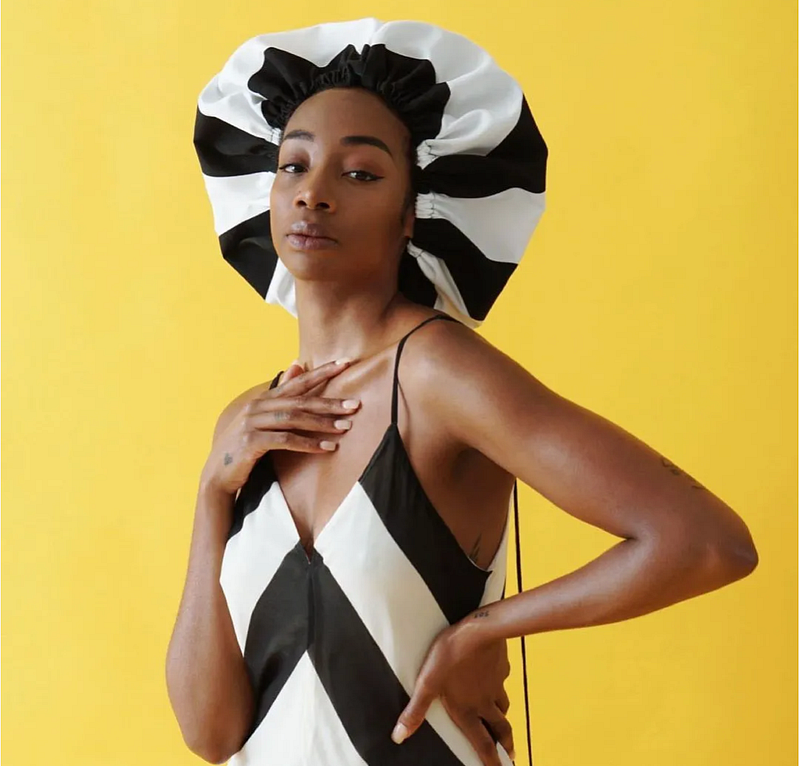
"No bonnet, no service" is a policy driven by respectability politics.
There was a time in American history when Black women were forced to wear hair coverings, and now there are a group of people who believe that Black women don't deserve to have their teeth cleaned at a dentist's office if they choose to wear a bonnet, hair scarf, or other hair covering. However, this policy ignores the religious, cultural, and historical context of Black women choosing to cover their hair in Africa and throughout the diaspora and being forced to cover their hair during parts of the Antebellum Era. Denying service to Black women who wear a bonnet in public attempts to force them to comply with society's whims or deem them unworthy of respect a dangerous notion indeed. And some have pointed out that "dialogue for bonnets in public is not the same" for Black men wearing durags in public, which hints at the misogynoir underlying the "no bonnet, no service" movement.
When a woman wears a bonnet or a hair covering, it's a personal decision, so when you create policies that control how and when they reveal their hair, you're actively disregarding their personal reasons. And I will use my experience as an example. After being recently hospitalized for an asthma attack, my doctor, an allergy specialist, suggested I start covering my hair in public, along with other steps like keeping the windows and doors shut in the morning to avoid pollen that may irritate my lungs and lead to further hospitalization. In another instance, one of my friends with lung cancer has undergone several rounds of chemo and wears various wigs, bonnets, and hair coverings to feel confident despite her health problems. Some women with alopecia may also prefer to cover their hair sometimes, and there is a litany of other reasons people may have. Unfortunately, it doesn't seem like Dr. Sutton and her respectability politics bandits considered that some women wear hair coverings, like bonnets, for health reasons. But most disturbing of all is that she disregards whatever personal reasons Black women choose to wear a bonnet and doesn't want their business, at least not until they're willing to reveal their hair for the world to see.
“Took my bonnet because the way this lady likes to rub herself against my short hair whilst cleaning my teeth is not ON. I pulled my pink bonnet out, and she looked at me and said, “oh are you a hijab now?” — Lovette Jallow, published author and renowned lecturer
Respectability politics attempts to blame the victims of racial discrimination for their own experiences, saying that if they worked harder to assimilate into the white-centered culture, they would be accepted and wouldn't feel the sting of racism, that the discrimination so many Black women experience would evaporate into thin air if they simply capitulated. This notion is certainly far from the truth. Do you know how you can tell? Black women, even those who straighten their hair or wear bone-straight extensions or wigs, still experience racial discrimination at school, in the workplace, and throughout their communities. Black people experience racial discrimination because white supremacists believe they are inferior, not because they actually are. And while it's fair to point out that most Black women do not wear bonnets all of the time, those who choose to should be respected, especially within the Black community. Denying women service for wearing bonnets is discriminatory and feeds into misogynoiristic tropes that attempt to control how Black women present themselves in public.
Black women have a long history of wearing hair coverings in public casually, formally, for religious, cultural, and health reasons, or for freedom’s sake. A bonnet is no different from a headscarf or other hair coverings. I would not want to frequent a business that actively discriminates against Black women who wear bonnets because I would feel it would make me actively complicit in the respectability politics which inspired the policy. “No shoes, no service,” while similar in its intent to deny service to some, is not the same as "no bonnets, no service" because this policy specifically targets Black women and ignores the politicization of Black hair in American society. If you think Black women should never wear bonnets in public, perhaps it's time to learn more about the history of Black hair, of how they've been unjustly chastised for over four hundred years simply for existing. Enough is enough. It's high time people stop acting as if Black women wearing bonnets is destroying the Black community when we know the true threat is respectability politics, an ideology responsible for the perpetual self-policing which attempts to keep Black people bound to the standards set by a white-centered culture.
🌹Learn more about the author here.