
Why Women Need to Thank Naomi Osaka for Taking a Stance
We need to take a page out of her playbook
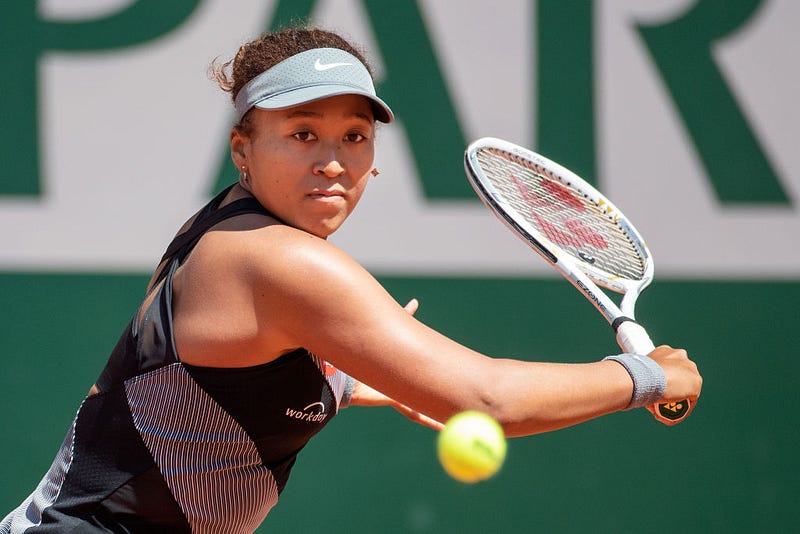
Update: On the day after the publication of this article, Naomi Osaka announced her withdrawal from the French Open. In an unexpected revelation for an athlete in any field, Osaka shared that she has been battling with depression and anxiety. Her courage to speak her truth, take public measures to self-preserve, and prioritize her well-being over the demands of her career is an unprecedented act of radical self-care for any woman of her age or notoriety.
Naomi Osaka’s announcement on Twitter that she would not participate in press conferences after her games at the French Open has much deeper implications for women, in particular BIPOC (Black, Indigenous, and People of Color) and AAPI (Asian American and Pacific Islander) women. Her stance, while controversial to some, is unambiguous: Osaka is safeguarding her mental health. In her tweet, Osaka pointed to the lack of regard for athletes’ mental health:
I’ve often felt that people have no regard for athletes’ mental health and this rings very true whenever I see a press conference or partake in one.
A screenshot of Osaka’s email to the Roland-Garros organizers was also tweeted. The email provides further context as Osaka insists that her stance was against a system that would force athletes to do a press conference during times of mental vulnerability.
Yet the response from the French Open organizers is symbolic of the race and gender tone-deafness that enshrouds many institutions and their lack of enlightenment around mental health. The complete dismissal of Osaka’s position by the organizers is summarized best in this tweet by Manoj:
Woman complains that her mental health is being affected by these interviews. Tournament gaslights her and tells her she is wrong. Absolutely unbelievable.
Institutional and corporate statements and pronouncements around Black Lives Matter were trending all of last year, following the public lynching of George Floyd. A year later, attempts at inclusion have taken place in some arenas, but careful effort to move beyond optics to enduring systemic change is palpably lacking. Coming out of the fear, isolation, and human devastation of a global pandemic, mental health is being touted in all corners as a critical need. For people of color who have also been disproportionately affected by the unleashing of racial hate and trauma, regardless of social class, this need is even greater. With the slowing down of remote work and being forced to go back into work environments where toxic personalities with biased and racist mindsets may be prevalent, we need to elevate the walls of self-preservation.
Women, particularly women of color, know what it is to function in exhaustion trying to meet the expectations and demands of institutions steeped in white culture. For Black women, the wearing of the “strong Black woman” armor is not a symbol of unflappability. It is, in fact, a shield to protect our hearts. Yet, to many, the armor gives this idea that we can withstand it all, making us undeserving of help, rest, care, balance, empathy, and even fair compensation. I have seen Black women wear this shield until the weight of it drags them to their grave. Despite the exhaustion, many choose to continue wearing the shield because asking to be exempt from it would otherwise mean exchanging the shield for a label that could cause them to lose a career that took a lifetime to construct.
Analis Bailey, a sports reporter for USA Today, states it best in her opinion piece:
When it comes to many workplaces and issues of race and gender, there is a simple truth both inside and outside of the sports world: When white women stand up for themselves in the workplace, they are called girl bosses, queens and leaders. When women of color stand up for themselves in the workplace, they are called problematic, divas and self-serving. This truth may be unrecognizable if you are not a woman of color, and if you are not a Black woman, this seems like an exaggerated trope. But it’s not and Black women, and women of color, experience this daily.
Osaka is standing against the hypocrisy of a system that uses athletes for financial gain and expects them to be complicit in their own public humiliation. Truth be told, the questions reporters pose in press conferences held after games often are ridiculously repetitive and lack journalistic value. Osaka is right. Press conferences are used to demean and degrade an athlete’s humanity after losing a game. No one should have to experience this type of mental degradation because they get paid “millions.” The truth is, money cannot buy peace of mind.
If we are centering mental health at this time, let’s also be clear that it’s not only about finding a therapist. I am sure Osaka can pay multiple therapists. Oftentimes, we seem to promote the idea of finding a therapist as a way of absconding everyone else in society of their responsibility to also live and act with civility. Mental health is also about having the right to walk away from those toxic persons, scenes, and environments that threaten, harm, and undermine our well-being.
As BIPOC and AAPI women, we find ourselves in situations where we give of ourselves out of a sense of duty, self-sacrifice, and loyalty. Instead of gratitude and empathy, our humanity is often undermined, and our sacrificial contributions are taken for granted. In fear of not being labeled selfish or self-centered or for fear of going against traditional structures, we remain silent, acquiescing to our own mental and emotional demise.
We need to take a page out of Osaka’s playbook. Women should not feel obligated to try to function in places and spaces or with persons who do not have our best interests at heart. This may mean that we will need to make decisions to walk away, stay away, separate, or take a leave — even if temporary — to protect our peace and safeguard our sanity. We should, however, consider that there will be a price to pay. In Osaka’s case, it was a $15,000 fine and calls to ban her from the games. A backlash is to be expected. Anytime you create boundaries, these become fences of protection to your well-being. To get to you, people will be forced to reengage on your own terms. This is why we all need to figure out what our boundaries are and find ways of putting them in place. One thing is certain, we can no longer be here for people, spaces, structures, and systems that demonstrate a lack of concern for our mental well-being.


