
Why Were Women Banned from Theatre in Elizabethan England?
Women were banned from the English stage until 1661; this article explores the reasons why
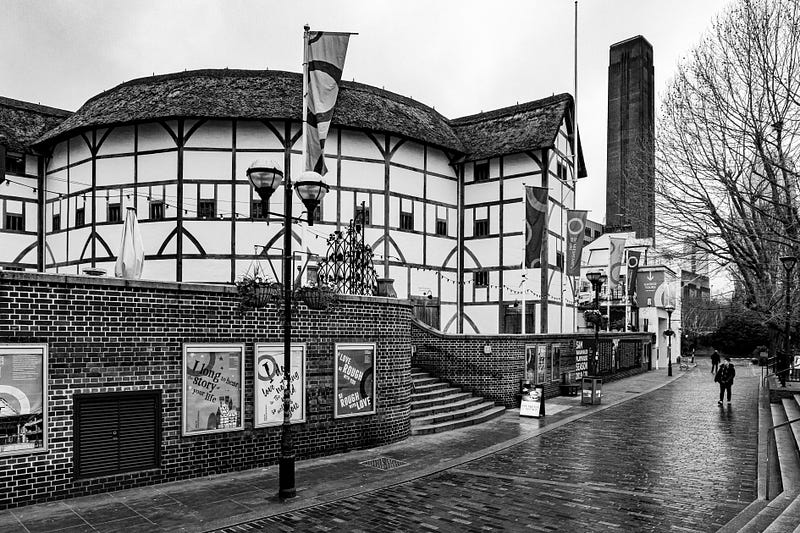
At first, the answer to this question seems self-evident. As many people know, the English stage banned female actors, preferring to have boys playing the roles of women. The same male actor who played Juliet in Romeo and Juliet, for example, also played Lady Macbeth in Macbeth. But why not just allow a woman to play the part?
Renaissance Concepts of Modesty
A popular argument as to why women were not allowed on the English stage was that it was seen to compromise their modesty. Given that the British public were used to seeing all-male performances for generations, many scholars suggest it simply did not occur to them to change anything.
However, as Stephen Orgel notes in his book Impersonations (1996), this is inadequate as an explanation. As he points out, the societies of France, Spain and Italy were:
quite as deeply concerned with female virtue as England was, and none banned actresses from the public stage […] by Shakespeare’s time they were a commonplace feature of the European stage — societies that maintained a public stage expected to see a woman on it. (1996, p. 1).
In order to answer the question, then, of why women were banned from performing onstage in England, is more complicated than it first appears.
Perspective
Partly, this question becomes a matter of perspective. In the same way that we, now accustomed to women in theatre, find it odd that women were not allowed, the English theatregoers would have considered the female actresses onstage in Europe to be odd or even problematic.
Were there arguments amongst the English about the morality and implications of transvestite boys onstage? Yes. But there is no evidence to suggest that the alternative of replacing them with women was discussed.
Is the Claim True?
This is something we as contemporary members of society often take for granted, having been told in school that women were not allowed to perform onstage, we take it as fact. But is that true?
We know that when Shakespeare was writing, it was true. But is it possible that women had previously been allowed to perform onstage and that right was taken away from them later on?
Rosemary Woolf suggests that, when it comes to Medieval England, there is no evidence to suggest that woman did not perform in plays (The English Mystery Plays, 1972, p. 401).
On top of this, travelling theatre companies from other countries would have come to England, where they would have had female performers onstage. So, we cannot say that the Elizabethan stage never had female actors on it, just that they were unlikely to have been English. Perhaps the English considered the virtue of European women as less important than the virtue of English women?
Furthermore, even if we are to accept that the stage itself was an all-male location, the theatre audience was one of the few places that women could go unaccompanied without social disdain; it is likely that the Elizabethan theatre audience was composed primarily of women rather than men.
What Makes a (Wo)Man
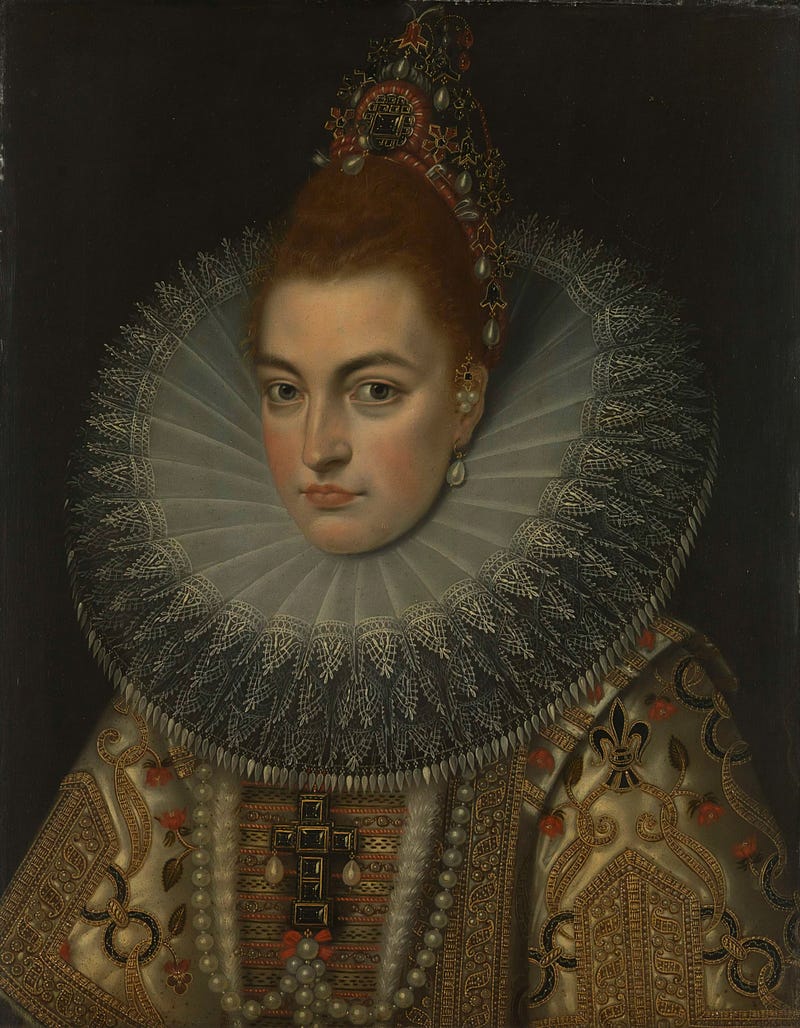
In ancient Graeco-Roman tradition, masculinity was as much about your social status and position as it was your biological sex. There was a constant anxiety that men could somehow slip into becoming feminine, and this was still somewhat prevalent in the Elizabethan period.
Women were deemed as dangerous to men because:
sexual passion for women renders men effeminate: this is an age in which sexuality itself is misogynistic, as the love of women threatens the integrity of the perilously achieved male identity. (Orgels 1996, p. 26).
Within this context, the very institution of the theatre itself was considered, by many, to be a threat to masculinity. Some men even feared that the boys who chose to play women onstage would become women in reality offstage.
But there was an even greater fear for the public than a handful of boys becoming women…
A New Kind of Plague
The argument against transvestite actors onstage suggests that male spectators of such performance may find themselves desiring the women they see. By being seduced by these false women, the fear was that they would then lust after the boy playing the part, making themselves effeminate because their desire is for a male.
However, the idea of switching these boys out for women was unthinkable because of the fear that it may lead men to sleep with those women they desired upon the stage rather than with their wives.
It is worth noting a potential counter argument: that the boys pretending to be women actually prevented male spectators from feelings of lust and that the choice to have them play women was to lessen the sensuality of the theatrical experience.
In short, many Elizabethans viewed the theatre as erotic in general; there was a link between theatre and prostitution in that it was considered as actors selling their bodies for the pleasure of on onlookers.
But perhaps thechoice to ban women from performing onstage had nothing to do with women at all.
My Theory
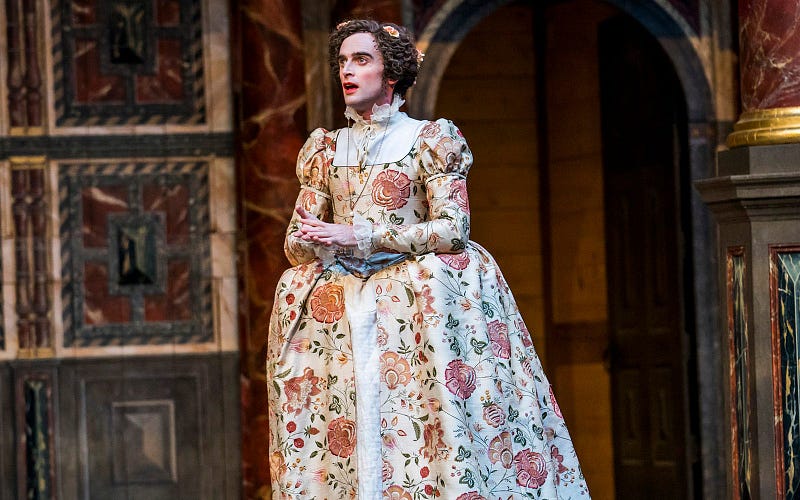
Homosexuality was not a concept as we understand it in contemporary society, with its first use in any language not appearing until in German towards the end of the 19th century. Until that point, sexuality and gender were not considered different things, though gender and sexual acts were.
This leads me to what was known as the Buggery Act of 1533. Passed by King Henry VIII, this act made all male-on-male sexual activity a capital offence, that is to say, punishable by death. This is surprisingly recent in the grand scheme of English history, and within less than a century of Elizabethan theatre.
Why am I mentioning this? Well, the prohibition against all forms of same-sex behaviour (public or private) did not apply to the theatre if one of the male actors was playing a woman at the time. This is not to say that actors had sex onstage, but it did give them a certain freedom to perform homoerotic scenes without fear of punishment.
Not only would this have attracted many homosexual men to become actors, but it would also have attracted them as audience members as the theatre was perhaps the only place that they could legitimately watch members of the same sex in romantic and sexual scenarios. There was something dangerous, exciting, and erotic about being able to watch two males kissing onstage in a time when such activity was illegal offstage. In this sense, the banning of women from performing in theatre acted as a thinly veiled excuse for the practice of homosexuality in a homophobic regime and for the voyeuristic pleasure of watching same-sex behaviour.
If you enjoyed this article, you might like my article on the Bible’s role in witch trials in Jacobean England:
If you want more detail on the specific practices of theatrical performance of gender in Elizabethan England, I highly recommend Stephen Orgel’s Impersonations: The Performance of Gender in Shakespeare’s England (1996).