
Why We Still Haven’t Learned the Lessons From Four Years Ago
After the debacle with polls in 2016, why were we so quick to believe again?
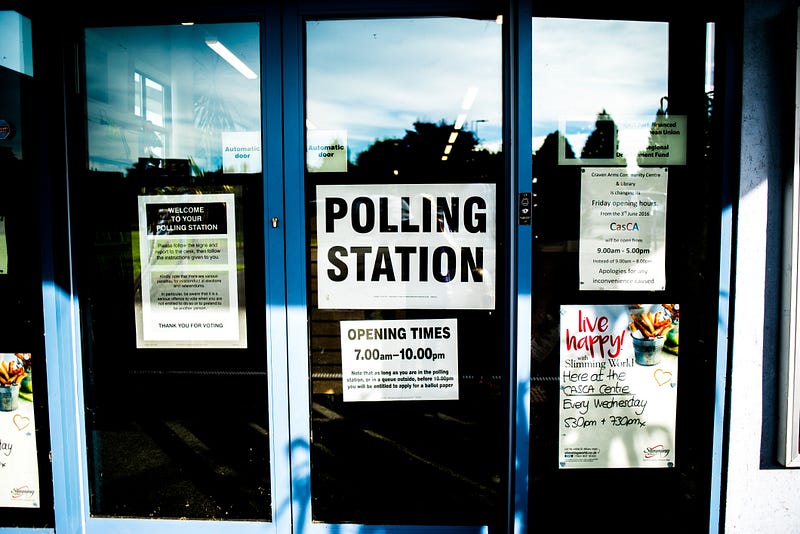
Four years ago, a large percentage of Americans, and spectators around the world, were shocked by the “unexpected” outcome of the U.S. election.
The outcome was “unexpected” only for those who were locked in the echo chamber of their social feeds and blindly believing the media coverage and the pollsters.
Four years later, it seems we haven’t learned the lessons from 2016. The media once again has hit heavy daily polling results, claiming that this time it’s different.
It’s not different.
Why We Are Tempted By Polling Results
The desire to believe in polls is understandable: uncertainty makes us freak out.
We are wired to need certainty; we want — actually, need — to know what is going to happen. So we’ll cling to anything that seems reasonable.
This year, as the pandemic has shattered our previous illusions of certainty, it’s even more tempting to believe in the polls, especially if they’re telling you what you want to hear — but even if they’re not.
Our desire for certainty is so great that we’ll cling to certainty even if the “certainty” we get is the outcome we don’t want.
We just want to know. When life feels unresolved, it’s hard to focus on the task at hand.
We want to have it settled, so we can focus on other things.
So it’s understandable why we might once again put our faith in the news reports and the polls. We don’t just want to believe. We need to believe so that we can feel resolved.
Please do not do this.
5 Reasons Why You Can’t Believe the Polls
Here are some things to keep in mind about polls, and why you might want to temper your belief in them:
- Framing is Critical. The way you frame a question can influence the answer.
- Polls Don’t Tell You Who Votes. There’s no guarantee that the voting sample looks like the polled sample.
- People Lie. Not just to the pollsters, but to themselves. Polls are measures of intent, and we are terrible at predicting our actions. This isn’t always intentional lying. Keep in mind that approximately 90% of our actions are governed by our unconscious.
- The Past Doesn’t Predict the Future. To extrapolate results, pollsters use underlying models that are based on past election outcomes. There’s an assumption of continuity and consistency in patterns that belies the fact that every situation is new. The past does not predict the future.
- You Can’t Poll For Unknown Unknowns. What impact will the pandemic have on voting? Will it impact a voter’s willingness to wait in long lines in the rain to vote, or will that voter fear getting sick and leave? What impact will the unprecedented early voting turnout have on the outcome? The models, which are based on the past, cannot build in the impact of new or unexpected factors.
All Prediction is Speculation
Consider that even meteorologists are often wrong, and their predictions don’t depend on human behavior.
Ultimately, all prediction is speculation. Nobody is an expert in the future.
As much as we would like to know how it’s going to play out, we won’t know until the votes are counted. And even that’s going to take some time.
In our culture of instant gratification, it’s quite likely that the election results will take longer than an Amazon Prime delivery.
It’s worth noting that this is not unusual. It’s typical for ballots to continued to be counted for days after the election.
What Needs to Change
Rather than trying to predict a future outcome, we can change how we handle uncertainty.
Just like everything else this year, this election is going to force us to build the muscle of sitting in the discomfort of uncertainty.
Renée Fishman is a real estate broker, holistic productivity coach, daily blogger, yoga teacher, and founder of The Ritual Revolution. She specializes in helping clients navigate change and uncertainty and finding meaning and purpose. Adapted from a post originally published at https://mymeadowreport.com on November 2, 2020.