
Why We Should ‘Let It Go’
How I learned to stop obsessing over life, love and work
Not long ago it hit me like a ton of bricks: I was living a life of addiction.
And I’m not talking about an addiction to substances — I don’t smoke and I rarely drink. But I get addicted emotionally. I would almost go as far as to call it ‘dependent’.
And yet dependency was something I thought I had always tried to avoid. I had always wanted to live my own life, feel the freedom of doing whatever I wanted. I couldn’t wait to be old enough to make my own decisions.
So how did I end up here?

Dependencies And Addiction In Everyday Life
Love
Everyone who has cried before, because of having sent a text message that wasn’t answered quick enough, might be able to relate.
I call this phenomenon ‘texting-anxiety’.
The first time I experienced it was last year when I was dating someone, who wasn’t very committed. There were days, where he just wouldn’t text back. One or two days to start with, but he sometimes managed to drop off the radar for almost a week. To some people that might not seem so bad — for me it was hell on earth.
What overwhelmed me was to be confronted with the lack of control I had.
As a person who likes to be in the know and likes to have everything going according to plan, I had difficulties adapting to a situation that was out of my hands.
I got upset, frustrated, I couldn’t believe someone would treat me that way. I blamed him for being unfair, for not respecting me.
And while that was happening I started to realise that I got myself into a very addictive situation: I was emotionally dependent — in an unhealthy way.
Life
I am a planning freak.
When I’m writing down my plans for the forseeable future, it gives me an illusion of control — it makes me believe to know what will happen for the next couple of days.
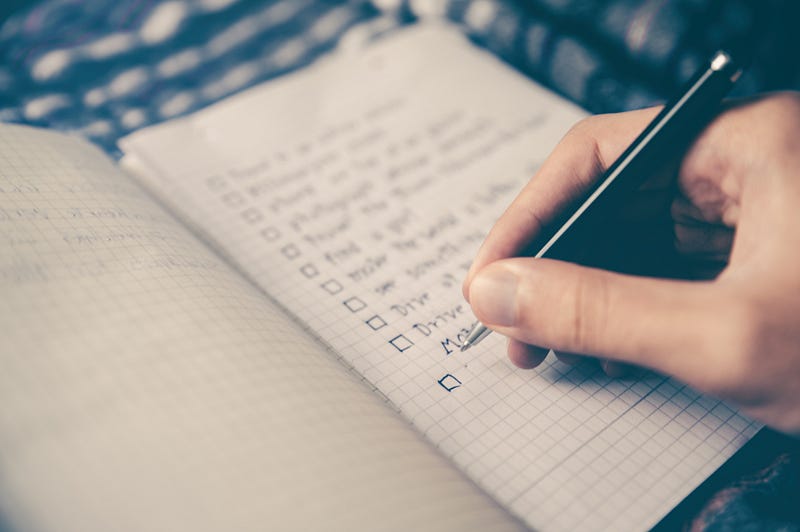
It feels good to have all the appointments and all the to-dos written down in my calendar and to tick them off every day after I’ve completed a task. That in itself is a little addiction, I have to admit!
I am ambitious and I want to get things done but sometimes my to do lists are so very long that it gets out of hand. As a result I start feeling bad, because I haven’t achieved my own goals.
My planning is a self-made construct that tricks my mind into thinking I have control, when I technically should adapt to the idea that I have none.
So even my personal life can feel like an addiction. An addiction to perfection, to striving for excellence, for making every day the best that it could possibly be and to ticking off one more thing than the day before.
Work
In a professional setting I want to achieve.
I want to do my best, I want to see good results, I want to feel like I’m being of use.
There have been a couple of instances in the past, where that wasn’t really possible because of external circumstances and I have found myself struggling massively.
Some of my managers and colleagues simply couldn’t relate and told me that I ‘couldn’t make the impossible possible’. They insisted I should just do what I could and that was it. Easy. Simple.
But I was addicted to good performance, to perfection and to the thought that everything should be working. And I found it so horrible to think what I could achieve as opposed to what I was actually achieving due to those circumstances.
What Helped Me To Let Go

1. Knowing That We Have No Control
This was the first lesson I needed to learn. And I’m still struggling to internalise that.
Although we tell ourselves that we can control certain things, most circumstances are out of our hands. Who would have thought that the world would be on stand-still, because of this virus? We can predict certain outcomes, but we don’t know anything for sure.
Socrates once said: “The Only Thing I Know For Sure Is That I Know Nothing At All, For Sure”
2. Letting The Future Be The Future
I could get quite obsessive over my idea of my future. I sometimes had a specific plan in my head and couldn’t understand that it wouldn’t work out the way I had wanted it to.
I decided to start looking at it from a different perspective and find the positive in everything that didn’t go according to plan.
The future will always be the future and we cannot plan it. I definitely hadn’t planned the most part of 2020 to be spent in my studio flat in London in isolation. But instead of resenting this arrangement I have tried to find the advantages I’m getting because of this situation.
Would I have ever wished for this to happen? — Definitely not.
Would I change the experience if I could? — Weirdly enough I have to say No, because I’ve learned a lot and it’s provided me with the time to grow and see what really is important to me.
It’s a good question to ask yourself, because surprisingly we can often find something valuable and meaningful even in times of crisis.
3. Slowing Down
Thinking back now I don’t even know how I sustained that busy life-style I was living. I pushed myself to go to so many events and appointments that I didn’t have the energy to go to.
And now, naturally, many of us are forced to slow down.
Spending so much time on my own has encouraged me to be with my thoughts and feelings and address them if needed. I have started meditating and I have been doing a mindfulness course.
It has helped massively in noticing my unhealthy coping mechanisms and has provided me with an opportunity to create healthier ways to deal with my dependencies.
Letting go of all of this emotional baggage feels so liberating and it’s partly due to these unfortunate circumstances that I have had a chance to work on it, to write my experiences down and to share them with you here.
Maybe you can relate to my story and if you do — I hope that my insights will help you to Let Go a little easier.


