Why We Protect Society from the Ravages of Capitalism
The sovereignty of money and the call for outgrowing personal greed

According to Britannica, neoliberalism is the
ideology and policy model that emphasizes the value of free market competition. Although there is considerable debate as to the defining features of neoliberal thought and practice, it is most commonly associated with laissez-faire economics. In particular, neoliberalism is often characterized in terms of its belief in sustained economic growth as the means to achieve human progress, its confidence in free markets as the most-efficient allocation of resources, its emphasis on minimal state intervention in economic and social affairs, and its commitment to the freedom of trade and capital.
Considering neoliberalism’s dominance in both the Democratic and Republican parties, at least until the latter’s Trumpian foray into populism, it’s worth pondering the limits of neoliberalism.
Specifically, we might ask ourselves why we don’t turn all of society into a free market. Why are some areas of society protected from capitalism, even in the United States, areas such as medicine, law, the military, and democracy?
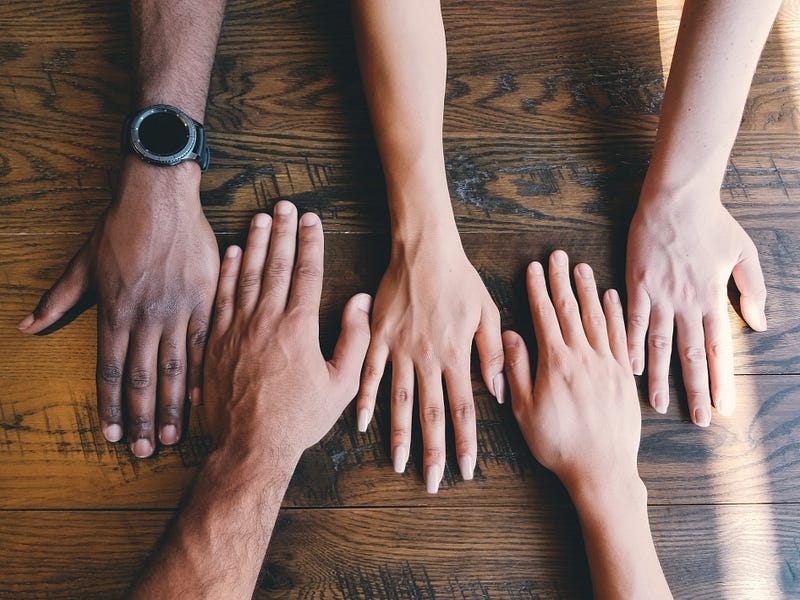
Bastions of liberal humanism
Each of those four areas of modern, free societies is governed by a key principle:
- Medicine: doctors must do no harm
- Law: equality under the law
- Military: as the last resort, war should be rare
- Democracy: one person, one vote
Doctors swear to abide by a form of what’s traditionally been called the Hippocratic oath, which is that they should help rather than harm their patients. Surgery may harm them in the short run, but only as a means to alleviate a greater harm. Thus, doctors weigh the costs and benefits of medical procedures.
Moving on, everyone is supposed to be equal under the law, so that, when accused of committing a crime, the defendant is entitled to a lawyer and to a fair trial. No one is supposed to be above the law, and justice is considered blind, as it were, or impartial.
Imperial wars of aggression are forbidden among free, developed countries. The military is used for purposes of defense, not to gain territory or to subjugate other peoples, as was done routinely in premodern times. Of course, there have been numerous wars over the last century, including ones initiated as acts of aggression, such as Hitler’s invasion of Poland, George W. Bush’s Iraq War, and Putin’s invasion of Ukraine. But these go against the progressive metanarrative, and the international community tends to condemn them.
Finally, democratic governments have come to represent all citizens of the country, including women and minorities, giving each an equal say in the government, in the form of a vote in the election of political representatives.
Underlying all of these principles is the philosophy of liberal humanism, the view that people have inherent rights. These rights go not just to Protestants, Catholics, aristocrats, white males, or the wealthy. All people, as conscious, intelligent, autonomous beings have the liberty and the right to pursue happiness, according to countries that view themselves as developed and “modern.”
That’s why doctors try to refrain from doing more harm than good for their patients, and it’s why all citizens are supposed to have equal treatment under the law, why wars of aggression are banned, and why all citizens have an equal vote in electing a democratic government. The equality and the sacredness in question are due to our personhood. Doctors shouldn’t harm their patients because patients are people, we deserve equal treatment by the courts because even accused criminals are people, and so forth.
For those reasons, the government regulates those areas of liberal society to protect people’s rights. State medical boards regulate the activities of health care professionals in the US, and the US Food and Drug Administration regulates the production of medicine.
American lawyers and courts are regulated by state and federal supreme courts, and the federal judiciary is a coequal branch of the government.
Likewise, the military falls under civilian control in the US, with the president as the commander-in-chief, and Congress providing the funding for American wars.
And voting rights are codified, with elected or government-appointed administrators at the state and local levels running elections.
The capitalist threat
Still, in the US each of these bastions of liberalism is threatened by capitalism.
The US has private health insurers that lobby to prevent or to sabotage government efforts to provide free healthcare for all American citizens.
The rich can afford better lawyers for their defense, and they more effectively lobby to add loopholes to tax laws, environmental protections, and other regulations that might pertain to their business. Moreover, the US is notorious for its flourishing market in private, for-profit prisons.
Increasingly, the US employs private security contractors, otherwise known as mercenaries, such as Blackwater (now called “Constellis”), and giant defense contractors like Lockheed Martin and Raytheon supply not just the US but much of the world with weapons of war.
And technically, the DNC and RNC are private companies, while other companies and wealthy individuals are free to support American political campaigns with unlimited amounts of money through super PACs. Campaigns can last for years in the US, overtaking the practice of government.
Capitalism: the sovereignty of money
What, then, is the problem with that capitalist encroachment on liberal society? What’s the nature of capitalism such that this economic system might be expected to work in some areas of society but not in others?
Fundamentally, capitalism is the sovereignty of greed for money.
What matters in this kind of economy is the freedom to start a company, to work, and to buy anything that’s being sold. You start a business to earn a profit, you work to earn a paycheck, and you purchase goods with money.
Technically, capitalism is known as the private ownership of the means of production, but that’s another way of saying that this economy is one in which money talks. In a communist system, by contrast, you’re not free to do business, regardless of how much money you have, because the government owns the businesses and runs the economy.
On the surface, capitalism, too, promotes liberal humanism, in that technological innovation, driven by competition between private firms seeking a profit, improves living standards and empowers us with options to help achieve our goals. Capitalism as the unleashing of greed for money is part of modernity, along with science, industry, and the prevalence of republics.
Yet there’s an obvious conflict between capitalism and the other facets of liberal humanism: capitalism promotes social inequality because in a capitalist economy, money isn’t equally distributed.
This difference is most striking when comparing votes in an election to the choice of goods for sale. In an election, a billionaire has exactly the same number of votes as a homeless person. No one’s permitted to vote more than once per election. But money can be accumulated such that a billionaire has billions of purchasing powers, whereas a penniless person has none.
Suppose, then, we “deregulated” hospitals, the courts, the military, and elections. That’s a euphemism for supposing that money alone is allowed to govern those social sectors. The resulting society would be a plutocracy, meaning that it would be ruled by the rich. How would it work?
Hospitals would be run for profit, so only those who could afford treatment could seek medical remedies for their ailments. Doctors would therefore turn away patients just as any other business closes the door on those who lack the funds to buy the products on offer. Perhaps the population would shrink as a result, decreasing the nation’s GDP. Perhaps the healthy rich people who remain would feel emotionally burdened by this effect of hyper-capitalism, or maybe they’d shelter themselves and pay to have robots clean up the mess of poor people dying from illnesses and injuries in the street.
In any case, the conflict would be clear, between the doctor’s oath of refraining from doing more harm than good for patients, and the capitalist’s catering to money.
Likewise, if the courts were run as businesses, the rich would be above the law, and the law would be used not as a shield to protect people’s rights, but as a means of generating profit. For instance, a privately operated judicial system might sue a startup company to steal its intellectual property and to sell it to the highest bidder.
Again, the US already has a burgeoning field of “ambulance chasers” who seek profit from class action lawsuits. But the courts are supposed to employ neutral judges and juries seeking justice, not profit. If the courts were run as businesses, there would be no justice in the liberal humanistic sense.
Similarly, if the military were privately run, there would be imperial wars of aggression, aiming to steal other countries’ resources or to harm competitors in an international trade of goods. Just as corporations seek to grow, a country with a military that’s run as a privately owned business would aim to conquer territory, and to do as much business as possible with an abundance of wars. Wars, then, wouldn’t be rare or used as the last resort because the purpose wouldn’t be the protection of the citizens’ human rights, but the generation of profit for the military’s owners and employees.
Finally, a government run as a business would replace the vote with the capitalist exchange of goods and services for a fee. There would be no democratic government; at most, sham elections might be run as entertainments for profit, as in a political reality TV show. There would be no need for democratic elections because there would be no respect for the equal rights of all the people. Again, money would talk the loudest, meaning that those with the most money would matter more than anyone else. The rich would rule, having been “elected” by the power of their wealth.
I trust you can see that those four further deregulations would add up to a dystopia. So that’s why we protect much of society from the effects of capitalism, to prevent the outbreak of such a dismal state of affairs.

Can we outgrow capitalism?
Having determined some sensible boundaries of capitalism, we might ask whether capitalism is an unqualified advantage even in its proper field. What, then, is the purpose of capitalism? Why do we compete to earn the most money?
We do so to finance our pursuit of happiness. Again, we use money to achieve our goals in life, and we compete in the workplace to earn as much money as possible, to improve our chances.
If everything were free, we assume there would be no incentive to work, so society would collapse. The Soviet Union, for example, is supposed to have collapsed for that reason. The communist government swept under the rug its unmotivated or rebellious masses by sending them to the Gulag.
Of course, people worked and invented technologies long before capitalism, but capitalism turbocharged progress by eliminating many moral and religious constraints on labour. Under capitalism, we work not as tribalists or as peasants for the glory of God or king, but for ourselves. We assume that rights come not from above but from the personhood of every individual, so we’re obliged to pursue our interests, to seek our advantage.
Capitalism, then, is a system for regulating the natural competition between so many empowered, self-interested individuals, and for smoothing over the costs as we thereby implicitly disadvantage our rivals. We consider ourselves civil if our labours are productive and if we respect each other’s private property. Capitalism organizes the inevitable conflicts between those seeking to maximize their personal welfare, by turning public life into a business. By commodifying goods and treating our work life as an entrepreneurial enterprise, we dignify the competition and justify the many costs of doing this business.
Yet is technological innovation infinitely progressive or will our inventions one day doom us to extinction? Can we sustain this competition for individual happiness by the unleashing of greed or will we destroy ourselves in the process, as we posit our personal prerogatives that trump our natural functions? Will the lower classes and the Third World labour forces rise up and shut down the systems of legal exploitation? Will improvements to AI and the automation of labour put us all out of work?
I don’t mean to suggest here that capitalism is good for nothing. My point in raising these questions, rather, is to suggest that capitalism isn’t a godsend. And one day we may have to consider alternative motives than greed for private advantages.
Think, for instance, what business would be like if all the world adopted Buddhism, if we declined to foolishly seek to capitalize on the illusion of our ego’s independence. Would there be a Buddhist reason to buy and to sell products?
Or imagine if everyone learned to appreciate our universal, existential condition which trumps all our petty tribal and personal disputes. Would there be existential grounds for social progress, as in the Star Trek scenario in which our species cooperates to conquer the stars?
Evidently, despite its origin in liberalism, capitalism conflicts with the values of liberal humanism, and even its proper sphere might be unstable, as the business cycle proceeds by creative destructions. Capitalism is supposed to increase the chance of our finding secular happiness, but there’s no guarantee we’ll always be able to afford that kind of economy.