
Why We Need to Stop Using Meritocracy to Justify Inequality
On a daily basis, we see our wages dwindle and labor laws loosen, yet that is never taken into account to justify inequality.
It’s not a secret that the gap between the rich and the poor is looking more like an abyss these days. While working people are losing their jobs and struggling to pay rent right now, due to the COVID-19 pandemic, billionaires increased their wealth. This situation brings us to question — more than ever — that old narrative that was so forcefully bestowed upon us: meritocracy — the idea that hard work makes anything possible.
On a daily basis, we see our wages dwindle and labor laws loosen, yet that is never taken into account to justify inequality. Instead, disparity and poverty are constantly being sustained with the narrative that people don’t work hard enough.
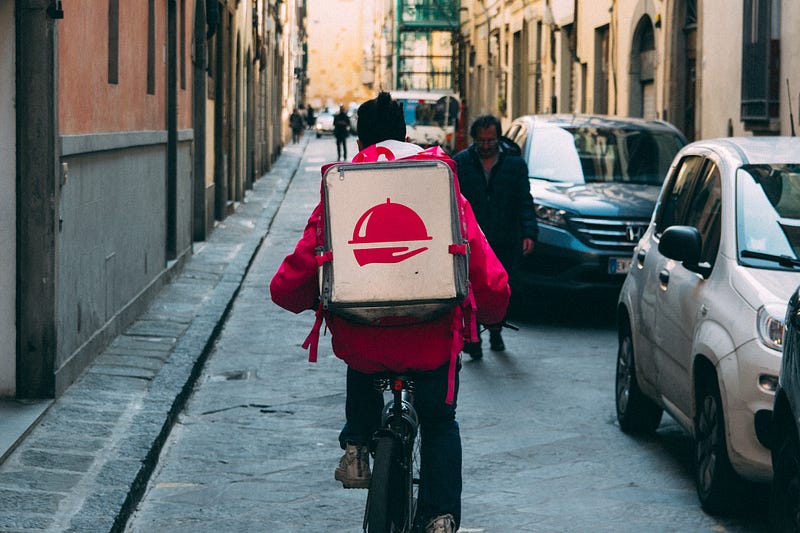
In this context, I want to bring to light the self-employment movement, for it is crucial to understand the growing disparity. It is constantly being advertised by companies the benefits of self-employment and its relation to entrepreneurship — no boss and flexible schedule are some of the upsides that are underscored. Notwithstanding, behind all that advertising and seemingly great advantages lie the reality of no employment contract, meaning no health care, no paid vacation and no need to abide by labor laws. Besides that, the worker still has to provide the means to work. So, undoubtedly, the advantages are really for the company, that thrives and profits upon the lack of a formal employment link.
Although, I think the advertisement team deserves some credit for accomplishing the task of fooling some of us into believing having less rights as a worker is somehow positive.
But the truth is, even the promoted advantages don’t align with reality. For some people these APPs are their only source of income and to them flexible schedules really mean working more to be able to make a living after all their expenses with gas, Internet and car loan. According to a complaint of an UberEats’ Australian worker — Amita Gupta — highlighted in the NZ Herald, after working 96 hours in one week — that’s around 13 hours of work per day — she earned AU$324 — that’s 3.38 Australian dollars per hour. To give you a notion of the size of the problem, minimum wage in Australia right now is AU$19.84.
Is Amita Gupta not working hard enough?
It’s imperative that we recognize that closing that wealth gap and making ends meet is not a matter of effort.
This situation is especially problematic in Developing countries, for the wealth gap in these places is even greater. In Brazil, the COVID-19 pandemic was a big wake up call for workers using these delivery APPs. During the pandemic, they were out for themselves, risking their lives to put food on their (and our) table and to increase the effectiveness of isolation for the rest of us. The companies they worked for didn’t so much as provide masks, hand sanitizers or anything else to ensure the safety of these hard workers. That was the last straw for them, since they had been enduring earnings that barely met the, already undignified, minimum wage of R$ 1,045.00 (US$194), while working 12 to 14 hours a day. And, to top that, the devalue of their work over time in another problem. Loggi, for example, paid, when they first started, R$ 4.00 (US$ 0.74) for each travelled kilometer, but that price went down to R$ 1.00 (US$0.19) in 2019, according to The Intercept Brasil. Meanwhile, delivery companies in Brazil are expected to grow annually at a rate of 9,3% as presented at Statista.
Are Brazil’s delivery men not working hard enough?
“Do you have any idea how it’s torture to be hungry and have to carry someone else’s food on your back?”
This scenario birthed a new movement in the country of workers that are aware of their position of slavery-like work that is masked by a fallacy that promotes they are, too, “owners of the company”, in the words of the CEO of iFood, a Brazilian delivery service company. The movement is being spearheaded by Paulo Lima, who is trying to make the world look at this marginalized group and fighting for better work conditions. In an interview Lima said “Do you have any idea how it’s torture to be hungry and have to carry someone else’s food on your back?”. He was even considered to be a candidate for city council of São Paulo, but he refused, saying he would rather focus on grassroots movements.
Thus, it’s imperative that we recognize that closing that wealth gap and making ends meet is not a matter of effort. In fact, most of the time, it’s beyond our control.
And, the argument that any job is better than no job doesn’t excuse the appalling work conditions and decrease of quality of life workers all over the world are being subjected to.
In addition to that, we need to also acknowledge that it is impossible to think about meritocracy in an extremely socially unequal society, in which skin color, gender, wealth and even place of birth dictates the amount of opportunities that are going to be given to someone. It is undeniable that privilege plays a huge role, for instance, in whether your wage will equal your male counterpart or if you’ll have a chance to go to college or, even, in whether or not you will be a victim of police brutality before you even have the change to compete in this very unfair meritocratic race.
Still, we’re taught to believe that the start is the same for everyone.
It’s not possible to stand behind the idea of meritocracy without denying that racism, sexism and poverty exist and are hurdles that some people have the privilege of not worrying about.
Take the case of Breonna Taylor, for example. A young black woman that was brutally murdered by police officers while she slept on her own bed, after three officers used a no-knock warrant to enter her apartment on march 13. It’d make, at least, a modicum of sense if the police officers responsible for this were immediately fired and were facing criminal charges, right? Well, as of right now — mid-July — only one office was fired, but the reason for that is because he shot blindly and hit the neighbor’s apartment. Therefore, we see absolutely no justice for Breonna Taylor. I wonder if the victim was white and wealthy the murder would go unpunished or if that would even happen in the first place.
What I mean is, it’s not possible to stand behind the idea of meritocracy without denying that racism, sexism and poverty exist and are hurdles that some people have the privilege of not worrying about.
So no, meritocracy doesn’t justify inequality. In fact, it doesn’t make sense in a context of utter social and economic disparity.
Having said that, here are some ways you can help bring justice for the murder Breonna Taylor and help Paulo Lima and other delivery men in Brazil have more dignified work conditions:
- You can sign the petition that demands justice for Breonna Taylor and the petition created by Paulo Lima to make sure food delivery APPs provide alcohol-based hand rub and food for the workers during the pandemic period.
- And, most importantly, keep talking about these issues with family and friends, spreading awareness of their existence is the first step of effective structural change.


