Why We Need Music in Our Lives
And no, it is not to brain-up our children; it is not to turn anyone into a mathematician.
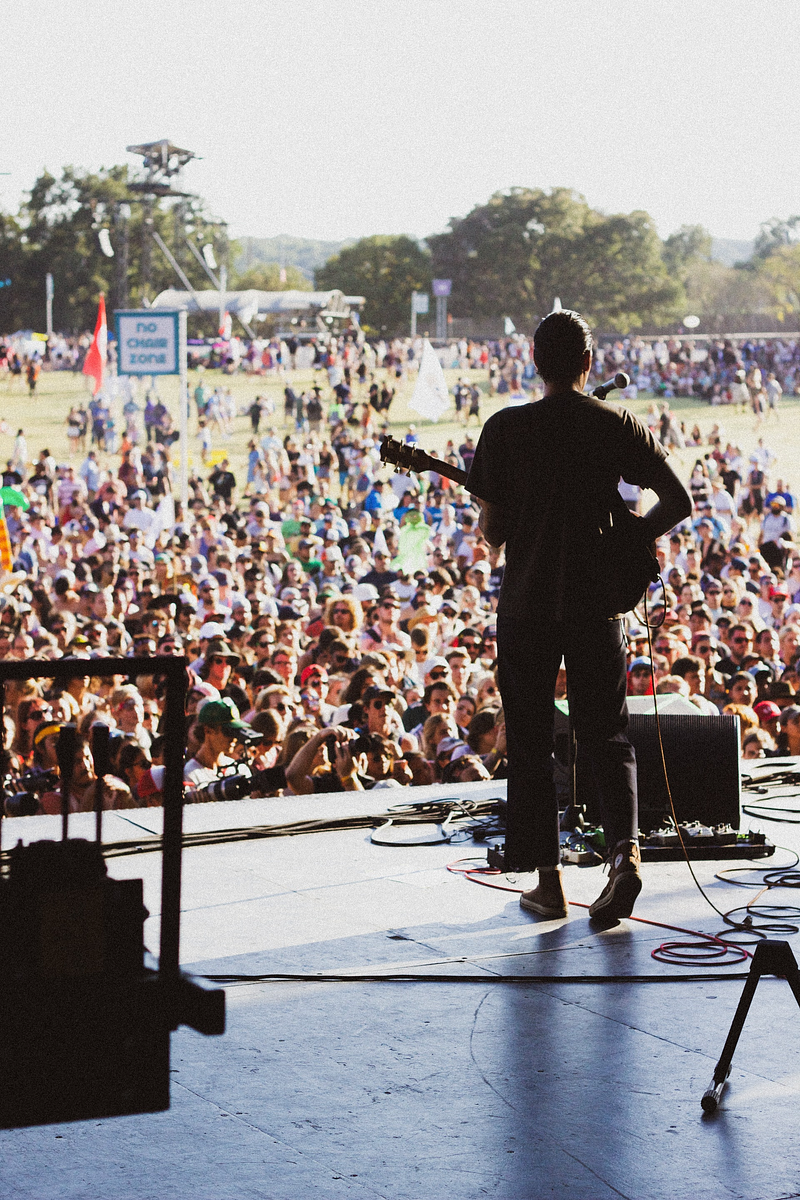
1. Music goes with everything — from morning shower, to homework, to making love, to warding off road-rage. There is Sinatra and Ziggy Marley, The Raconteurs and Cannonball Adderley. There is hip-hop and gamelan and ska. There are local jazz trios in restaurants, and a Saturday afternoon jam at a Blues club. There’s volume. There’s Spotify if you’re cheap. And there’s no excuse.
2. Music is a good indicator of capacity for life. If you don’t like music, you are probably dead; check your pulse, or ask someone to do it for you. Use it in your online dating profile to weed out people-to-avoid.
3. Music creates a living wall between you and the crazy-making stuff. When you’re sitting on the right side of a band, on the other side is the office and the laundry and the bedroom, and the rest of your life…and all you need to think about is the notes and maybe the voice. And when to clap to say thank you. *
4. Music is root canal filling for the soul. Take the small notes and begin to push it into the corners (souls have those, along with wrinkles and folds), and fill it and fill it–fill it well to avoid infection. Sometimes, most times, infection is warded off with alcohol–though if one has issues with this, music will do the job on its own. But fill and pack it in–you know how the dentist does it–grabbing your jaw, levering, bearing down… Let the music do its work. As it does, it pushes out the bad. Leaves you with some serious chompers to eat up life.
5. Music creates wonder. And “wonder is respect for life.” (William Steig, New Yorker cartoonist turned children’s author and illustrator, said these words in his Caldecott Award acceptance speech.) Music gives you reverence and irreverence, version and inversion. Respect creates integrity. Connect the dots.
6. In case you didn’t understand that last one — because I know I don’t always make sense at first — music helps you remember who you are. If you listen. That would be the “brain-up” piece right there…because thirteen years of elementary and secondary education should help you learn who you are, but too often takes you further from that knowledge. Music will take you back to that place
7. Music will help you remember others and who they are, too. This works even if you aren’t a “musician,” as in “one who can play an instrument with others who can play instruments.” (Part of how I define “musician.”)
8. Playing music alone and/or with others, or listening, focuses you. It focuses me, anyway. When I’m playing (piano or my dad’s old sax), I can’t think about anything else; if my mind wanders, so do my fingers. In this, music is meditation. It fixes my mind on itself.
9. Music is so much more fun than prozac, effexor, and the dozens of other synthetic options. If it’s not enough for you, then mix with a cocktail of dance.
10. Music is. Listen.
*buy the band a beer. Oh, go on.