
Why We Need Experts
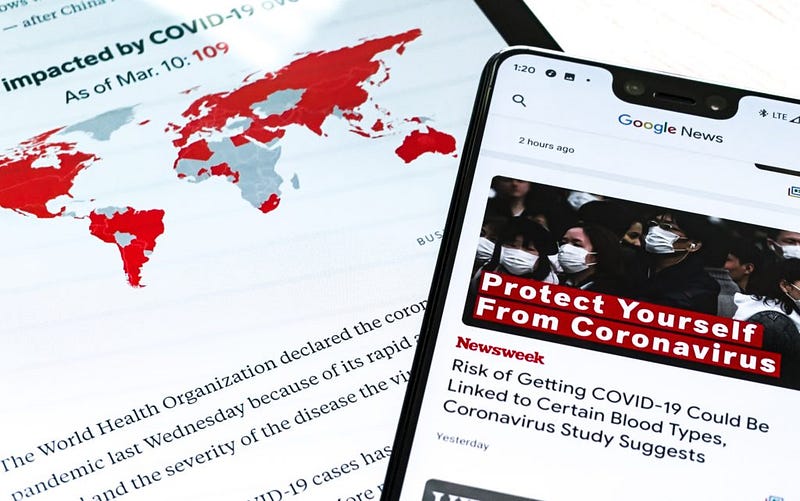
We live in age where we can get any information we need within a few clicks, and everyone can do that. Why do we need experts?
It’s a fair question, but not the best question to ask.
A better question would be, what is expertise nowadays?
If you’re the typical millennial or gen Z reader, you probably stopped reading at the previous sentence and went to ask the same question to Google. The reason I make that guess is because as I was writing the question “what is expertise?”, my first impulse was to open a new tab and google it.
Think about it, isn’t it unreal? I am trying to share my thoughts on a subject that deeply matters to me, but I still expect the internet to provide the answer.
Let’s go with that search for a second, here are some results.
The Cambridge Dictionary says “expertise: a high level of knowledge or skill”
The scientific journal Frontiers in Psychology says “Expertise is consensually defined as elite, peak, or exceptionally high levels of performance on a particular task or within a given domain”
The business dictionary says “Basis of credibility of a person who is perceived to be knowledgeable in an area or topic due to his or her study, training, or experience in the subject matter.”
IGI Global says “The property of a person (that is, expert) or of a system that delivers a desired result, such as pertinent information or skills. Expertise generally implies providing useful and large amounts of knowledge and action quickly (fluency).”
Now, am I any closer to the truth?
I feel like I am. Expertise seems to be something that has to do with knowing a lot of information and with applying that information to a task, leading to good results quickly. Just like when you write formulas in Excel you are putting a lot of information to work to fulfill a task efficiently.
It is also something that gives credibility to those showing it, especially when supported by experience or training. Just like showing up in an expensive car gives the message you’re clearly, irrefutably rich and accomplished.
Right?
…
I feel like I am missing the point now….
Maybe I should go one level deeper. If expertise is based on knowledge, then what is knowledge in an age when everyone has access to all information at all times?
When you start asking more and more questions, boy is the internet confusing.
Let’s look at some concrete examples.
I only recently discovered that there is a group of people on this planet that still believe Earth is flat, they are called flat earthers. Immediately I could not resist but watch a debate between a scientist and a flat earther.
I’ll avoid going into the details of their arguments, but I will highlight two points. First, the flat earther rejected the scientist’s arguments with the same speed of your computer refusing to save a document that contains a colon in its name. The conviction with which the flat earther brought the conversation to an epistemological dead-end every single time was alarming. Secondly, free speech was slipped into that debate, as you could expect. The flat earther said that it’s not fair that his videos are censored by Youtube. In fact, he says, he is not promoting hate or violence, he is just discussing ideas.
The problem is, he is using science wrongfully to support his ideas, which is why it is worth flagging to the viewer that the opposite of what he says is true.
By claiming he follows the scientific method he devalues the system upon which human civilization has built his knowledge base and created progress until now. He does so without bringing new methodologies to the table.
Another example are the anti-mask groups all over the world, arguably much more dangerous than the flat earthers. There is plenty of evidence to suggest wearing face masks does make a positive difference in slowing down the spread of the pandemic. Yet, the UK have been debating for months whether or not it would be a good thing to do and they are only now coming to their senses. As to the US and their anti-mask protesters, should I even bother?
Amusingly, there’s a lot of people out there that believe face masks contain a 5-G antenna used to track us, which will cause brain cancer.
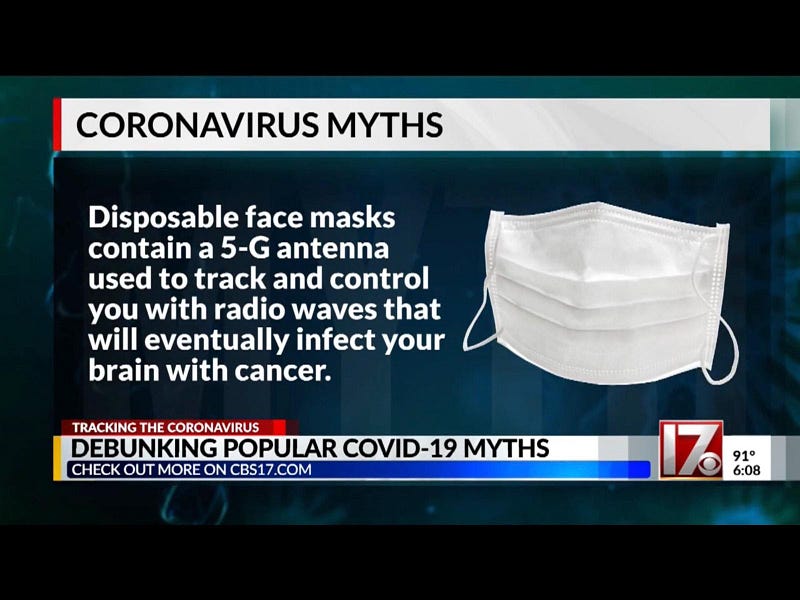
These are examples of what happens when you have the world’s knowledge at your fingertips. And frankly, it is frightening.
It’s frightening not just because of the absurdity of some ideas and their total neglect of facts, but because these ideas end up influencing masses, and that could have disastrous consequences.
So far our question “what is knowledge?” evolved into “what is believable knowledge?”.
In general, believable knowledge is brought about by a well defined, transparent, and agreed upon methodology. Believable knowledge is also not going to change over time. If you follow the same methodology you should get the same results.
And even then, we don’t consider it absolute knowledge, we consider it as a theory that is supported by evidence and which is true until proven otherwise. Until. Proven. Otherwise.
Science has played the role of chief provider of believable knowledge until now.
As you can tell, I am a big supporter of the scientific method.
But it’s not all sunshine and roses; science has its dark moments, too
Since we are talking about current affairs, take for example the case of hydroxychloroquine (HCQ) as a preventative measure for covid-19. HCQ has been used to cure malaria and rheumatoid arthritis.
A small scale study, which was not peer reviewed, claimed HCQ could also help with preventing covid-19. On the other hand, experts like Dr. Fauci claimed there was no evidence it did.
In order to get past this confusion, a randomized trial was needed, which is normally performed during a pandemic (it was done for Ebola for example).
However, the scientific journal The Lancet published an article where they claimed that HCQ increased fatalities in covid-19 patients. This pulled the break on the much needed randomized trial due to safety concerns.
The study published by The Lancet was contested by a group of scientists for its shortcomings and the paper was retracted.
Finally, the randomized trial was performed by Oxford University, which concluded that HCQ had “no beneficial effect” in treating or preventing covid-19.
(A scientist and friend of mine published a more detailed analysis of this story, you can find it here: https://www.newsmantra.live/how-unscientific-studies-claims-created-ripples-amid-covid-crisis/)
This fiasco had important concrete consequences on people and markets. HCQ price went through the roof, making it more expensive for people that actually needed it. On the other hand, some people ended up poisoned by HCQ.
A big fat scientific mess it was…
Part of the problem could just be about incentives. I totally agree with Nassim Nicholas Taleb on what he says about science “The professional researcher competes to find relationships. Science must not be a competition; it must not have rankings […]. Knowledge must not have an agency problem”
If we exclude these pitfalls, science has been the go-to methodology to find good quality data to build our knowledge for centuries now, and it has mostly worked.
However, in reality science is often seen as an esoteric subject led by elites that are somehow distant from real life. Science is not quite widely accepted as one of the key sources of applicable knowledge, one that can propel our civilization forward, and that has done so until now.
In other words, science has a branding problem that limits their sphere of influence. Fiascos like the HCQ story are not making that brand any better.
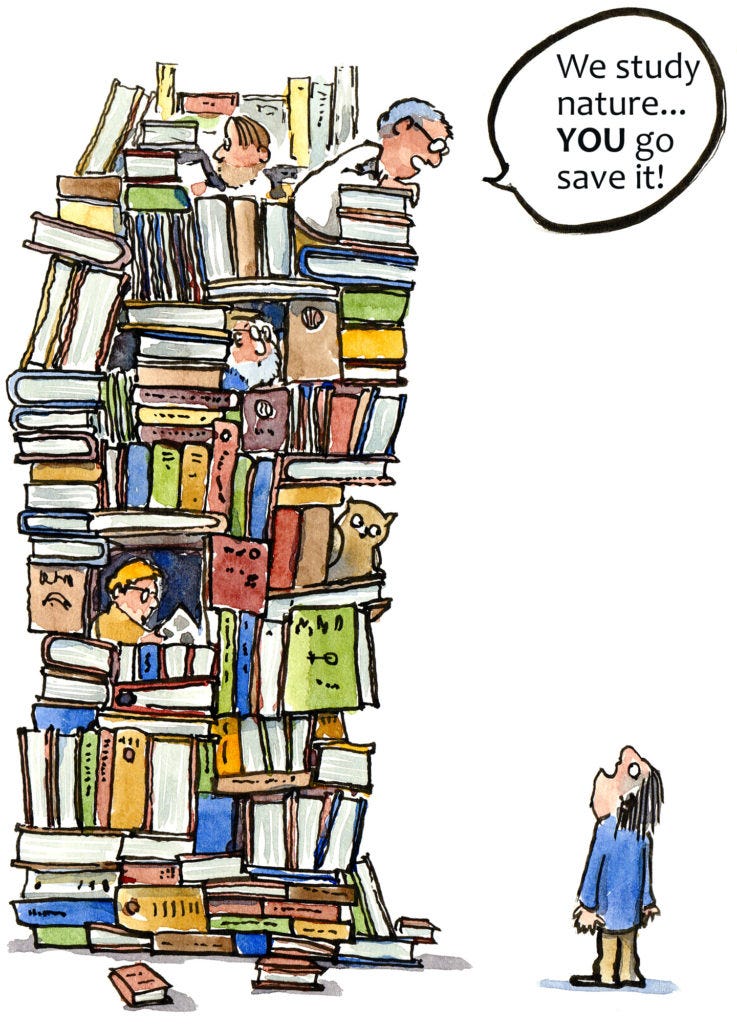
Some of us don’t fully trust science to guide us. Furthermore, intellectuals are seen with an eye of skepticism in some circles. Sometimes such skepticism turns into unapologetic opposition.
Look at the social phenomenon of anti-intellectualism, which is predominant in the States but also present in European countries.
It’s a fascinating phenomenon with strong political and historical influences that I might explore more in detail in another article.
Anti-intellectuals see intellectuals and their ideas as an obstacle to business, and higher education as liberal brainwashing. This is causing an ever growing group of people to see lack of higher education as a badge of honor.
While these types of movements fit nicely into pre-existing political agendas, their effect is much broader than politics. They create in fact a strong cognitive divide that makes the spread of new, forward-looking ideas much, much harder. Thinking and reflection is also often demonized.
This about it for a second. Whenever we want to learn something, even if information is readily available, we must still navigate through fake news, corrupted scientific publications, partisan media articles and statistics taken out of context.
It’s not enough to just Google something. We need critical thinking in order to acquire believable knowledge out of the sea of available information. The alternative is to go down rabbit holes and create a world of our own, which rejects any other idea out there.
And critical thinking is real knowledge. It is the ability to look at large volumes of information and ask ourselves which narratives make sense and why. It’s the willingness to understand the implication of certain ideas, in all their nuances. It gives us the opportunity to make clear decisions for ourselves, and it goes way beyond the data.
The word “data” comes from the Latin datum, data, which means “given”. For the ancients, the concept of data was that of a fact, a given, which is a starting point for a logical conversation.. Data is a fact that starts the conversation, and is not the conversation; a fact that starts the thinking, and does not replace the thinking.
Critical thinking is what gives us the freedom we so often claim we want to be respected.
Experts can help us get to that freedom, that’s why we need them.
They can be intellectuals, scientists, seasoned businesspeople, you name it. They are people that can start conversations on the basis of facts and stimulate critical thinking.
We all learn at some point that not all “experts” are to be trusted.
Trust them only when they really understand the problem you need to solve, or the specific domain you are exploring.
In practice, if you are looking for help on a specific problem, try to define the problem in your mind before engaging with experts or blindly believing their content. Are they able to describe the problem more specifically than you can? That’s a green light.
Are they able to understand and explain the implications of their advice on your life? That’s another green light. And finally, what do they personally have to gain from you following their advice? Depending on the answer, that is the ultimate green or red light.
Scientists are those experts during a pandemic, and can step it up and be those much needed experts in other moments of our lives. But they must stand up to the challenge, be transparent and never compromise on the integrity of their methods. Not only that, but they should also openly call out and challenge any leader who is making poor scientific claims or is using science wrongly to support their statements. The believability of science depends on it.
Intellectuals should be playing the same role in other domains. They should strive to convince the public they’re no longer elites on an ivory tower. They’re involved in real life. They’re there to help us develop the critical thinking that makes us cut through the noise and win in the long run.
Now we need them more than ever.
In conclusion, let us not forget the words of Timandra Harkness:“It’s a wonderful thing that the internet and data have opened up so much of the field of human knowledge to so many more people, but it’s not a good thing if we lose track of what knowledge is.”


