avatarBobby Dubey

Free AI web copilot to create summaries, insights and extended knowledge, download it at here

3980

Abstract

">Maybe you don’t know how to step back and analyse, that’s okay. You don’t need to know everything, but question everything, here’s how I learnt to step back and ask…</p><h1 id="84fa">I choose to Journal.</h1><p id="1d9e">Earlier this year, I was in India, and my family was in London, the Pandemic was happening, and I was scared, so I started to write down my emotions, figure out their route source, that would help me feel better.</p><p id="dd01">Back in the day, the smart, and important people would sit down and write because they wanted to think properly. Around the ’60s, psychologists found that writing and labelling emotions help us.</p><p id="f9e3">No one knew why, but so far, we’ve understood that a possible neurocognitive pathway exists, but, previous studies weren’t logical enough to tell us about this neurocognitive pathway.</p><p id="0dfd">So we decided to see what happens and form an image of our brain when we journal, ergo, label emotions. So we found out that labelling emotions reduced the response of the amygdala(the part of your brain that processes emotions) and other limbic regions to negative images.</p><figure id="3234"><img src="https://cdn-images-1.readmedium.com/v2/resize:fit:800/1*ny7grCLCA5EN_Gyv5Cmkfw.png"><figcaption>Image belongs to researchgate.net.</figcaption></figure><p id="7245">On top of that, when we journal, the right ventrolateral prefrontal cortex (RVLPFC) is increased, funnily enough, the activity in the limbic regions, and the RVLPFC were inversely correlated.</p><p id="50b1">In conclusion, it was found that affect labelling may diminish emotional reactivity from the RVLPFC to the medial prefrontal cortex to the amygdala, via a neurocognitive pathway.</p><p id="02be"><a href="https://pubmed.ncbi.nlm.nih.gov/17576282/">That’s the science behind journaling.</a></p><p id="d9c8">Journalling is like blue-sky thinking, when you journal, don’t judge yourself, whatever you right is an objective matter, there’s no right or wrong.</p><p id="8b2f">After I stopped journaling, I ….</p><h1 id="e5a8">Meditated.</h1><p id="4e8e">I had experimented with mediation before, and I never took it seriously, but now I meditate at least 3 times a week. Meditation is the mainstream now, it’s the norm, you have apps like headspace and the Wim Hof method app, which is what I use that help you meditate.</p><p id="d301">Meditating is a flex nowadays.</p><p id="2c26">What’s the science behind meditation?</p><p id="0901"><a href="https://www.nccih.nih.gov/health/meditation-in-depth#">So in 2012, they had a study which compared the brain images of 50 adults who meditate and 50 who don’t. Results suggested that the people who meditated had more folds in the outer layer of the brain, this is known as gyrification, which may increase the brains’ ability to process information.</a></p><p id="c8c8"><a href="https://www.nccih.nih.gov/health/meditation-in-depth#">In 2013, a study showed that meditation can affect activity in the amygdala (surprise, surprise) and that different types of meditation can affect the amygdala differently even if you’re not meditating.</a></p><figure id="f3f0"><img src="https://cdn-images-1.readmedium.com/v2/resize:fit:800/1*FygfL8HWtIUva9A_NXJk2g.png"><figcaption>Courtesy of Gaelle Desbordes, and Harvard Edu. The image belongs to them, the brain on the left is the reaction to negative images before meditating, the brain on the right is the reaction in the amygdala after 8 weeks of meditation practice.</figcaption></figure><p id="f4b8">The philosophy is simple, so think of it as two birds, one is perched upon a tree watching another bird down below plucking worms.</p><p id="ba02">In this idea, an observer and an object are being observed, these are two parts of consciousness, generally, we’re the bird on the tree, and life is an object. The desk that I’m sitting on is an object, and I’m observing it as I type.</p><p id="bfbc">The issue here is that we’re not always sitting on the t

Options

ree, we’re flying, so when you meditate and count your breath, you allow yourself to observe that problem like a bird on a branch, observing another bird struggling to get a worm.</p><p id="8946">The key to meditating is to get an app, you want to make meditation easy, you should try and integrate it with another habit, for example, I practice meditation before I sleep, or before I take a shower. I use the app because it serves as a constant reminder for me to meditate, and I meditate before a daily activity to maintain some consistency.</p><p id="bf46">You will miss out on a few days, I’ve meditated 3 times this week. Don’t beat yourself up, focus on meditating today.</p><h1 id="a5c7">Therapy.</h1><p id="2343">So when I was in India, I was training at a camp and the management had decided to hire a therapist, she would come every Thursday, and I would randomly talk about stuff in my life.</p><p id="2b1c">After every session, I’d feel good.</p><p id="ac3f">There are a lot of modalities in therapy, CBT, STPP, BT, Freudian, Jungian, family therapy, you name it.</p><p id="2acc"><a href="https://www.sciencedirect.com/science/article/abs/pii/S0272735899000574">What you find is that all the types of therapy are effective, some slightly more effective than others. Scientists have found it difficult to measure the benefits of doing therapy, but from Carl Jung to Jeremy Kyle, the content of therapy, and the methods used aren’t that important.</a></p><p id="5ef8">The whole point behind the therapy is that you have a good listener in the room who’s willing to understand your problems and help you from a non-judgmental standpoint.</p><h1 id="c70e">The point(s) behind All 3.</h1><p id="f779">Whether you’re meditating, journaling, or talking to a therapist, what you’re trying to achieve is an objective standpoint that comes from having a clear head.</p><p id="1f6e">You see self-help only helps you when the improvement is from the inside out. As you can see, meditating and journalling affect you from the inside out, there’s proof of that, with therapy, it helps, but we can’t figure out why.</p><p id="fd4a">If you’re going for self-help advice, look for advice that helps you from the inside out, all of your answers lie within, the deep, complex, questions that are unanswered won’t be solved with alcohol, or any external stimuli, to extract these answers you may have to use all three methods, but the point is that they help you question.</p><p id="bc35">Question everything, but look for answers objectively.</p><p id="b5c9">Question everything, but don’t overthink it.</p><p id="e57b">Buddhists have this concept called the Monkey Mind, it’s the endless stream of thought that keeps gushing through our brain. You can’t stop it unless you’re meditating in a cave or your Eckhart Tolle.</p><p id="2417">When you write a thought down in your journal, or when you meditate, you’re going to think, the same goes with talking to someone.</p><p id="6cba">When you meditate, acknowledge the thoughts that come to you, and let them go.</p><p id="7ed7">When you journal, you’re acknowledging you’re thoughts and emotions, but don’t think about what you’ve written. I used to write, and then I’d tear the paper and flush it down the toilet.</p><p id="6386">I can’t remember what I told my therapist, but I don’t want to, because it’s been acknowledged and I’m over it.</p><p id="541c">The brain has more than <a href="https://www.nature.com/articles/s41467-020-17255-9">6000 thoughts</a> a day, and you can’t process each thought consciously, but you shouldn’t overthink the thoughts that you can process.</p><p id="36a3">Meditating, journaling and therapy help you to stop thinking by grounding you in the present, you become aware.</p><p id="c2c3">True happiness comes from being in the present, you won’t be able to handle the stores of information in your brain consciously, but you can deal with it by meditating, journaling and therapy.</p></article></body>

Why We can’t handle Pain and Negativity but We Can Deal with It.

Meditate on this.

Photo by Mauro parallax on Unsplash

In a previous article, I wrote that 2020 has been painful, but why we can’t we handle pain even though we’ve gone through 2 World Wars, a few plagues and one or two pandemics. Some of us vomit when we see dead people, some of us look away or up to the heavens praying that the person rests in peace, yet we all know what our inevitable fate will be.

Why we Can’t handle Death.

Let me bring you up to date, 53 million people have passed away so far, and 1.45 have passed away due to the Pandemic. If you count to sixty, 120 people would have passed away, in the time that it takes you to watch the average movie which is 90 minutes long, 3712 people would have died, and a person would be halfway to heaven.

Did I make you squirm?

Our fear of death is the source of all our negative emotions, we feel like we don’t have time because we won’t be here one day, and so our relationship with death is negative.

Up until 1975 when the Vietnam War ended, death was explicitly shown to us, think WWI and WWII, you go before that, you had public executions, and people would watch executions, like movies at the cinema, go before that, and we were hunting down prey in the wild, sticking knives through sabre-toothed tigers.

What happened?

We became civilised. We couldn’t take it anymore, so in the millennia, we censored a lot of stuff. If you eat chicken, you’re not seeing that chickens’ head getting chopped off in front of you, not in the developed western world, bodies aren’t being stacked on trucks anymore.

Our overall exposure to death was minimised.

Until 2020.

There are lots of explicitly reported deaths in 2020. We had a distant relationship with death, but, you can’t fear it now.

You need to confront your mortality.

Kind of dark Bobbie, are you ok?

Confronting your mortality allows you to be thankful for your life, it makes sure you use every hour wisely. Your fear of death is stopping you from enjoying life.

Confronting your mortality gives you a sense of urgency, expose yourself to the fact that you’re ephemeral and temporary.

Why We can’t handle Negativity.

You have probably experienced fear, anxiety, boredom, and anger at some point during this year.

Some of you are drowning in said emotions, and have been for a long time.

We react to our emotions, someone cut you off in traffic, you felt angry, and so you start swearing, your child messed up, so you take out your frustration on them.

As humans we get caught up in our feelings, we’re taught to be vulnerable, men are allowed to cry.

Here’s a counterintuitive piece of advice:

Men don’t cry.

No, I’m not being toxic, but hear me out. We can’t handle negativity because we don’t have the headspace to, so the modern man gives in to his emotion of sadness and cries.

Men don’t cry because a man should have the headspace to step back from said emotion and question it objectively. Why are you feeling sad? Have you ever analysed it?

Maybe you don’t know how to step back and analyse, that’s okay. You don’t need to know everything, but question everything, here’s how I learnt to step back and ask…

I choose to Journal.

Earlier this year, I was in India, and my family was in London, the Pandemic was happening, and I was scared, so I started to write down my emotions, figure out their route source, that would help me feel better.

Back in the day, the smart, and important people would sit down and write because they wanted to think properly. Around the ’60s, psychologists found that writing and labelling emotions help us.

No one knew why, but so far, we’ve understood that a possible neurocognitive pathway exists, but, previous studies weren’t logical enough to tell us about this neurocognitive pathway.

So we decided to see what happens and form an image of our brain when we journal, ergo, label emotions. So we found out that labelling emotions reduced the response of the amygdala(the part of your brain that processes emotions) and other limbic regions to negative images.
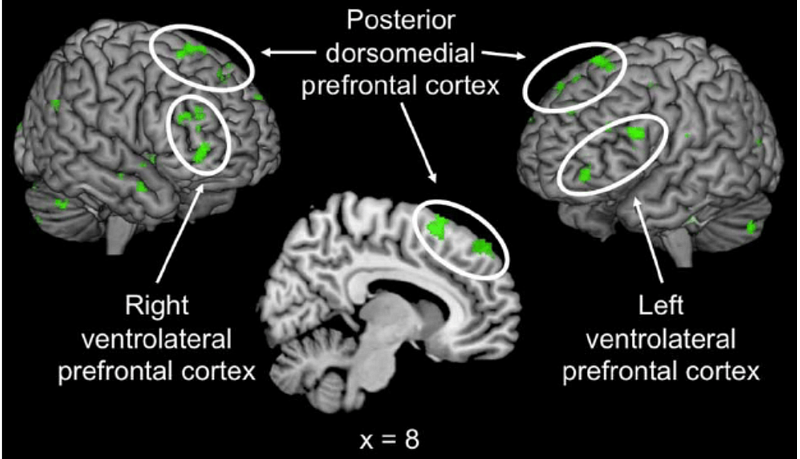
Image belongs to researchgate.net.

On top of that, when we journal, the right ventrolateral prefrontal cortex (RVLPFC) is increased, funnily enough, the activity in the limbic regions, and the RVLPFC were inversely correlated.

In conclusion, it was found that affect labelling may diminish emotional reactivity from the RVLPFC to the medial prefrontal cortex to the amygdala, via a neurocognitive pathway.

That’s the science behind journaling.

Journalling is like blue-sky thinking, when you journal, don’t judge yourself, whatever you right is an objective matter, there’s no right or wrong.

After I stopped journaling, I ….

Meditated.

I had experimented with mediation before, and I never took it seriously, but now I meditate at least 3 times a week. Meditation is the mainstream now, it’s the norm, you have apps like headspace and the Wim Hof method app, which is what I use that help you meditate.

Meditating is a flex nowadays.

What’s the science behind meditation?
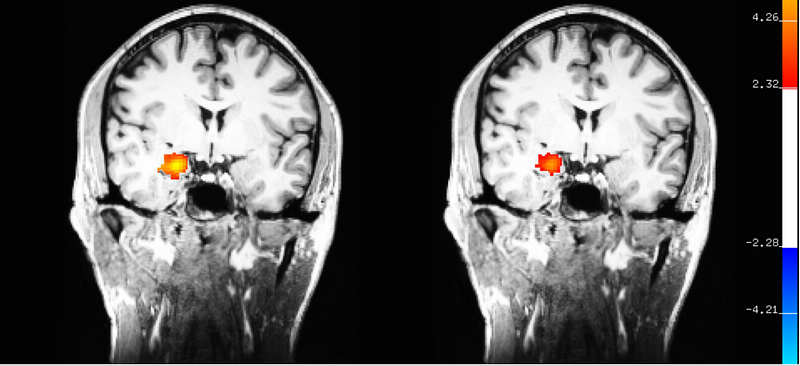
So in 2012, they had a study which compared the brain images of 50 adults who meditate and 50 who don’t. Results suggested that the people who meditated had more folds in the outer layer of the brain, this is known as gyrification, which may increase the brains’ ability to process information.

In 2013, a study showed that meditation can affect activity in the amygdala (surprise, surprise) and that different types of meditation can affect the amygdala differently even if you’re not meditating.

Courtesy of Gaelle Desbordes, and Harvard Edu. The image belongs to them, the brain on the left is the reaction to negative images before meditating, the brain on the right is the reaction in the amygdala after 8 weeks of meditation practice.

The philosophy is simple, so think of it as two birds, one is perched upon a tree watching another bird down below plucking worms.

In this idea, an observer and an object are being observed, these are two parts of consciousness, generally, we’re the bird on the tree, and life is an object. The desk that I’m sitting on is an object, and I’m observing it as I type.

The issue here is that we’re not always sitting on the tree, we’re flying, so when you meditate and count your breath, you allow yourself to observe that problem like a bird on a branch, observing another bird struggling to get a worm.

The key to meditating is to get an app, you want to make meditation easy, you should try and integrate it with another habit, for example, I practice meditation before I sleep, or before I take a shower. I use the app because it serves as a constant reminder for me to meditate, and I meditate before a daily activity to maintain some consistency.

You will miss out on a few days, I’ve meditated 3 times this week. Don’t beat yourself up, focus on meditating today.

Therapy.

So when I was in India, I was training at a camp and the management had decided to hire a therapist, she would come every Thursday, and I would randomly talk about stuff in my life.

After every session, I’d feel good.

There are a lot of modalities in therapy, CBT, STPP, BT, Freudian, Jungian, family therapy, you name it.

What you find is that all the types of therapy are effective, some slightly more effective than others. Scientists have found it difficult to measure the benefits of doing therapy, but from Carl Jung to Jeremy Kyle, the content of therapy, and the methods used aren’t that important.

The whole point behind the therapy is that you have a good listener in the room who’s willing to understand your problems and help you from a non-judgmental standpoint.

The point(s) behind All 3.

Whether you’re meditating, journaling, or talking to a therapist, what you’re trying to achieve is an objective standpoint that comes from having a clear head.

You see self-help only helps you when the improvement is from the inside out. As you can see, meditating and journalling affect you from the inside out, there’s proof of that, with therapy, it helps, but we can’t figure out why.

If you’re going for self-help advice, look for advice that helps you from the inside out, all of your answers lie within, the deep, complex, questions that are unanswered won’t be solved with alcohol, or any external stimuli, to extract these answers you may have to use all three methods, but the point is that they help you question.

Question everything, but look for answers objectively.

Question everything, but don’t overthink it.

Buddhists have this concept called the Monkey Mind, it’s the endless stream of thought that keeps gushing through our brain. You can’t stop it unless you’re meditating in a cave or your Eckhart Tolle.

When you write a thought down in your journal, or when you meditate, you’re going to think, the same goes with talking to someone.

When you meditate, acknowledge the thoughts that come to you, and let them go.

When you journal, you’re acknowledging you’re thoughts and emotions, but don’t think about what you’ve written. I used to write, and then I’d tear the paper and flush it down the toilet.

I can’t remember what I told my therapist, but I don’t want to, because it’s been acknowledged and I’m over it.

The brain has more than 6000 thoughts a day, and you can’t process each thought consciously, but you shouldn’t overthink the thoughts that you can process.

Meditating, journaling and therapy help you to stop thinking by grounding you in the present, you become aware.

True happiness comes from being in the present, you won’t be able to handle the stores of information in your brain consciously, but you can deal with it by meditating, journaling and therapy.

Mental Health
Personal Development
Self Improvement
Psychology
Personal Growth
Recommended from ReadMedium
avatarletters from rosie
i peeled my own orange today

2 min read