
Are You TRULY Mechanically Inept?
How we develop negative self-beliefs, and what parents can do to prevent it
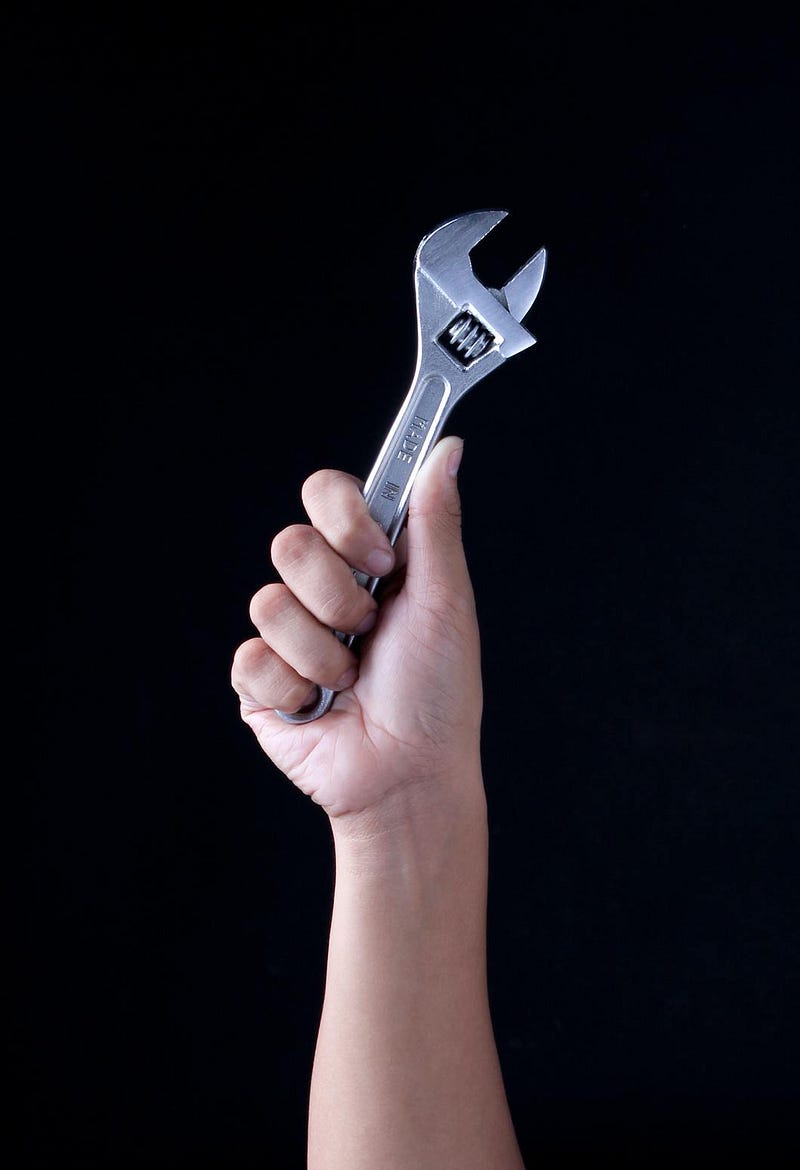
The heat just went out, and I have no idea what to do other than shiver.
When it went out, I was in the middle of writing a piece about relationship advice. I began bemoaning the fact that I’m such a mechanically inept person. I suck at fixing things. But I’m a psychology professor, and I hate how hard people are on themselves because they believe they suck at something. I chucked the relationship piece and wrote this.
Here, I’ll show you four reasons that I — and other mechanically inept people — developed the belief that we suck at fixing things.
Maybe it will help you understand where you got your beliefs about what you — and your kids — suck at. You may even come to question those beliefs.
1. We didn’t learn at home
My mom was single with five kids. She was broke, so we rented homes instead of owned homes.
Know what my mom did when there was a problem with the house? Called the landlord.
Know what I do when there’s a problem with the house? Call the landlord.
Know what I do when the heat goes out and I haven’t heard back from the landlord? Shiver.
Why can’t I fix it myself?
The answer starts with a question. For those of you who know what to do when the heat goes out, how do you know that?
Some of you may answer, “My dad taught me” or “I learned from watching my dad”.
Mechanical skill, like any skill, is something that can be learned.
One way to learn a skill is simply to watch others. We’re not just learning ‘how’ to do it. We’re learning that we’re capable of doing it.
When we don’t see others we know, people ‘like us’, doing something, we believe they can’t do it so we believe we can’t do it either.
2. The education system is jacked up
If we’re not learning mechanical skills at home in some fashion, could we learn at school?
I mean, I loved reading John Milton’s Paradise Lost. I visualized the god character using a figure-four leg lock to beat down a rebellious angel (I really did watch too much professional wrestling growing up).
But could the educators find a way to spare just one class to teach us all things like house maintenance, including what to do when the heat goes out?
After all, home ownership is kind of the gold standard of the “American Dream”.
My high school did offer vocational classes where I could have learned basic mechanical skills. You could take ‘shop’ that taught woodworking or ‘shop’ that taught how to fix cars.
My decision to not take those classes wasn’t about gender norms. It was about the way vocational classes are viewed by our society:
The book-smart kids will go on to white collar jobs, so they don’t need to take vocational classes. The other kids are destined for blue collar jobs, so they should take vocational classes.
Mechanical skills were treated as something to be learned for a future vocation instead of something that is good for all humans to learn so we can be useful and not at the mercy of repairmen.
Makes me wonder what else we don’t bother learning based on whether or not it seems useful for jobs.
3. Parents label us prematurely
My brother would know what to do when the heat went out, but he didn’t learn mechanical basics from school. He learned them from my mom.
Because we rented, she didn’t do home repairs, but she took care of everything else.
My mom was, supposedly, mechanically gifted. For fun on the weekends, she would take a motorcycle apart and put it back together.
She constantly worked on her 1976 Pontiac Firebird.
(This wasn’t exactly the most suitable vehicle for a mom of five kids, especially in a no-seatbelt era. With six people crammed in, I usually had to sit on the hump in between the two, rear bucket seats. That wasn’t terribly comfortable, but man I felt so cool when we roared around in the Firebird.)
One day when she was working on the Firebird, she told me to bring her a diaper box. (My younger siblings were still in diapers). I took all of the diapers out of the box as quickly as I could. (My mom wasn’t one to be patient. When she said, “Get me…”, you ran to get it.)
When I gave her the box, she turned to my brother and showed him how to lay the car’s original gasket onto the thin cardboard, trace it, cut out the tracing, then place the diaper-box gasket back in the car engine.
(Given I’m non-mechanical, I can only write the gist of what I remember, so forgive my undoubtedly inaccurate description of what she did.)
Why did she teach him and not me?
It wasn’t because he was a boy. She was a woman, so she knew women were quite capable.
Here’s a possibility: It’s because he was older.
My brother was three years older than me.
Age matters in learning mechanical skills. The differences in brain structures, and associated information-processing capabilities, are massive between a 7-year-old kid and a 7-year-old kid who is 200 days older.
Just 200 days of developing more synaptic connections is a huge advantage. The older 7-year-old can appear to have a better sense of spatial orientation, knowing where to run to field a ball. The younger 7-year-old will appear relatively daft.
Throw three years difference in, and the older kid seems so much more willing and able to sit still and watch a parent do something as boring as replace a gasket. The parent labels the older kid as ‘talented’ and ‘interested’.
The younger kid will still be distracted by a butterfly flying by, seemingly disinterested.
By the time I was old enough to be willing and able to sit still and watch my mom do something as boring as replace a gasket, my mother had already firmed up her belief about me. She believed that I wasn’t good at or interested in anything that involved mechanical ability, so I believed her.
My mom forgot that her own mechanical ability was not a God-given gift of natural talent. Her grandfather spent uncountable, one-on-one hours with her as she grew up, patiently teaching her how to work on cars, making her believe she was good at it.
4. We’re taught generic ‘how to’
A big belief of mine is that, in adulthood, I can’t blame schools or parents for my failures.
I actually did, as an adult, try to learn mechanical stuff.
A friend of mine taught me how to change the oil on my Ford F150 pick-up truck. The next time my oil needed changing, I tried to do it by myself, but the filter was screwed in so tightly that I couldn’t get it out.
I watched a friend change spark plugs — remove the old ones, adjust the gap of the new ones, and plug ’em in. When I went to do it by myself, I couldn’t get one of the plugs to budge. It was stuck, so I was stuck.
I learned how to change tires, but when I was stuck on the side of the interstate with a flat tire, I couldn’t get one of the lug nuts to come off. I was back to relying on a guy who stopped by and offered me a hand.
Every time I tried to learn how to do something mechanical, it never worked out.
Nowadays, I understand why it never worked out.
In law enforcement, I was taught a lot of generic moves for how to defend myself from attackers. I passed the tests, but the truth is, it was a joke. We’d learned that when people are hyped up on ketamine, they can feel no pain.
Is a woman weighing 120 pounds really going to survive an encounter with a 220-pound man hyped up on ketamine? I didn’t think so.
For a year, I took personal, one-on-one lessons with an instructor who only weighed 130 pounds. When he was young, he was bullied by bullies who out-weighed him and were stronger. He designed a system of self-defense specific to petite people going up against far bigger and stronger attackers.
I practiced just those few moves, the ones he customized to me, over and over and over, and they worked.
People with more physical strength and much mechanical experience taught me how they changed oil, spark plugs, and tires. Maybe I would have been better off learning from a person who was similar to me or knew what would work for someone like me.
Summary
There’s a lot you can do to prevent kids from developing false beliefs that they suck at something. If you can’t personally teach them how to do things like home or car repair, maybe you can arrange for them to spend time with a person who can, particularly older ones who may have the time and patience to teach them. You can encourage them to take vocational classes, even if they don’t plan to have a blue-collar vocation. You can avoid prematurely labeling your kids ‘bad at’ or ‘not interested in’ something. Teach them as much as you can when they’re young, because when they’re adults, their self-beliefs may be cemented, making it harder for them to learn. And when you teach them, customize to the kid, not just “here’s how I do it”.
My hope for all of us: When we don’t do something, it’s because we don’t want to do it, or truly can’t do it, not because we falsely believe that we can’t do it.
By the way, don’t worry about me. My landlord sent her boyfriend over. When he asked to see the furnace, I led him to the water heater. (I really am that inept.) He was able to find the furnace and quickly fix the heat.
Maybe I am writing a ‘relationship advice’ piece after all: Instead of looking for a man who is over 6 feet tall, or a woman whose knockers are of the preferred dimensions, look for a partner who knows what to do when the heat goes out.


