Why was Year 536 AD the Worst Year to be Alive?
Historians agree that the year 536 CE, or 536 AD, was one of the most tragic years in human history and was an exceptionally horrible year to be alive. But what exactly happened in 536 CE?
Living in the modern digital age, we are no strangers to minor inconveniences. People often use these as an excuse to make hyperbolic claims about “the worst year ever.” However, despite the many upheavals and unforgettable tragedies that have afflicted mankind across history, many historians point to the year 536 CE as, what you might call, the worst year to be recorded in human history
This dark chapter in human history involves the dimming of the sun, a chilling volcanic winter, famine, plague, and societal upheaval on an unparalleled scale. In fact, the impact of the events of the year 536 CE were so catastrophic that they heralded the following decade as one of despair.

As we plunge into the tumultuous events of 536 CE, we uncover a tale of darkness and adversity so exceptional that it will leave us modern humans grateful for the minor inconveniences we face in comparison.
When the World was Plunged into Darkness
It was in 536 CE that the world was enveloped in an inexplicable darkness that transformed all days into an endless twilight.
Procopius, a Byzantine historian, first encountered this strange phenomenon while traveling in Sicily. He described a sun that shone as dimly as the moon at night, as well as the perpetual shadow that was cast over the earth as a consequence.
This was no mere local anomaly; reports from the much further reaches of the Byzantine (Roman) and China Empires described the same phenomenon. However, it wasn’t just a gloomy darkness that confronted the world during this period. The dimming of the sun threw societies into a downward plunge, affecting crops, temperatures, and the very psyche of civilizations across the globe.
The cause of this celestial dimming was later found to be due to a massive volcanic eruption. Researchers discovered evidence of volcanic ash deposited in multiple regions from this exact year. This ash spread across the Earth’s atmosphere and effected a darkening of the skies as well as a drop in average global temperature. This phenomenon is called a ‘Volcanic Winter.”
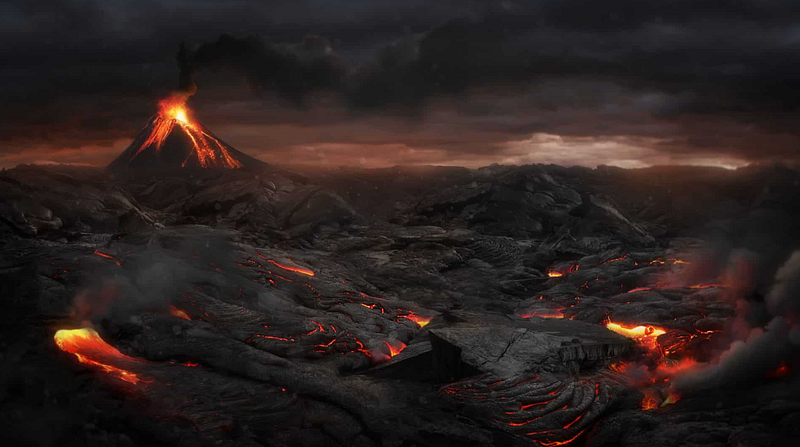
This sudden change in climate had severe repercussions on agriculture as crops could not receive adequate sunlight for photosynthesis, resulting in widespread famine and starvation. People became weak and more susceptible to disease. The unforgiving darkness and cold that characterized this year set off a cascade of survival challenges for people, societies, and ecosystems, setting the stage for a year that would be remembered as a time of exceptional suffering and despair.
A Cascade of Catastrophes
The volcanic winter of 536 initiated a domino effect of disasters, starting with the severe downfall of agricultural productivity across the globe. This led to widespread famine, as on one hand, crops failed to grow without sufficient sunlight, and on the other, it was too cold for agriculture.
As the agricultural turmoil continued, a deadly plague emerged, making the already dire circumstances much worse. The Justinian Plague, as it was later named, swept through communities with a vengeance, claiming countless lives and adding a new layer of horror to an already darkened world.
The plague, characterized by fever, swollen lymph nodes, and necrosis, destroyed populations and societies from the Byzantine Empire to far-flung regions, leaving a massive scar on the societal structure of the time.
In the aftermath of 535’s climate anomaly, the combined effects of famine and plague sent society on a dark downward spiral, the likes of which we never have to confront in the modern age. Unlike modern humans, in 536 CE, human societies were practically helpless in the face of nature’s capacity to break down social order and alter the course of human history.
Tracing the Volcanic Ashes to Their Source
The volcanic eruption that led to the year 536’s darkness have sparked the curiosity of both scientists and historians, prompting a deep dive into climatic and geological research.
The research points towards a series of massive volcanic eruptions as the primary culprits behind humanity’s darkest year. Ice core samples from Greenland and Antarctica have provided material evidence of this catastrophic period, uncovering layers of volcanic ash deposited in 536 CE.
Further investigation into the matter has traced the potential origins of these eruptions to several locations around the world. Scholars continue to debate about the precise sources, with theories ranging from Icelandic volcanoes to North American ones and even Central American.
The eruption in El Salvador, around 535 or 536, for example, has been highlighted as a chief contributor to the global ash cloud. In fact, this period of volcanic activity was so significant, that it is believed to have initiated the severe climatic shift associated with the Late Antique Little Ice Age.
Clearly, the consequences of these eruptions were far-reaching, affecting not only agriculture and food production, but also the global climate. As societal structure continued to collapse and human health deteriorated, humanity was confronted by a climatic shift that no society was prepared for. It seems that the interplay between volcanic activity and its effects on 6th-century society highlights the vulnerability of human civilization to environmental changes, and their general lack of preparedness.
The Byzantine Struggle to Come Back from the Edge
The period in history we are dealing with was the arena of multiple large interconnected empires.
One of these was the Byzantine Empire (Eastern Roman Empire), founded in 330 AD, which, by the time of our volcanic winter, was already confronted by the complexities of maintaining power and expanding its territories. During what is known today as the worst ever year recorded in human history, the Byzantine Empire faced a crisis of unprecedented proportions. This was a calamity that threatened its very survival as a dominating Empire on the global stage.
The climatic and environmental catastrophes that followed from the volcanic winter of 536 added layers of distress to an empire already somewhat struggling with political instability and military upheavals. Emperor Justinian, whose ambitions for rejuvenating the glory of the Holy Roman Empire were met with mixed feelings, found his empire suddenly grasping for straws as crop yields significantly reduced and famine spread over the empire.
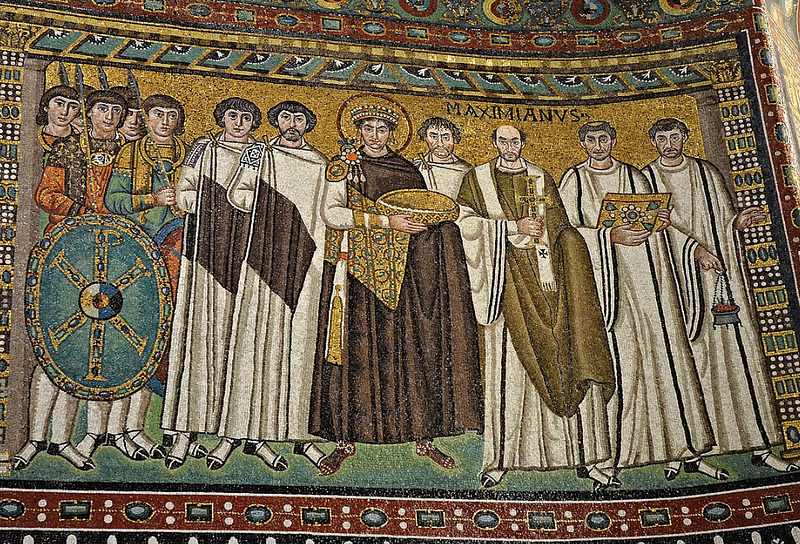
The arrival of the Justinian Plague, named after our overwhelmed and overworked emperor, further crippled the Byzantine society, decimating the population and weakening military and economic strength. This convergence of two disasters (natural and biological) revealed several of the vulnerabilities of the Byzantine administrative and logistic systems, bringing to light the fragility of man-made constructs in the face of nature’s power and unpredictability.
The Byzantine Empire’s response to these crises, while limited by the knowledge and technology of the time, underscores human societies ability to fight back against the extreme environmental forces. These efforts were not in vain, and slowly but surely the Byzantine Empire was able to find its footing again. While society was forever changed by the events of 536 AD, the Byzantine Empire continued to persist until around a thousand years later during the Middle Ages.
The Global Ripple Effects of the Volcanic Winter of 536 CE
The year 536 CE is remembered as a pivotal moment in human history, not just for the course of the Byzantine Empire but for several civilizations around the globe, each experiencing a unique set of challenges as a result of the climatic anomalies. In China, for example, the impact was significant, with reports of frost in mid-summer and snow in August, an anomaly that led to the destruction of summer crops.
This rare weather event precipitated a famine in China that lasted for two years, reducing the population by an astounding 70% to 80%. Such extreme climate conditions demonstrate the sheer vulnerability of pre-industrial, agrarian societies to drastic environmental changes.
Meanwhile, about halfway across the world, the Moche civilization of Peru faced its own crisis as a result of the same global climatic disturbances. An exceptionally strong El Niño event wreaked havoc on the civilization’s well-established fishing and agricultural systems.
The warming waters destroyed the fish populations that were crucial to their diet and economy. Meanwhile, heavy rains and flooding damaged their highly sophisticated irrigation systems, crucial for crop production, leading to widespread food shortages, deterioration of human health, and a collapse of the Moche civilization’s economy.
These global ripple effects that the events of 536 had on far-flung civilizations, separated by half the earth’s distance, reveal the huge impact that environmental factors can have on human societies. They serve as a reminder of the fragility of the economic and social ecosystems we inhabit, especially in the face of natural forces
From the fields of China to the coasts of Peru, the destruction caused by the volcanic winter of the year 536 CE is an example of how a singular climatic event can transform the fates of civilizations continents apart.
The Lifting of the Fog and the Road to Recovery
As the fog of the catastrophic events of 536 began to lift, societies around the world embarked on a path of slow recovery.
The resilience displayed by these societies of late antiquity is a testament to the power of the human spirit.. As the ash cleared and the sun regained its regular brightness, agricultural production gradually rebounded, allowing economies to begin the slow process of healing.
This period of reconstruction was not just about regaining lost ground. Instead, it was also a time of adaptation and innovation, with societies trying to find new ways to thrive in the forever changed world they now inhabited.
The reinvigoration of trade routes and the rebuilding of cities as centers of commerce played a vital role in the recovery of civilization, societies, and empires. Geological surveys have shown the reappearance of lead in ice core samples, which indicates silver mining and coin minting. This discovery suggests a revival of economic activities and a steady return to prosperity.
This economic rebound was essential, providing the resources and stability needed for societies to rebuild and for human populations to grow once again. The challenges of the past had forged a new era of resilience, marked by enhanced cooperation and an increased understanding of the need to work together to overcome natural adversities.


