Why was Napoleon Able To Conquer Europe?
The reasons behind the successes of the Emperor
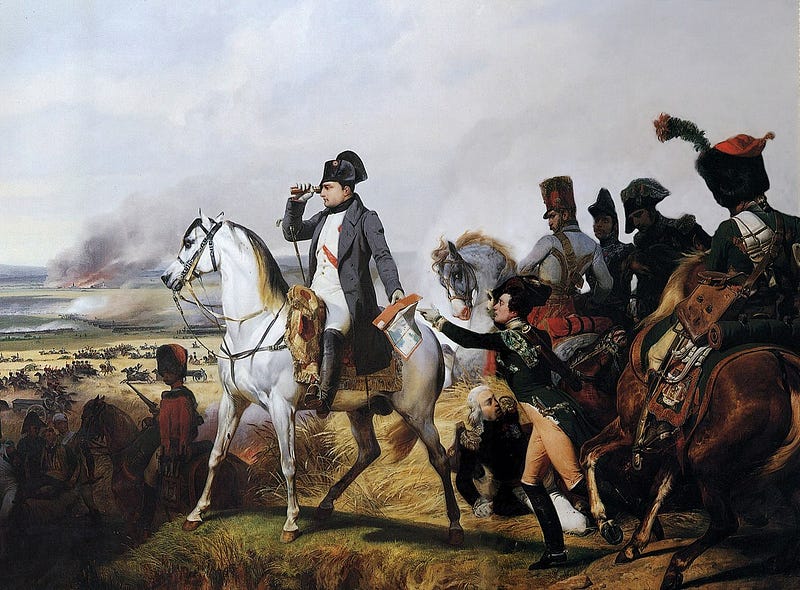
Napoleon Bonaparte is widely regarded by historians and laics alike as one of the greatest military leaders of all time. In a meteoric career spanning over two decades, a young Corsican artillery officer rose to become the absolute ruler of France, who during the peak of his power, was the master of Europe.
His road to absolute power was through his sheer military brilliance. Nonetheless, we humans have this tendency to overstate the role of a single brilliant individual, and thus miss other key components that were also necessary and as crucial to the rise of the great man as was his genius.
In the following parts of this article, I will highlight the key reasons which played their part in the rise of Napoleon.
French Revolution
Had it not been for the revolution and had he remained in the service of the French crown, it is very likely that Napoleon would not have risen far enough to be given command over an army, let alone an entire empire.
The reason for this was simple, the pre-Revolution era French army was dominated by the high aristocracy, and although he was born into an aristocratic family in his native Corsica, Napoleon was most certainly not rich or blue-blooded enough to rise to high command in the Ancien Regime.
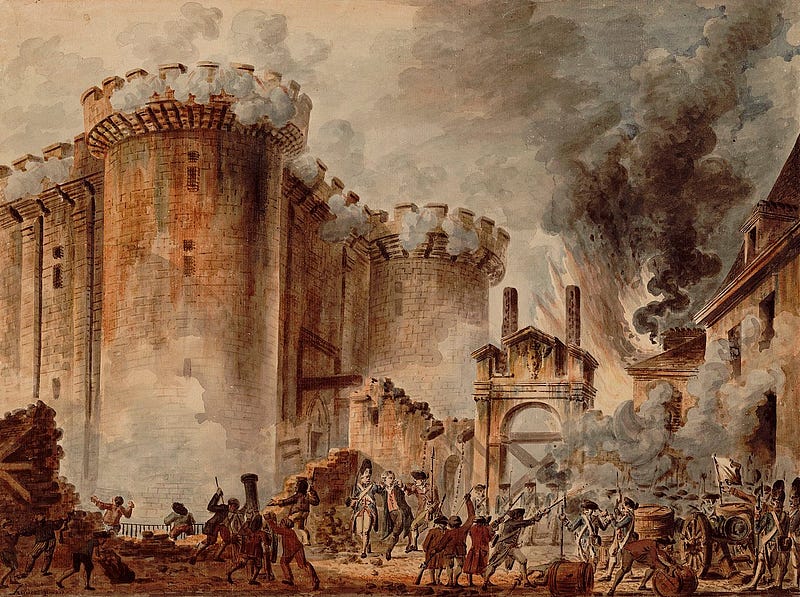
The iron grip of the aristocracy over the higher echelons of the French armed forces was only broken by the revolution, when partly out of principle and necessity( as many aristocrats emigrated from France and thus left their command position vacant), a man of lower birth finally received their chance to rise, and rise they most certainly did. Napoleon is the most well-known example, but many of his marshalls like Murat, Lannes, Ney and Augeureu were also products of the revolution.
The very strong French army
From the beginning of the French Revolutionary Wars, up to the later stages of the Napoleonic Wars, the French generally had the better of their enemies on the field of battle.
There were several reasons why the French armies were so successful, and one such reason was no doubt the meritocracy brought by the revolution. While in the armies of Austria, Prussia or Russia the high command was dominated by the richest members of society, who often got their position only thanks to their money or court relations, the French armies, especially in the Revolutionary Wars, had an officer corps where the percentage of people who rose through merit was much higher.
Another reason why the French were so efficient in these years may have been the higher rates of literacy and education in the ranks of the French armed forces. Though it is always hard to give exact numbers, but some historians believe that by the late 18th century, nearly 2/3 of the French man were literate, a much higher rate than in the Austrian and especially the Russian army( where illiteracy rates were very high even a century later when Russia was fighting in WWI).
The Revolutionary and Napoleonic armies were also able to use the reforms that were pushed through in the French armed forces after the disastrous performances of France in the Seven Year’s War. The artillery was markedly improved in the 1763–92 period, something the Prussians found out at their own expanse when they invaded France in 1792. Several writers also wrote about infantry tactics, and the generals of France made good use of the work done by the reformists in the period that preceded the revolution.
Napoleon’s genius
Finally, no one can doubt Napoleon’s genius, as according to historians like the brilliant David Chandler it was his computer-like brain that was able to best exploit all the tools he had at hand.
During his campaigns, he broke with the old dogmas and left behind the cautious tactics of the previous centuries.
Under his command, the French army was re-organized along the lines of the corps system, which in practice meant that Napoleon’s Grande Armee was broken up into several mini armies( corps), each corps had its own infantry, cavalry and artillery, and was strong enough to fight on its own for a limited amount of time until it was reinforced by nearby contingents.
Using this system, Napoleon was no longer forced to keep his army concentrated, which allowed his army to travel along several routes while being close enough to give mutual assistance to the part of the army that came under pressure and also able to rapidly concentrate on a single force if and when the need arose.
The dispersed nature of the French army served two purposes: first of all, it allowed the French to ditch the long convoys carrying endless wagons with the supplies, as the smaller mini armies were small enough to survive by „living off the land”, enabling the French to travel at a speed that was unusual for that period; the second advantage such a system had was that it concealed the objectives of the French from their enemies, as the dispersed army could concentrate at several points in the future depending on the exact circumstances.
Using this flexible system, the French Emperor, for well over a decade was capable to outwit his enemies and more often than not was able to engineer situations when he was able to fight under circumstances which were much more favourable to himself than his enemies.
Probably the two best examples of Napoleon’strategy were his victories over the Third and Fourth Coalition, when during the Ulm campaign using deception and the rapid movement of his troops the French were able to encircle the Austrian army of General Mack and take 60,000 prisoners with very minimal losses; while at the beginning of the War of the Fourth Coalition, despite having similar number of troops as his Prussian enemies, but Napoleon was able to concentrate his own forces much more efficiently to defeat the Prussians at Jena, while his subordinate Davout, the commander of a single corps, was able to score a victory while he was outnumbered 2–1.
Sources:
The Campaigns of Napoleon(1973), David Chandler, Scribner
Jena 1806: Napoleon destroys Prussia(1993), David Chandler, Osprey Publishing
If you like my articles and do not want to miss the next one, subscribe here to receive all my stories by email.
Not a Medium Member yet? Join the community through my referral link to read unlimited stories.