
Why Vinegar Is the Solution to All Your Problems
Maybe not your life problems but your cleaning problems at least
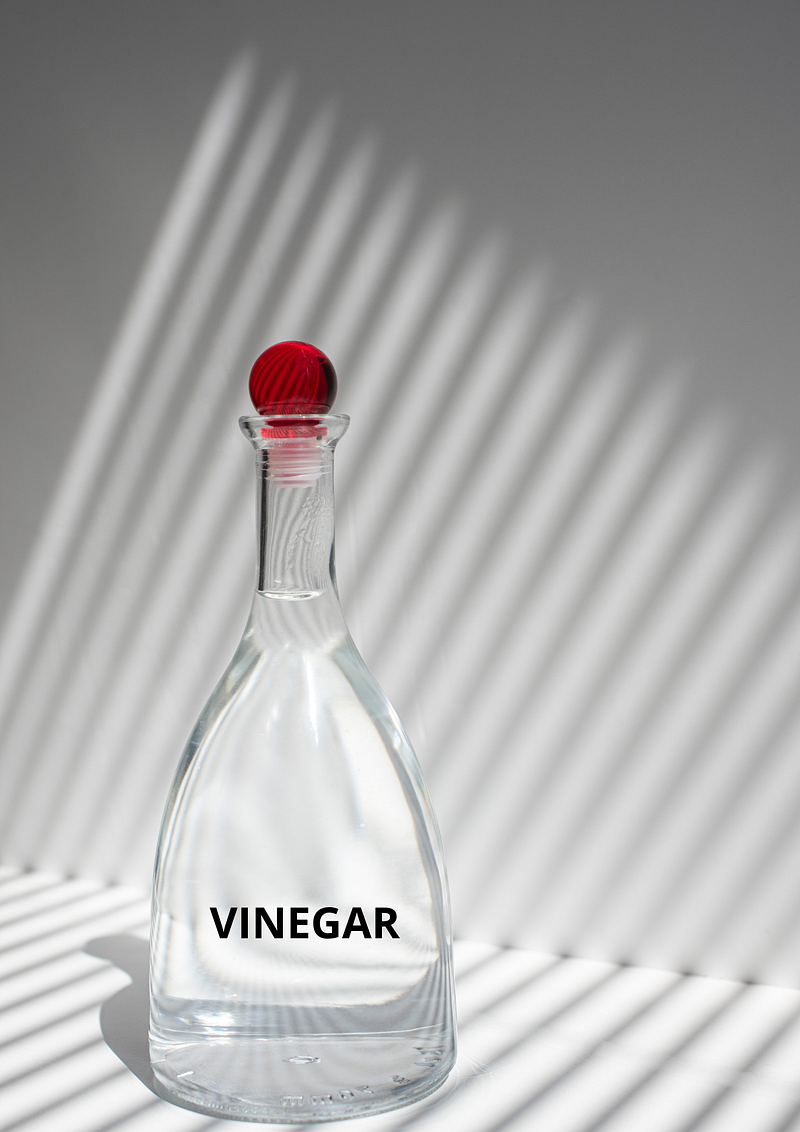
I don’t know about you, but I’ve never been more of a clean freak than during lockdown.
Lying in the middle of my lounge room floor, trying to chisel my abs into oblivion, I started noticing the little lint balls piled up under my couch — the tiny cobwebs forming in the crevasses of the ceiling and the film of dust on my smart TV.
My post-workout stretch was now replaced with taking inventory of all the areas I had neglected to clean during my working office hours and now had the time to pay attention to.
Limescale is the enemy
A major problem we have here in London is limescale, it’s this white mist that appears where ever water has been and is like the mole in a game of waka-mole. The more you wipe it down, the more you kill it, it always seems to rear its ugly head again and again.
I decided to Google ‘How to get rid of Limescale’ and the answer ‘white vinegar’ popped up.
The clear, smelly liquid in the back of my pantry, that I occasionally used for salads?
‘Ok cool’, I thought, ‘Let’s try it’.
Just like magic, the white mist had disappeared — it’s not an eternal solution but it is a natural alternative to all the chemicals out there.
Vinegar is the answer
A friend of mine was telling me about how she washed her washing machine.
I’d never heard this before — washing your washing machine? I thought it was good at multitasking on its own — washed itself as it washed my clothes, no?
I turned to Google again and hey presto ….‘add some white vinegar in the tray and turn the washing machine on to ‘clean’ mode.’
Great, a brand spanking new washing machine, without the use of harsh chemicals.
For dead rats as well
Along with a limescale problem, London also has a rat problem — seems like I’m painting a lovely picture of the city I live in — It is really beautiful.
A pest controller left some poison for our new furry friends and promised us that the rats are smart enough to eat the poison and run outside and die.
‘Yeah right,’ I thought, ‘humans have issues following instructions, let alone dying rats.’
A few days later there was a foul smell through the house.
I knew it!!
The rat had died in the pipes somewhere and the stench of a rotting sandwich blackening over time had begun to emanate.
It was unbearable.
Luckily I couldn’t see the critter decomposing somewhere behind the walls but he made sure we smelt his rotting body.
I turned to Google again and searched ‘How to get rid of dead rat smell’ and you guessed it!
Vinegar!
‘Ok, this was too much’ I thought.
How can this humble household ingredient have all these superpowers?
What is Vinegar?
Vinegar is wine that has gone off.
Wine is made from a process known as fermentation — a metabolic process where sugar is converted into alcohol using micro-organisms. In its most organic state, naturally-occurring yeasts from the skin of grapes will turn the sugary fruit juice into alcohol over time.
If a sealed bottle has been opened or the cork compromised, oxygen enters the wine which then undergoes a second kind of fermentation process where the alcohol is turned into acetic acid — the main compound in vinegar.
Why it’s good for cleaning?
Acetic acid has a pH of approximately 2.5 which gives it its acidic properties. It’s more acidic than citrus fruits but less acidic than the stomach bile used to digest our foods.
Furthermore, it’s a hydrophilic solvent which means it reacts well with water and is best used diluted.
It’s also a bit of a socialite and is good at mixing with oils, salts, sugars and minerals which makes it the perfect candidate for cleaning as it dissolves and kills dirt.
These same properties can also travel through space and absorb odours too. Since most odours have alkaline (opposite of acidic) properties, vinegar’s acidity means it can absorb these too.
How to Use Vinegar to Keep Your Home Spotless?
White distilled vinegar is the best to use for cleaning since balsamic or apple cider can stain surfaces.
At times the smell can be a little overbearing so make sure to dilute it with water and add some drops of essential oils to mask the smell.
Air freshener
Half-fill bowels with vinegar around the room or boil vinegar and leave in the kitchen to eliminate cooking odours.
Most air fresheners mask one odour with another but vinegar dissolves the odour purifying the air.
Showers and baths
Limescale, that white misty substance, is made up of minerals (usually calcium and magnesium) that are left behind after hard water has evaporated and is why bathrooms bear the brunt of it.
Wash down showers and baths with a mixture of vinegar and washing up liquid.
For stubborn limescale around faucets soak paper towels in vinegar and wrap around taps for an hour before cleaning.
Countertops
Vinegar is also a natural disinfectant and is perfect for wiping down countertops after food preparation.
It should not be used on marble or granite as the acidity of vinegar can diminish the lustre of the natural stone. Opt for natural stone cleaners instead.
It can also deter ants that may scour countertops at night in search of food scraps.
Unclogging drains
Vinegar mixed with baking soda is perfect for unclogging drains. Pour a mixture of half and half down the drain followed by boiling water and let it sit overnight.
The hot water should help dissolve the clog and the baking soda serves as an abrasive to break through the clog.
Lockdown Cleaning Revelations
Vinegar and its properties was truly a revelation that came to me during lockdown and the fact that it’s a natural alternative to harsh chemicals makes it all the more magical.
What cleaning revelations, if any, came to you during lockdown? Are there any other natural substances that share extraordinary cleaning properties like vinegar? Please feel free to share!


