Why Vegans Should Eat Eggs
Eggs do not tick a single case of all the reasons that motivated me to go vegan.

And we are back to this debate. I know this is a touchy subject, but I really wanted to address it.
Two days ago I listened to a podcast about veganism. It was all about how vegans should stick to the diet, and if once in a while they ate oysters or tuna they had it all wrong and had to ethical commitment.
Honestly, I am not vegan, for various reasons. First, I don’t want to label myself, because I don’t want to be forced to stick to a particular case. Second, I eat what it feels right to eat — for me. I don’t drink cow milk because it is bad for my health, causes terrible conditions for cows, and nonetheless emits a lot of CO2. It might eat molds when I am at the sea because they just have been fished and they are not sensitive beings.
However, I stand back and take an honest point of view. I deeply respect veganism — I wanted to be vegan but my lifestyle, my country, and my environment make it really hard.
How did I come to this realization?
My father has hens, he lives in a small city and has a big garden. He loves his hens with all his heart. He cooks rice especially for them, takes the time to chop the vegetables’ peelings for them and adds oats in their food. They are the happiest as they can be.
Every day, or every two days, a hen lays an egg. And they won’t stop doing it just because a human did not take the eggs out of the henhouse. Eventually, they will start hatching the egg, but we don’t have a rooster, so what’s the point? It keeps doing it for a day or two and moves on. Simple.
There, I didn’t see any reasons why I should not eat their eggs. They did not tick a single case of all the reasons that motivated me to go vegan.
Eating animals or animal products is not ethical towards living beings
Ten years ago, or twenty, this was the main reason why most people would start a vegan lifestyle. Especially teenagers, because the younger the more sensitive we are towards animals.
The saddening truth
I saw many documentaries on how pigs are slaughtered, cows are overfed, and hens raised in small places or boxes step on their excrements — the ground is never ever cleaned.
I also saw how people can put 50 hens in one square meter. They can’t even walk, so they just get bigger and bigger. They move so little that their legs are too weak to hold their weight, they break under it and the hens are paralyzed, laying in the same ground that is covered with their excrements.
This is not the case everywhere, just be sensible
Even if these conditions are horrifying — and I would never ever tell you to buy eggs from such farms — not all farms are that bad and some are very respectful.
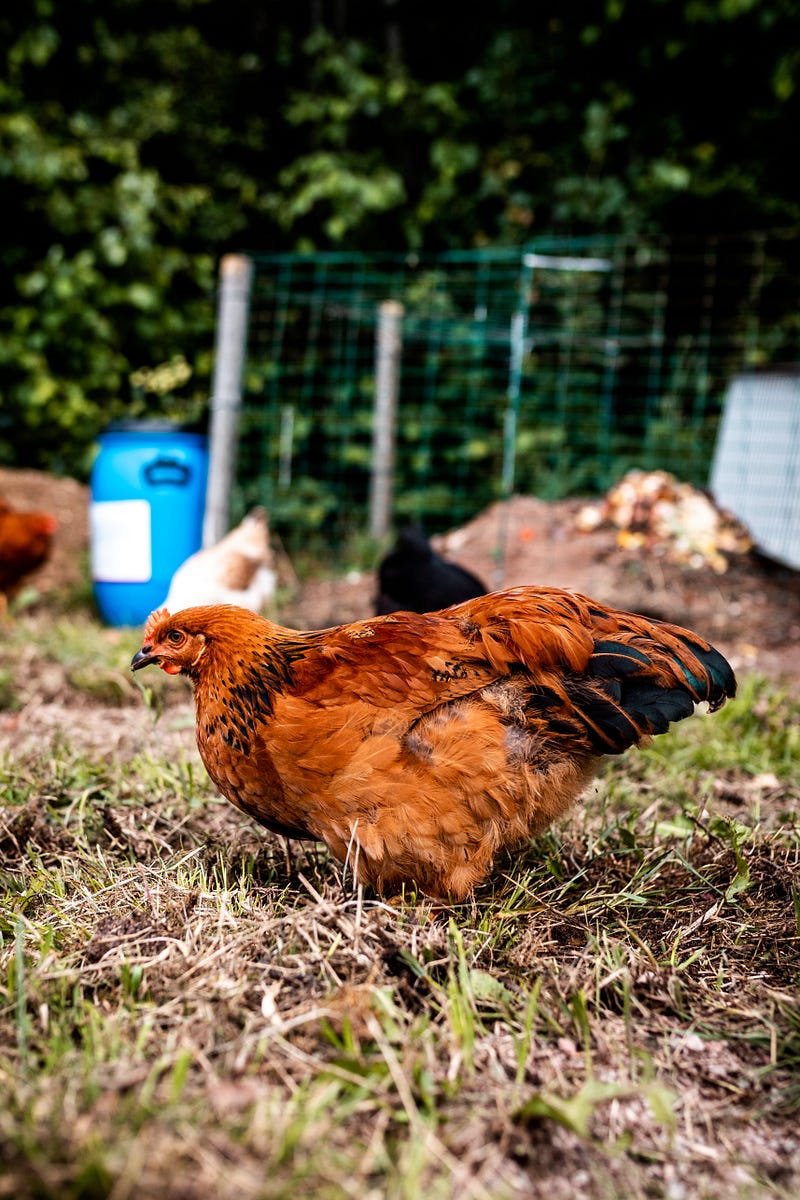
Why I look at then hens in my garden, they look genuinely happy. They do literally what they want, use the space they want, and are treated like queens.
If organic farms are at a much larger scale, and they can’t provide such luxury, they nonetheless offer great space, great food, and decent treatment to the hens. Hens need no more than being raised free-range and eat oats (anything other than pills or their own excrements).
Organic is a way to go
So no, I am not telling you to eat any kind of eggs. Don’t eat the cheapest eggs on the market. Of course not.
Choose organic, free-range eggs. I agree they are more expensive, but good food has a price, doesn’t it? And if you can put $5 for a portion of tofu or seitan, you can put $3 for a box of eggs.
Buying products — good products — which cost more money because of their quality, is also a way of supporting the producers. If organic, respectful farmers are better paid and generate more income than they used to, they will develop, and others will be encouraged to do the same. So your expense supports local farmers and not big companies who produce massively.
Veganism is for the planet
This is the second reason — I observed — for people to go vegan. People are more informed about the ecological urge, and going vegan is an amazing way to have a positive impact on the planet.
Reducing meat consumption reduces the emissions of C02 and other greenhouse gases (NH4). It also reduces the consumption of water. Think about it. You need to grow cereals and water them for animals to consume them, and then you only consume the animal. You might as well eat the cereals directly and cut the middleman.
So yes, animal products have a real bad ecological impact. A vegetarian diet produces 2.5 times less carbon than a meat-friendly diet — and this is even more for a vegan diet. But what about eggs?
Eggs have pretty low greenhouse emissions
According to a 2009 study by the ADEME, eggs pollutes 5 times less than cheese and 10 times less than beef (kg equivalent carbon). Of course, it is still way higher than vegetables.
Eggs are local
What you can’t take away from eggs is that they are always grown locally. Almost every country has farmers with hens and so eggs. So when you buy your eggs, not only you are pretty sure they come from your country but they also often come from within 100km.
Can we say the same for all vegetables and fruits? Absolutely not. We already know about bananas, avocados, pineapples. What we don’t think about is sweet potatoes. If you live in Europe, you can be sure your sweet potatoes come from the USA. And tomatoes don’t grow all year long. Guess what? Hens always produce eggs, everywhere.
Replacing eggs is worse than eating them
I agree that eating eggs emits its lot of CO2 and NH4. But when you want to take the eggs out of your diet, you need to replace them. And these food replacements might be worse for the planet that just eating the eggs right away.
The more common food replacement I see for eggs (in cakes at least) are bananas and ‘flax eggs’. Bananas often come from South America or Africa. Flax eggs and made with flax seeds (Russia, China, Egypt) or chia seeds (Mexico).
There are very few studies about the carbon footprint on bananas imports but we know for sure they have taken the plane. If I stop myself from taking the plane to pollute less, why would I consume fruits that have traveled more than me?
Moreover, eating local means also supporting the local economy. That is something the pandemic has taught us: it is important to have a developed economy in your own country, otherwise it can rapidly and badly sink at the first disturbance.
Your health matters
Last but not least: our health. If that is not the main reason people go vegan, but it is an enjoyable side effect. We often see celebrities cutting out meat and dairy to lose weight, to have nicer skin, etc.
And that’s true. When I was seventeen, I was practicing and working out every day and at the same time, I realized I would be 100 better off without meat in my diet. Why would we drink milk when we know that it causes osteoporosis? Which is completely the opposite of what the lobbies want us to believe, by the way.
I grew up thinking eggs would raise our cholesterol, because the doctor told my granddad it was bad for him. Again, it’s the drug lobby talking. With the year, we gained some transparency. And eggs are not that bad at all.
All the good eggs can do to you
- Of course, they are full of protein and so are extremely satiating.
- The egg yolks are loaded vitamin D, which protects the brain, prevents cognitive decline and dementia.
- They are really good for the eyes. They contain lutein, which protects against degenerative diseases of the eye (diabetic retinopathy, AMD and cataracts).
- Finally, they reduce high blood pressure.
I know the majority of these issues don’t concern you because you are not facing them, but it might be worth thinking long-term. If we are going to live longer, we might as well live better.
Again, what they absolutely don’t do — and I want to insist on it — is that they do not increase cholesterol levels neither do they increase the risk of cardiovascular diseases.
So if anything, eggs are not at all bad for your health.
Let's sum it up: eggs against veganism
Now that we have been through all the mains reasons why people should be vegan — and I agree with all of them — we have also seen how eggs don’t match all these criteria.
- Ethically: if you buy organic eggs from local farms, you can be sure no harm will be done to the animals.
- Environmental reasons: eating local eggs is better for the planet than eating bananas and avocados that have traveled around the globe.
- Your health: no negative impact, some great benefits. And their protein content improves your fitness.
So according to me, none of the reasons to be vegan are checked by the eggs. They fundamentally do not go against any of the principles and that is why I do not feel bad at all when I eat eggs.

Obviously, it is all about being sensible about what we eat and why we eat it. Be reasonable, eat locally, organic. Coming back to being plain in our choices is way more effective to promote our ethical values, to protect the environment, and your keep good health conditions.


