
Why Us? Surviving the Unexpected
What we did when we were too sad to do anything
When tragedy strikes, it seems like everyone has well-meaning advice for how to make a comeback. No matter what, friends and family have a remedy that they want you to try.
Twenty years ago, the unthinkable happened to us: My husband had a heart attack. No warning signs, no genetic predisposition, no reason to suspect that a healthy forty-year-old would just break out in a cold sweat, collapse, and turn our lives upside down. He survived and is still going strong, but I sometimes wonder how we got through that dark period of our lives.
At the time, we had three young sons, a hefty mortgage, a car payment, two demanding jobs, a huge German Shepherd, a cute cat and a supportive network of family and friends.
However, after he came home from the hospital and everyone went home, the reality was terrifying. Despite the obvious realization that we were vulnerable, we tried to forge ahead. It wasn’t easy to do. Basic assumptions about the future were no longer certain.
What if he had died? We would have to move. How would I take care of my kids alone? Would they be able to have the suburban lifestyle we were so carefully building?
My youngest son became very attached to his father. He seemed to want to be everywhere his father was all the time. The older two looked on and began the hyper-vigilance that would mark every milestone in their lives.
When it was time for our oldest son to choose a college, he worried that he couldn’t be back in time, in case my husband had another heart attack. My middle son was reticent, but carefully watched over every activity his father tried to do.
One Monday, a few weeks after his heart attack, the boys were home from school and we were all in a sad slump. Each of us had tried to face the reality of mortality and we were frozen. It seemed like we were just moving through the days while waiting for something to go wrong again. We panicked.
We sat around trying to block out the fact that he still wasn’t feeling well. The medicine was doing its job, but the dosages might be off — his body wasn’t used to taking the medicine.
It took years to trust the doctors and believe that the angioplasty really worked; he would, eventually, tolerate the medicines and we would trust in a future again.
There was a day, a turning point.
I couldn’t stand the gloom and doom anymore and decided we would start somewhere. We needed to do something that would move us beyond the oppressive doomsday thinking that had settled on our couches and infiltrated our thinking.
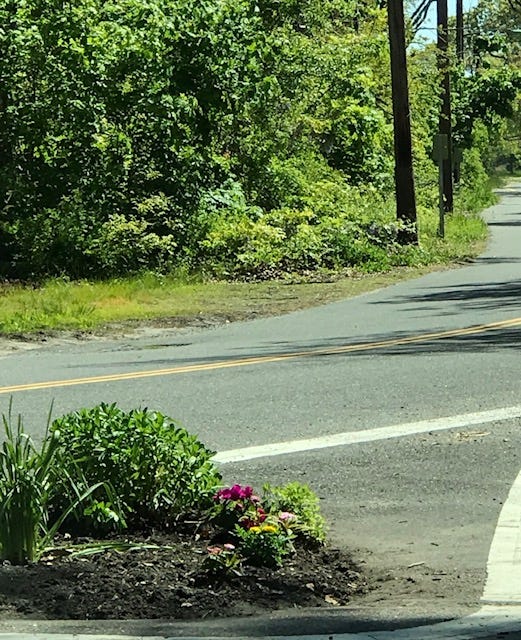
On my way home from the store, I crossed the railroad tracks and looked to my left. At the intersection, there was an electrical pole and a little triangle of land separating two roads. It was the first thing I saw when coming down our street. The little plot of land was overgrown with weeds and I always found it to be an eyesore.
By the time I pulled in the driveway, I had an idea for lifting us out of our collective gloom. We had the whole day. The whole day to change the entrance to our little neighborhood.
I announced a quick trip to Home Depot. They didn’t want to participate, but I convinced them that this improvement needed to be done. There was opposition, “Why? It’s not our job!” lamented one son. This was followed by my oldest who reasoned that the Town should be taking care of this. Then my husband pointed out that I was going to get us all electrocuted.
I assured him that we weren’t going to interfere with any wires. That day, the boys dug up the dirt while my husband directed their efforts. We planted hostas, tulips, daffodils, irises and few other plants.
Then, we went back to the house, where we filled up empty water gallons and used them to water our new little garden. We took care of that little triangular piece of land; planting, re-planting, watering, and weeding. Every day, when I passed our little plot, I smiled and reminded myself that we would get through this dark period.
Such a simple act lifted us out of gloom that day.
I’m a voracious reader and thought that it would be enough to intellectualize our trauma, but in this case, I was wrong. What it took was a physical act, coupled with a belief that we could do something, even an insignificant thing, to improve our little corner of the world. That belief has lasted for twenty years.
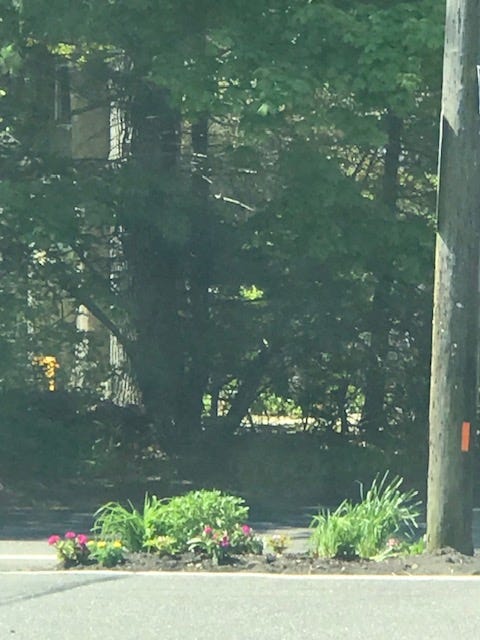
As for out little plot, the boys have moved on, but there’s a new young couple tending our little garden.
We watch them water, weed, plant and know that we started this little project on a day when we were overwhelmed and despondent. We did one thing and we were successful at it.
If we could do that, we could do anything, even the seemingly impossible.

Originally published at http://writingforeverydayliving.com on May 21, 2020.