
Why Ukrainians Worship a Nineteenth-Century Feminist Poet
How Lesya Ukrainka became a voice against Ukraine’s colonization and patriarchy
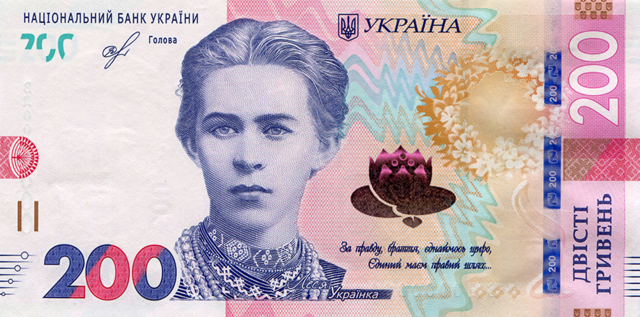
Ukrainians know something about colonization. Territories within the modern nation of Ukraine have been colonized by foreign powers since the 14th century, with periods of independence in between. One of the ways Ukrainians have retained their identity and culture has been through literature.
Ukrainians revere their literary figures. They erected monuments in their honor. The most famous of those artists come from the nineteenth century and include Taras Shevchenko, Ivan Franko, and Lesya Ukrainka.
In a country known as traditional and patriarchal, it may surprise you that a woman makes the list of Ukraine's most loved literary artists.
What is it about Lesya Ukrainka that makes her beloved in her country?
Lesya Ukrainka, Formidable from a Young Age
Lesya Ukrainka was born Larysa Kosach-Kvitka to an upper-class intellectual family in 1871 in Volyhnia, a part of the Russian Empire. Her mother used a pseudonym and was a well-respected children’s poetry and stories writer. Many believe she may have encouraged her daughter to pursue writing.
Lesya’s mother also inspired her children’s love of the Ukrainian language and culture in the Russified cities of Ukraine. She did this by using the Ukrainian language exclusively at home, hiring Ukrainian tutors, and arranging trips for her children to the countryside to hear Ukrainian.
Lesya started writing early. She wrote her first poem when she was eight, lamenting her aunt’s exile for criticizing the Tsar. Her family were Ukrainian patriots. In 1881, she contracted tuberculosis, which plagued her health for the rest of her life. Early in her life, she moved with her family to Kyiv.
Seeing her talent for writing poetry, her uncle, Mykhaylo Drahomanov, a scientist and professor, influenced her to explore the Bible, Ukrainian history, and folk tales for poetry inspiration. The Bible was a typical book in an upper-class Ukrainian family of the day, filled with rich language and poetry. She was also well educated, learning multiple modern European languages, Greek and Latin, and was well versed in history.
When she was thirteen years old, she introduced her pseudonym, Lesya Ukrainka to colonial Ukraine, when her poem, Lily of the Valley, was published in the magazine Zorya. Ukrainka means Ukrainian woman.
Having been influenced by her family and by the works of Taras Shevchenko, who is considered the father of the modern Ukrainian literary language, she set the stage early in her career by using the power of the pen to support Ukrainian independence from Russia. Shevchenko influenced her early poetic style with its subjects of loneliness, social alienation, and Ukrainian nationalism.
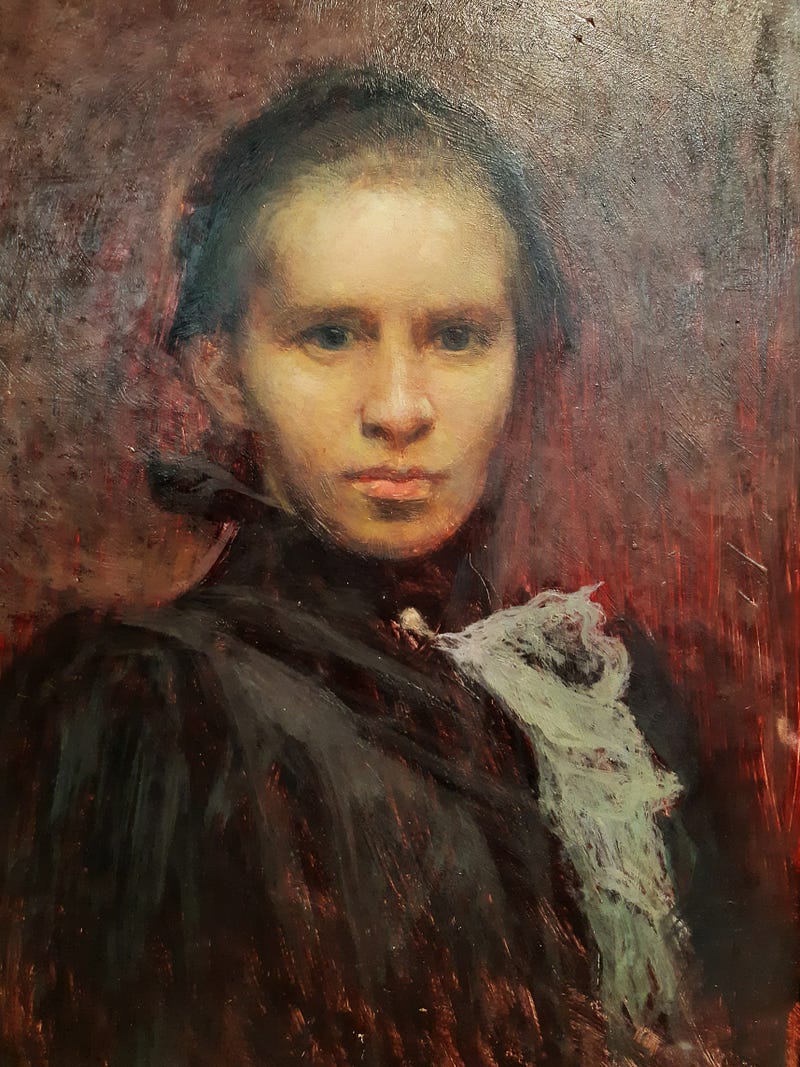
Literary Genius, Feminist and Vocal Nationalist
By her mid-twenties, her first book, a major collection of poetry, On Wings of Songs, was published in L’viv in 1893 with Ivan Franko’s support. Lesya sent Ivan her poems while he reviewed and compiled them and had them published by the Shevchenko Scientific Society in L’viv, a Ukrainian scholarly society and publishing house. It was followed by the collections of poems, Thoughts, and Dreams in 1889 and Echoes in 1902. These anthologies established her as a pre-eminent young writer.
Lesya Ukrainka wrote her poems in Ukrainian and had no choice but to publish them in L’viv in western Ukraine, a part of the Austro-Hungarian empire since the Ukrainian language was repressed in the Russian Empire. In 1876, Tsar Alexander banned Ukrainian books from being published or imported because of fear of a rise in Ukrainian nationalism. Hence, Lesya’s works had to be printed in Austro-Hungary and smuggled into the Russian Empire for the Ukranian readers.
In her twenties, along with her older brother, Mykhaylo, she co-founded a literary organization, Pleyeda. With the Tsarist ban on Ukrainian literature, this organization met secretly to discuss literary works, to work on translations of foreign works into Ukrainian, and to have literary contests.
As a strident nationalist, Lesya became involved in Ukraine’s struggle for independence against the Russian Empire. As a sympathizer of peasants’ and workers’ rights like many of her intelligentsia peers, she also adopted Marxism. A prolific translator of classical and European literature into Ukrainian, Lesya translated the Communist Manifesto. Due to her activism, her attention reached the Tsarist authorities, who arrested her in 1907. She was ultimately released but, for the rest of her life, remained under surveillance.
In the early twentieth century, Lesya started writing poetic dramas and produced plays based on historical events. Some of her most famous works include “A Woman Possessed” and “Babylonian Captivity” based on the Old Testament and “In the Catacombs” and “Cassandra” on classical ancient Greece and Rome.
Some of her poetic dramas struck a new tone, emphasizing a woman’s point of view with strong female characters. In “Cassandra,” she re-wrote the story of Troy based on the point of view of women and their struggles and victimization from the war. In “The Stone Host,” she wrote that Donna Anna is a woman grateful to Don Juan for killing her husband but defiant to remain an independent widow, up on a pedestal, so that Don Juan can exalt rather than run away with her.
Her other dramatic plays were inspired by folk songs and fairy tales such as “In the Dense Forest " and “The Forest Song”. In many of these later works, Lesya not only emphasized feminism but also raged against Ukrainian complacency, urging them to rise against the Russian Empire to achieve independence, thus winning fans across Ukraine.
Her genius created both many fans and misogynistic detractors. While contemporary literary artists like Ivan Franko supported Lesya’s work, they also belittled her and used her tuberculosis illness against her.
He famously said, of Lesya, considered a back-handed compliment that she was “the only man in Ukrainian Letters.”
Present-day Ukrainian Icon
Lesya eventually married in 1907 and spent the rest of her days in the warmer climates of Crimea and Georgia, nursing her tuberculosis and continuing to write her poetic dramas, critical essays, and short stories until her declining physical health finally took her in 1913 at the young age of forty-two years old. Over her lifetime, she learned dozens of languages to meticulously translate works from other countries into Ukrainian while creating new works in her native language.
In Lesya’s short life, she significantly impacted the literary and cultural psyche of Ukrainians around the globe and, more importantly, within Ukraine to catapult her into the club of top authors like Taras Shevchenko and Ivan Franko. During the Maidan Square protests in 2014, Shevchenko, Franko, and Ukrainka were revered as heroes and inspired the protestors against the Yanukovych government.
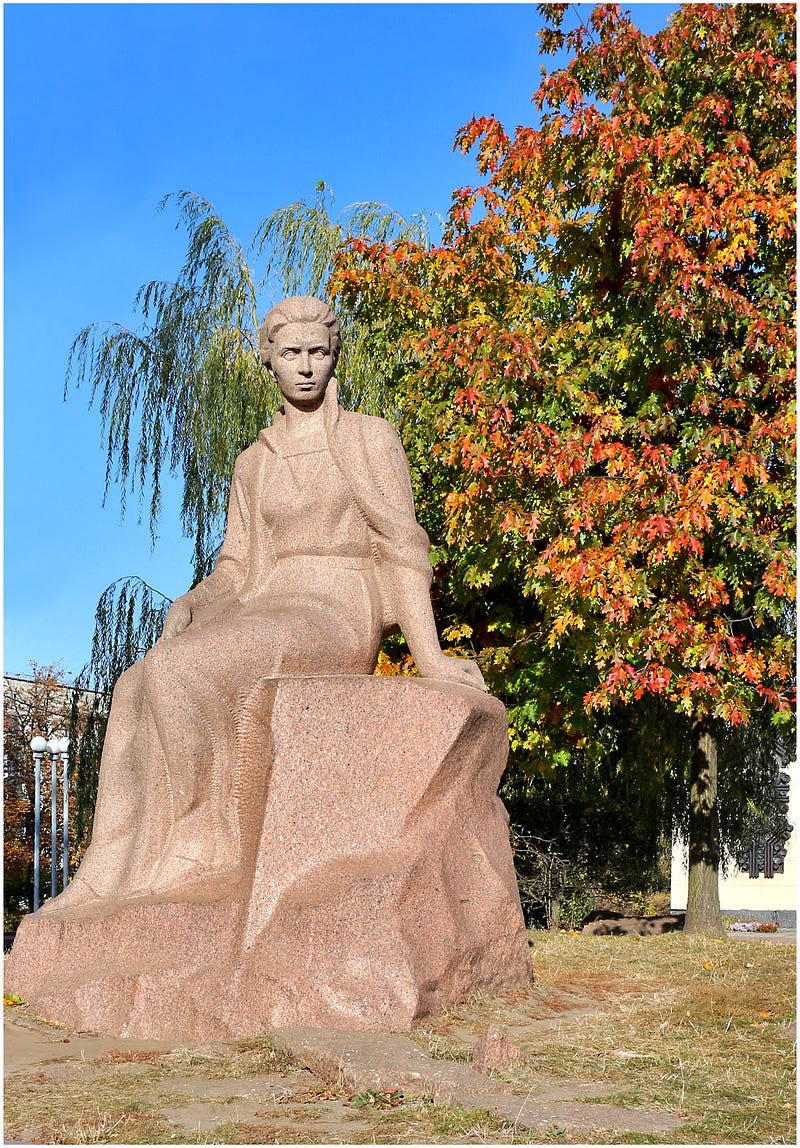
In many Ukrainian cities, a statue or memorial is dedicated to her in the center square. Her one-hundred-fiftieth birth anniversary was celebrated across Ukraine and in the Ukrainian diaspora in 2021.
With the current war in Ukraine, Lesya Ukrainka has taken on new prominence in Ukraine’s struggle against Russian aggression and colonialism with her works and her words. She is inspiring a new generation of Ukrainian nationalists and feminists.
Hopefully, her genius will be better exported to the rest of the world one day.
References:
· Ukrainka, Lesia (encyclopediaofukraine.com)
· Lesya Ukrainka Poems > My poetic side
· Lesya Ukrainka | Feminist, Activist & Writer | Britannica
· Ukrainian Money & Polish Literature: Who Was Lesya Ukrainka? | Article | Culture.pl
· Lesia Ukrainka — Restoring a Ukrainian Icon (bylinesupplement.com)
· Who is Lesia Ukrainka? ‣ Ukrainian Institute London
· Lesya Ukrainka: Ukraine’s Beloved Writer and Activist — JSTOR Daily
· Lesya Ukrainka., 150 years Aniversary | Embassy of Ukraine in the Republic of Iraq (mfa.gov.ua)
· Ukraine — Imperial Rule, Cossacks, Hetmanate | Britannica
· ‘Whoever liberates themselves, shall be free’. Lesya Ukrainka’s life and legacy (chytomo.com)
· Ukrainka, Lesia (encyclopediaofukraine.com)
· Lesya Ukrainka Poems > My poetic side
· Lesja Ukrainka — On the wings of songs (1893) (l-ukrainka.name)


