
Why Tracking Calories Is a Positive Practice To Be Mindful and Self-Aware
An argument for tracking calories
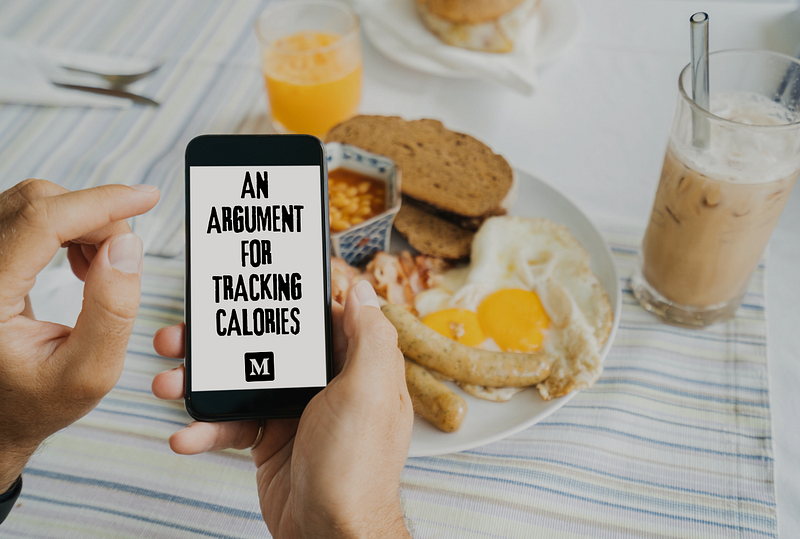
In the ever-evolving landscape of health and nutrition, one topic that often leads to a heated debate is the tracking of calories. Should you meticulously log every calorie consumed, or is it an unnecessary obsession?
The answer is most likely neither, but it is worth arguing over the value of understanding calorie consumption and how they are distributed among the foods we eat (macronutrients). It doesn’t have to be all or nothing, it can be a mindful and positive practice in the way that understanding finances helps to relieve the burden of debt.
“Like the law of gravity, the law of energy balance keeps on working whether you believe it or now.” — Tom Venuto in The Body Fat Solution
Knowledge Is Power
The more I learn about calorie tracking, the more I realize its misunderstood significance. Many view it as an arduous task, an obsession that leads to an unhealthy relationship with food. But here’s the thing: it doesn’t have to be that way.
The reason for tracking calories is simple — knowledge is power. Just as an architect needs precise measurements to build a masterpiece, you must know what’s going into your body to craft a healthy lifestyle. Calories and macronutrients are the building blocks of nutrition, and understanding them empowers you to make informed choices.
Think of calories as the universal currency for energy. Every morsel of food you consume contains a certain number of calories, and your body uses these calories as fuel.
Tracking calories allows you to balance your energy intake with your energy expenditure, a fundamental aspect of weight management and overall well-being. Furthermore, calories in the form of protein are vital for fat loss, muscle building, and recovery, and without enough of it, you’ll struggle to improve your overall body composition.
“Perhaps the most valuable result of all education is the ability to make yourself do the thing you have to do, when it ought to be done, whether you like it or not; it is the first lesson that ought to be learned; and however early a man’s training begins, it is probably the last lesson that he learns thoroughly.” — Thomas H. Huxley
Mindful Eating Is not Restrictive Dieting
Contrary to the misconception that calorie tracking promotes restrictive dieting, it can be a tool for mindful eating. It’s about making conscious choices, understanding portion sizes, and being aware of macronutrient values. When you track calories, you’re less likely to consume excess calories, which can lead to mindless weight gain.
Whether your goal is to lose fat, maintain a healthy weight, or gain muscle, tracking calories provides a roadmap. It helps you set realistic goals and track your progress over time. Instead of embarking on a guessing game, you can establish a clear plan to reach your goals. We do it with money, education, relationships, and career goals, so it shouldn’t be any different with food.
Yet, the notion of tracking calories is often treated differently because we don’t fully buy into the fundamental idea that controlling calories is the key. We fall for dogmatic beliefs, pseudo-science, influencers, and everything in between.
We are also constantly told that it is not our fault. Instead, we should blame our parents, genetics, the government, the education system, food scientists, and, “big” soda. Sure, they are part of the problem, but at the end of every morsel of food consumed and every drop of drink drank, is the the decision that we made.
“It’s tempting to form beliefs according to what we wish were true rather than on evidence or logic. It’s more reassuring to believe that excess fat is not your fault and that a slow metabolism is to blame. It’s more reassuring to believe that a health problem has nothing to do with the lifetime of habits that preceded it and it’s entirely a matter of genetics.” — Tom Venuto
Reframe the issue, embrace this power that you have, and recognize that it’s not about becoming a slave to the numbers or an enemy of food enjoyment. It’s about becoming an informed and conscious consumer of calories. Knowledge empowers you to make healthier choices that work toward your health and fitness goals.
We only get one body, so make the most out of it!
The Skill of Nutrition
The more you know about the calories you consume and their macronutrient makeup, the better equipped you’ll be for the ups and downs that are sure to come. Instead of viewing calorie tracking as a burdensome task, consider it a tool for greater awareness and control over your nutrition.
When used responsibly, tracking calories can be a valuable asset on your journey to a healthier, happier you.
The next time you hear the word “calories,” don’t cringe and instead embrace it as a source of empowerment. If you are in the pursuit of a high-performance lifestyle, then this knowledge is crucial to practically every outcome imaginable.
I like to think of nutrition as a set of skills that we can learn and get better at. Like any other skill, it takes practice, persistence, self-awareness, and lots of failures along the way to get better. The great idea of nutrition as a skill means you have complete control over the controllable.
You don’t have to wish and hope for the lifestyle you want and the body you desire. All you have to do is commit to the process and outwork your former self.
Check out the High-Performance Lifestyle Publication for weekly stories to improve skills in fitness, business, and psychology. Follow me on Twitter, Instagram, and Threads, sign up for my mailing list, or visit my coaching website at trainoutwork.com for more.


